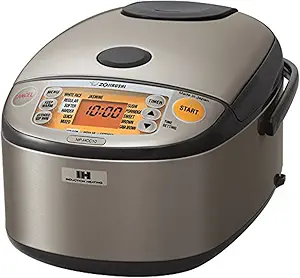
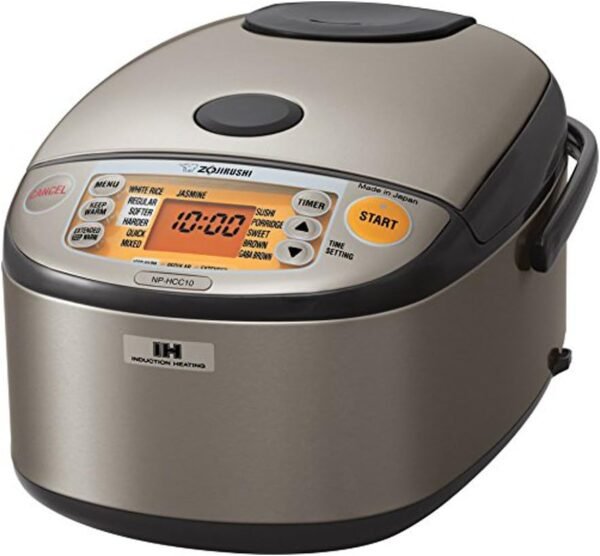
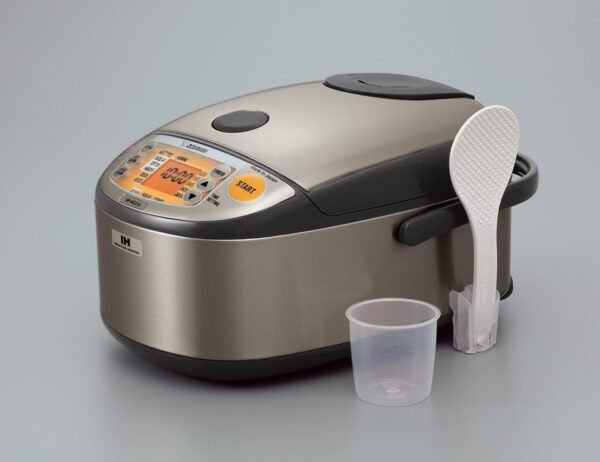
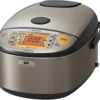
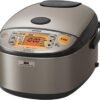
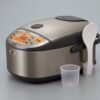
Description
How often does rice appear on your table, and does it have to be right?
There is a threshold in rice cookers, and this machine sits on the far side of it. Below the line are cookers that boil water off and switch to warm. Above it are cookers that control the temperature of the pan itself and adjust the cook as it happens. Crossing that line is worth doing if rice is a staple rather than an occasional side, and not worth doing if you cook white rice once a fortnight, because a simple cooker handles that well.
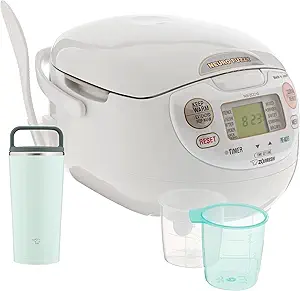
The second question is who is eating. Zojirushi lists this model at 1 liter, which the specification table restates as 1.05 quarts. Neither figure is the one rice cookers are normally sold by, which is cups of uncooked rice, and the listing never gives that number. That is a real gap, because cup capacity is the only way most buyers can compare one cooker to another. One liter of cooking pan is a machine for one to three people, not for a family batch, so get the cup rating from Zojirushi before ordering.
The third question is counter space. The listed footprint is 14 inches deep by 10 inches wide by 8 inches high, which is a substantial permanent resident on a counter for a one liter capacity. Induction cookers carry more hardware than plate heated ones, and the depth is where it shows. Measure the run you intend to use, and remember the lid opens upward.
Induction heating and the triple heater are what you are paying for
A conventional rice cooker sits the inner pan on a hot plate. Heat enters through the bottom, and the machine’s only real control is switching that plate on and off. Induction heating works differently: a coil generates a magnetic field that induces current directly in the metal of the pan, so the pan itself becomes the heating element. Two things follow. The heat is more even, because it is generated throughout the metal rather than transferred through one face, and it responds far faster, because there is no hot plate to heat or cool between adjustments.
Zojirushi pairs that with what it calls a triple heater, with heating at the bottom, the side and the lid. Side and lid heating are what prevent the classic uneven result where the bottom layer is overcooked, the middle is right and the top is dry. The inner pan is described as thick and spherical, which matters for the same reason a heavy pan matters on a stove: mass smooths out temperature swings and a curved base circulates the water rather than leaving corners.
What the menu settings are actually changing
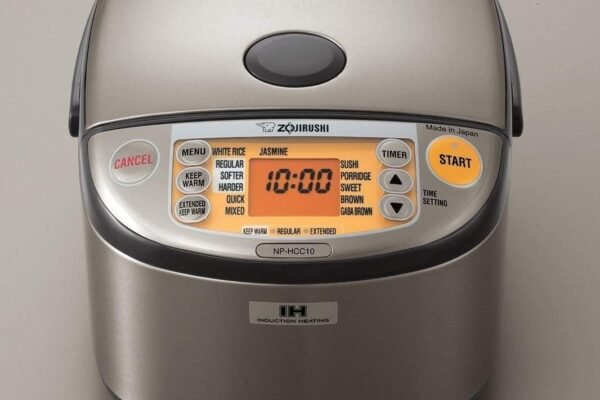
The menu list is long: white rice in regular, softer and harder versions, jasmine white rice, mixed rice, sushi rice, porridge, sweet rice, brown rice, GABA brown rice and a quick cook setting. Those are not marketing labels for the same cycle. Different grains absorb water at different rates and want different soak times and different finishing temperatures. Sushi rice wants to finish firmer and drier so it holds shape when seasoned. Porridge wants far more water and a long low cook. Brown rice needs a longer soak because the bran layer slows absorption.
The GABA brown rice setting is the most specialized. It holds brown rice at a warm temperature for a period before cooking begins, which activates germination and raises the level of gamma aminobutyric acid in the grain. That is the manufacturer’s stated purpose for the cycle. It also takes far longer than a normal cook, which is what the delay timer is for.
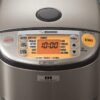
Alongside those, the listing states a keep warm function, a delay timer, a quick cook cycle and an orange LCD control panel with a clock and timer. The delay timer is the feature that changes weekday cooking, because a long brown rice cycle started at breakfast is ready at dinner.
Living with it: cleaning, materials and two figures that cannot be right
Cleaning an induction rice cooker is simpler than the machinery suggests, because the pan lifts out and the inner lid is stainless steel. Zojirushi lists the materials as a stainless steel inner lid, a non stick coated metal pan described as BPA free, a stainless steel outer lid and a plastic body with a clear coated stainless exterior. The listing’s care instruction is hand wash recommended, and there is a small typo in that field on the page. The instruction still matters: a non stick pan in a dishwasher loses its coating faster, and the inner lid seals against a gasket that does not enjoy detergent.
The routine that keeps any rice cooker working is the one people skip: wash the inner lid every time, not just the pan. Starch condenses on it, and that is where the stale smell in an old rice cooker comes from.
Two numbers on this page are not believable and should be treated as import errors. The item weight is listed as 1 pound. An induction rice cooker with a thick metal pan, a coil assembly and a stainless clad body weighs roughly ten times that, and one pound is not a plausible figure for the inner pan alone. Separately, the description says the stainless exterior makes cleanup a snap while the care field says hand wash is recommended, which point in opposite directions about how much work the machine asks for.
The electrical figures are consistent and useful: 1.2 kilowatts at 120 volts, which is 10 amps, so it should not share a circuit with another high draw appliance running at the same time. The unit is made in Japan and carries a one year limited warranty on parts and labor.
When a different cooker is the better buy
If the induction premium is not something you want to pay, Zojirushi’s own fuzzy logic machine gives you most of the menu intelligence with a conventional heater. The Zojirushi NS-ZCC10 Neuro Fuzzy review covers that comparison directly and is the natural alternative for anyone weighing this one.
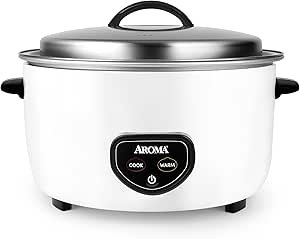
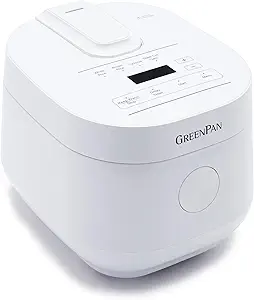
If capacity is the constraint rather than precision, look at larger machines. The Aroma ARC-914D review covers a conventional cooker sized for a family, and the Aroma ARC-1430E commercial review covers volume cooking for a large kitchen. At the simpler end, the Brentwood TS-10 review covers a five cup machine with no electronics to speak of, and the GreenPan ceramic nonstick rice cooker review covers a compact preset machine for anyone whose priority is the coating rather than the heating method.
The full range sits in the rice cookers category, and because this machine also holds and cooks porridge, it overlaps with the slow cookers category.
Who it fits and who does not need it
It fits a household of one to three where rice is eaten several times a week and where the variety matters: sushi rice one night, brown rice another, porridge in the morning. It fits anyone who wants a machine to handle timing rather than attention, and the delay timer plus the long brown rice cycles are the combination that makes that work. The listing shows 4,298 ratings averaging 4.7 stars, ranked 45th within rice cookers and 11,571st across kitchen and dining, from a model listed since March 2015, which is a deep and long standing base of feedback.
It does not fit a household cooking large batches, since one liter is a small pan for the footprint it occupies. It does not fit an occasional rice cook, who will not notice what induction is doing. And anyone sizing carefully should get the cup capacity from Zojirushi first, because this listing gives volume in liters and quarts and never in the unit the category actually uses.