Description
Can the room take 83 inches?
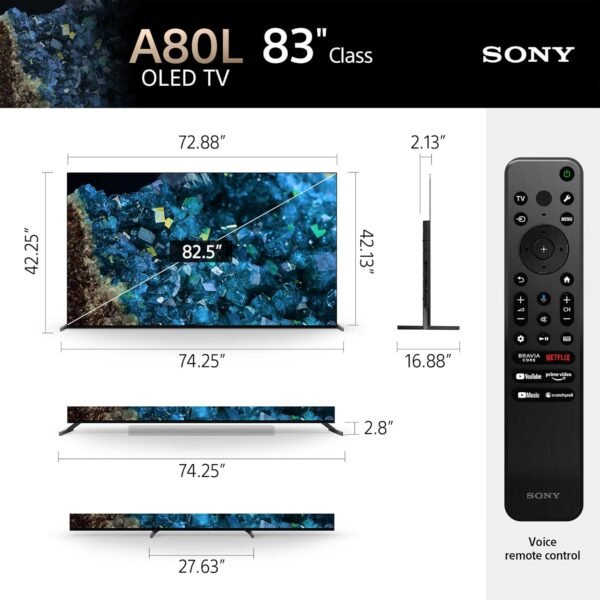
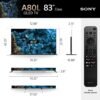
An 83 inch television is a renovation decision dressed as an electronics purchase. Start with the wall. Sony lists the product dimensions as 74.13 inches wide by 42.25 inches high by 16.88 inches deep, so the panel alone needs more than six feet of uninterrupted wall, with nothing on either side and nothing above it that a screen this tall will crowd. Then measure the route to that wall: the doorways, the stair turn, the hallway. A carton that is wider than six feet does not pivot at the top of a staircase.
Then measure the seating. At 83 inches diagonal, comfortable 4K viewing sits roughly nine to eleven feet back. Closer and the screen fills more of your field of view than most people want for anything other than film. Further and you are paying for size you have stopped noticing. If your sofa is seven feet from the wall in a normal living room, this is not the set. That is the honest version of the decision and it comes before any discussion of processors.
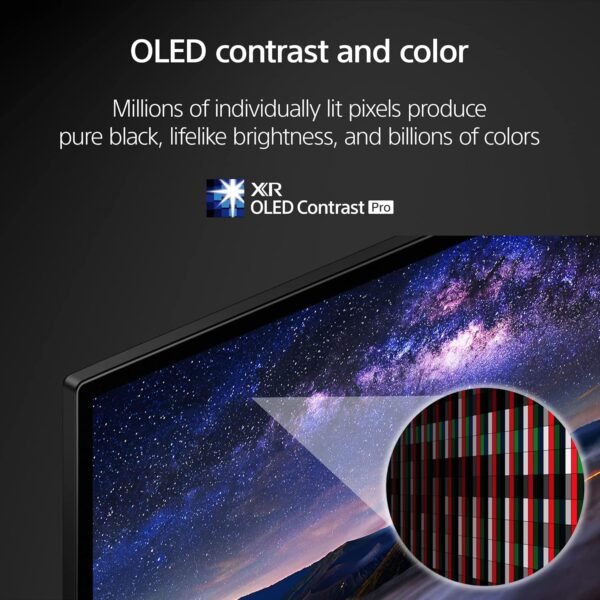
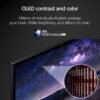
If the room does take it, what you are buying is an OLED panel, and OLED is chosen for one reason above all others: each pixel makes its own light, so black is the absence of light rather than a dimmed backlight. In a room you can darken, that is the difference OLED buyers are actually paying for.
The panel and the processor are the deciding pair
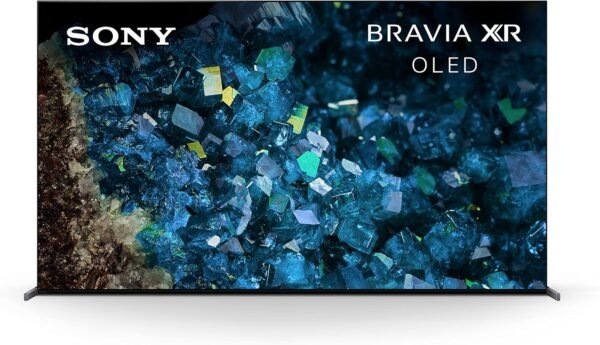
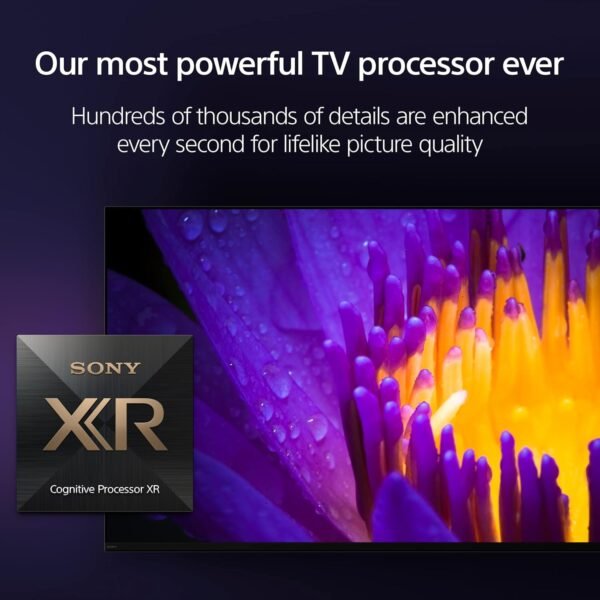
Sony runs this series on the Cognitive Processor XR, and describes its job as delivering wide dynamic contrast, detailed blacks, natural color and high peak brightness. Two named technologies sit under that: XR OLED Contrast Pro, which handles brightness management on the panel, and XR Triluminos Pro, which handles the color volume. Sony’s own framing is that the processor works the way human vision does, prioritizing the part of the image the eye is drawn to. Read that as a description of the processing philosophy rather than a measured result, because the listing publishes no brightness figure in nits.
Format support is where this set separates from cheaper large panels. Dolby Vision, IMAX Enhanced and Netflix Adaptive Calibrated Mode are all listed, along with Dolby Atmos audio. For a film oriented household that is a meaningful list, because Dolby Vision carries scene by scene metadata that a static HDR10 signal does not.
Acoustic Surface Audio Plus, and what it changes
Instead of speakers firing down or backward, Sony vibrates the OLED panel itself to produce sound, a system it calls Acoustic Surface Audio Plus. The practical consequence is that dialogue appears to come from the mouth on screen rather than from below it, which is the single most common complaint about flat panel audio. It also means the set is unusually good at not needing a soundbar in the first year, and unusually awkward to wall mount flush, because the panel needs to move to make sound. If a soundbar is in the plan anyway, this feature matters less than it looks.
Living with an OLED this size
Gaming support is genuinely strong and specific. Sony lists HDMI 2.1 with 4K at 120Hz, variable refresh rate and auto low latency mode, a Game Menu that collects the gaming picture settings in one place, and two PlayStation 5 features, Auto HDR Tone Mapping and Auto Genre Picture Mode. If a PS5 is the main source, those settings do work that you would otherwise do by hand in a menu.
The care instructions for OLED are real and worth stating. Static bright elements held on screen for hours, such as a news ticker, a channel logo or a game heads up display, are the mechanism behind image retention. Sony builds in mitigations, but the sensible household rule is to vary the content and avoid leaving a paused frame up for an afternoon. Ambient light is the other consideration: OLED is at its best in a controlled room and gives up ground to a bright LED panel in a sunlit space.
Two listing figures contradict the rest of the page and should be checked rather than trusted. The voltage field reads 100 volts, which is the Japanese domestic supply figure, not the 120 volt supply this United States model number is built for. And the weight is given as 25 kilograms, roughly 55 pounds, which is low for an 83 inch panel and almost certainly excludes the stand or the packaging. If you are specifying a wall mount, take the load rating from Sony’s own specification sheet, not from the retail listing. The remote takes two AAA batteries, which the listing notes are required.
Installation deserves its own thought at this size. An 83 inch panel is not a two person lift in any comfortable sense, and OLED panels are thin enough at the top that flexing them during a lift is a real risk rather than a theoretical one. Whether it goes on a stand or a wall, plan the lift with the number of people the manual specifies and a clear path. If it is going on a wall, the mount has to land in studs, and a set this wide will usually cross two of them, which constrains where on the wall it can go. Route the power and HDMI before the panel goes up, because reaching behind an 83 inch screen afterwards is not practical.
Sony also bundles BRAVIA CORE with five credits for recent releases and a twelve month subscription to its back catalog. That is a time limited inclusion, not a permanent feature. The listing records the set as first available in June 2023, with 364 ratings at 4.3 stars, ranked 112th in OLED televisions.
What would send you elsewhere
If the room is bright rather than controllable, a high brightness LED or QLED panel will serve better than OLED. At this scale the TCL 98Q651G and the Samsung QN98QN90A Neo QLED go larger still on backlit technology, and the Hisense 100QD7N pushes to 100 inches. The full QLED category is where that comparison belongs.
If you want OLED but the room is smaller, the Sony K65XR80 brings the same panel technology to 65 inches, and the rest of the OLED category covers the sizes between. Whatever size you land on, a set this large belongs on a rated mount such as the Mounting Dream MD2380, fixed into studs rather than drywall anchors.
Who it fits and who should skip it
Buy it if you have a dedicated viewing room you can darken, nine feet or more of seating distance, six feet of clear wall, and a film and PlayStation habit that will use Dolby Vision and 4K at 120Hz.
Skip it if the room is sunlit, if the sofa is close to the wall, or if the delivery route has a tight turn. And confirm the voltage and the true panel weight with Sony before you buy a mount, because the listing gets both of those wrong.