


Description
Is the wall wide enough, and is the sofa far enough back?
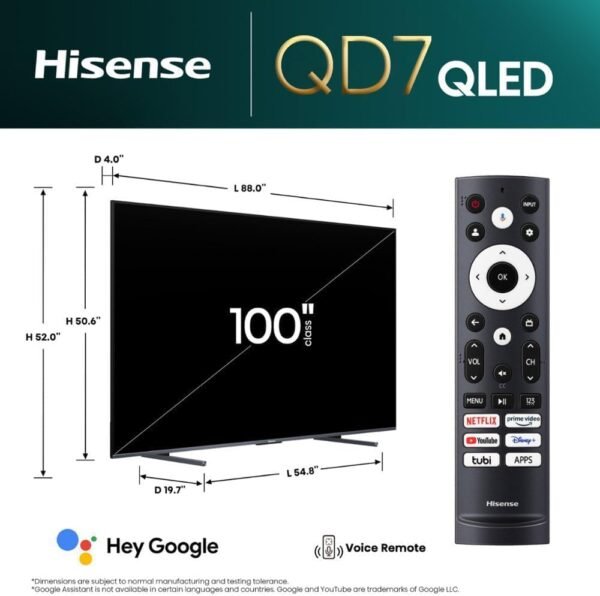
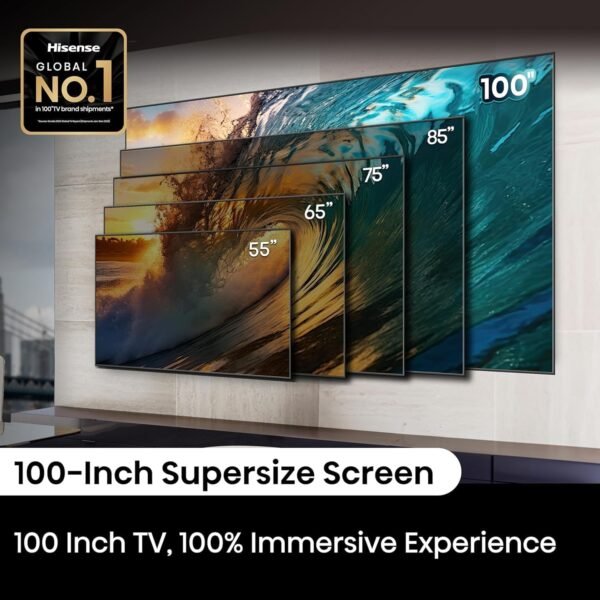
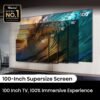
A hundred inch television is not a bigger version of a normal purchase. Hisense lists this panel at 88 inches wide and 50.6 inches high, which is seven and a third feet of wall taken up by screen alone, before any margin on either side. Measure the wall first. Then measure the doorways, the stairwell and any turn between the front door and the room, because a carton over seven feet wide does not negotiate a landing.
Then measure the seating distance, which is the number people skip. At 100 inches diagonal, comfortable 4K viewing sits somewhere around eleven to thirteen feet back. Closer than that and you are turning your head to follow the action. If your sofa is eight feet from the wall, this screen will dominate rather than immerse, and an 85 inch set will give you a better evening for less money.
Weight is the third gate. The listing gives 137.8 pounds. That is a multi person lift and, if it is going on a wall, a mount rated well above that number fixed into studs. A screen 88 inches wide will span more than one stud, which constrains where on the wall it can go rather than leaving it up to taste.
The specification that actually decides it: a native 144Hz panel
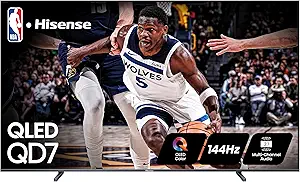
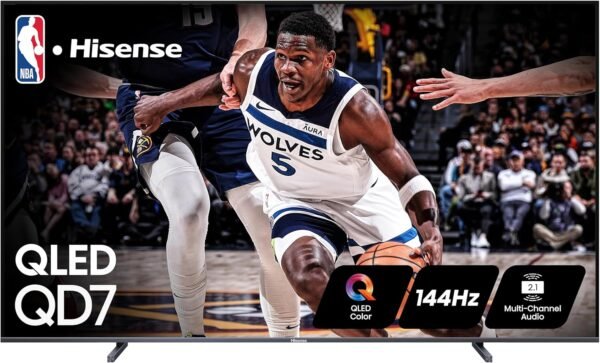
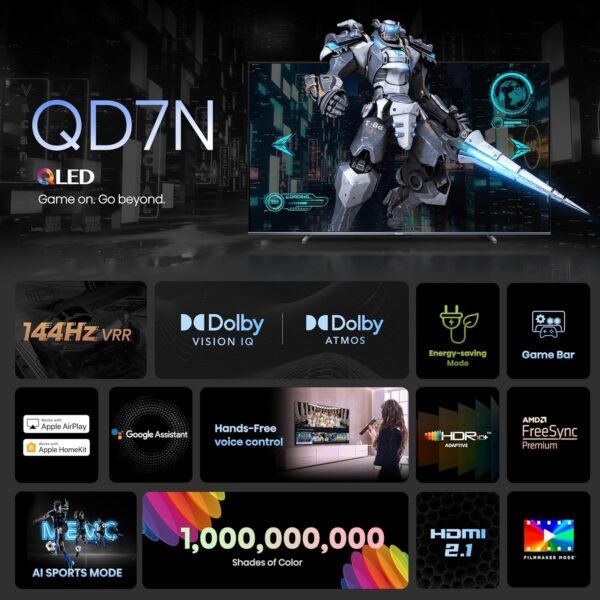
The single most meaningful number on this listing is native 144Hz. Native is the operative word, because it means the panel itself refreshes 144 times a second rather than a processing trick applied to a 60Hz display. Hisense pairs it with a variable refresh rate range of 48Hz to 144Hz, AMD FreeSync Premium, Auto Low Latency Mode and Low Latency MEMC, and puts the controls in a Gamebar accessible from the remote.
That combination is what makes a screen this size viable for PC gaming, which is unusual. Most very large televisions are built for film and give up on frame rate. A native high refresh panel with FreeSync means a graphics card can drive it at whatever rate it manages without tearing, which is a genuinely different proposition from a 60Hz panel with gaming branding.
For picture, Hisense lists QLED quantum dot color, Direct Full Array backlighting, a 4K AI Upscaler, Dolby Vision and Dolby Atmos. Direct Full Array is worth calling out because it means the backlight sits behind the panel in zones rather than around the edges, which is what allows a bright object on a dark background to look right. On a screen this large, edge lighting would be visibly uneven, so this is a necessary choice rather than a luxury one.
Where the marketing numbers need translating
The listing carries two different figures that both end in 240, and neither is a refresh rate. Motion Rate 240 is Hisense’s motion clarity index, which it attributes to MEMC frame insertion. Game Booster 240 appears alongside a stated variable refresh rate range that tops out at 144Hz. The panel refreshes at 144Hz. Treat both 240 figures as marketing indices rather than hardware specifications.
Two wattage fields also sit side by side and mean different things: Output Wattage is given as 50 watts, which is the audio amplification, while Wattage is given as 500 watts, which is the power draw. And the screen size field says 99.5 inches while the title says 100 inch class, which is the normal gap between nominal class sizes and measured diagonals rather than an error.
Living with a screen this size
Power is the first practical note. Five hundred watts is a meaningful continuous draw, more like a small appliance than like the 43 inch set in the bedroom, and it will show up on a bill if the television runs several hours a night.
Room lighting matters more at this scale, not less. A Direct Full Array QLED panel is a good choice for a bright room, which is fortunate, because a screen this large is hard to place in a room you can fully darken. What you should avoid is a window directly opposite, since 88 inches of glass reflects an entire window rather than a patch of it.
The software is Google TV with hands free voice control, so saying the wake phrase works without touching the remote, along with Chromecast for pushing video from a phone or laptop. Networking is WiFi 5 rather than WiFi 6, which the listing states clearly. On a set that will be streaming 4K, a wired Ethernet connection is worth running if the router is anywhere near, because 4K streams are the most demanding thing on most home networks.
Audio is 50 watts of output through the set’s own speakers with Dolby Atmos processing. That is more amplification than most televisions carry, and it is still a thin cabinet on a huge panel. A screen this size in a room this size will want a soundbar or a receiver, and the Dolby Atmos support is there to feed one.
One more placement note that only applies at this scale. The listed depth of 4 inches is the panel alone, without a stand, which is the figure a wall mount installation cares about. If the set is going on furniture instead, you need a console that is both wide enough and rated for the weight, and very few standard media units are specified for 137 pounds spread across two feet placed near the ends. Check the furniture rating as carefully as you would check a wall bracket.
The listing records 463 ratings at 4.3 stars, a rank of 100th in QLED televisions, and an availability date of September 2024. The remote takes two AAA batteries, which are included.
What would send you to a different screen
If the room cannot take 100 inches, step down rather than compromising the seating. The Hisense 85U6N keeps the same broad approach at a size that fits more rooms, and the Hisense 75U7N steps down again. The QLED category is the place to compare panel width against wall width.
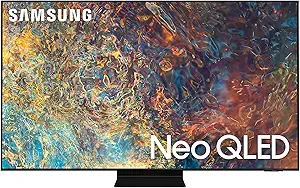
If you want this scale from a different maker, the TCL 98Q651G and the Samsung QN98QN90A Neo QLED are the direct alternatives at 98 inches. Whichever you choose, a set this heavy belongs on a rated bracket such as the Mounting Dream MD2380 from the wall and ceiling mount category, fixed into structure rather than drywall.
Who it fits and who should skip it
Buy it if you have eleven feet or more of seating distance, a wall wider than eight feet, a delivery route that works, and a use case that benefits from a native 144Hz panel with FreeSync.
Skip it if the room is smaller than the screen, if the only wall has a window opposite it, or if nobody in the house games at high frame rates, in which case a smaller set with the same picture technology is the better buy. Confirm the delivery route before ordering, not after.