

Description
What problem is a streaming box solving in your living room?
Nearly every television sold in the last five years has apps built in, so the honest first question is why you would add a box at all. There are three answers that hold up. Your television is older than its app store and has stopped receiving updates. The built in interface has become slow enough to be annoying. Or you want a specific capability the television does not have, such as sideloading applications, plugging in a storage device, or running Android software that a smart TV platform will not let you install.
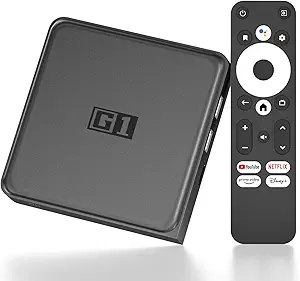
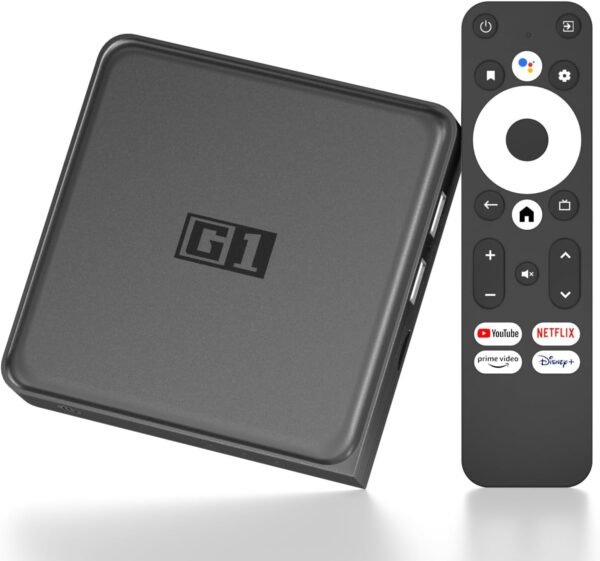
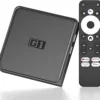
The Kinhank G1 is aimed at the first two situations. It is a small Android box, listed at 3.9 by 3.9 by 0.79 inches, that sits behind or beside the television and takes over as the interface. Physically it disappears, which matters if you have already run out of room on a media shelf. The listing does record an item weight of 1.37 pounds, which is heavy for a device that size and is more likely to describe the shipped package than the box itself.
The third situation is where Android boxes differ from a Roku or a Fire stick, and it is the reason people choose them. This one is described as supporting TF card expansion, so external storage is part of the design rather than an afterthought. If your use case involves local media files, that is a real distinction. If you only want Netflix to load faster, a cheaper stick from a mainstream platform will do the same job with fewer questions attached.
The specifications that decide it, and where the listing keeps them
Almost everything technical about this product lives in the feature bullets rather than the specification table. The table publishes only brand, weight, dimensions, country of origin, model number G1, a color of Red, and the ASIN. There is no processor field, no memory field, no operating system field and no port list. That is unusual for an electronics listing and it is worth knowing before you compare it against a rival.
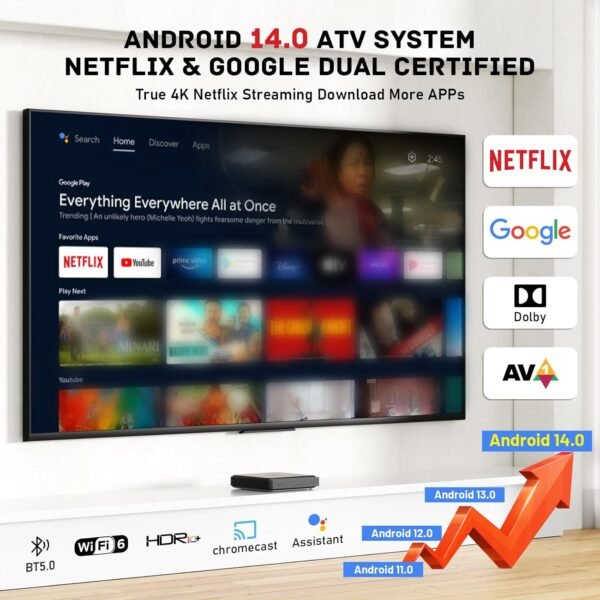
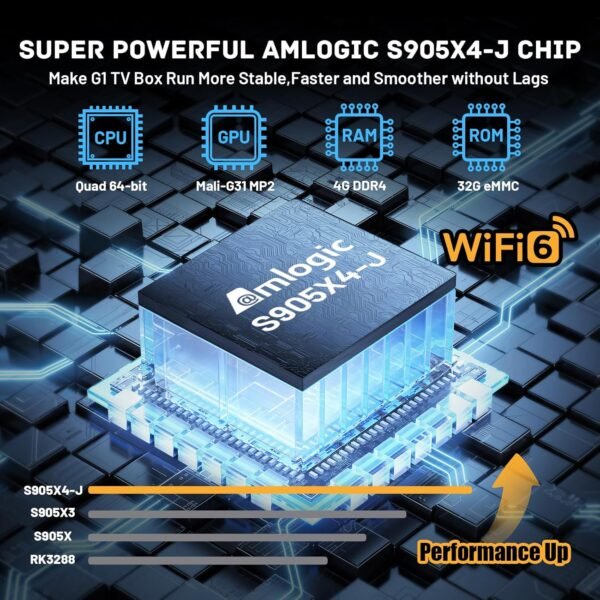
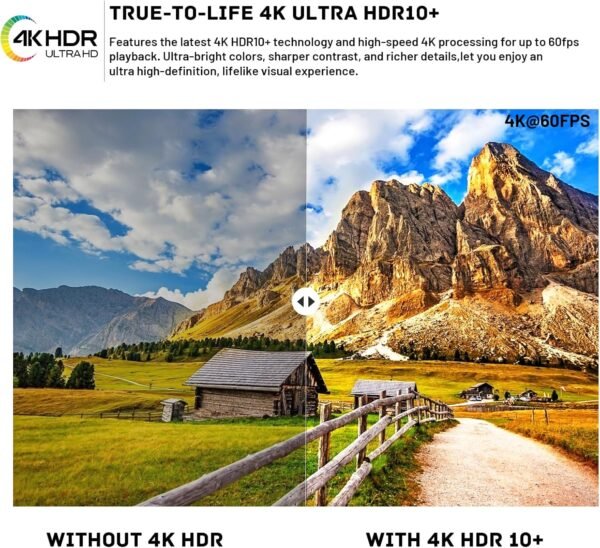
From the bullets, Kinhank states an Amlogic S905X4-J processor, 4 GB of RAM and 32 GB of internal storage, dual band 2.4 and 5 GHz Wi-Fi 6, Bluetooth 5.0, AV1 decoding, 4K HDR10+, Dolby Vision, Dolby Digital Plus, built in Chromecast and a voice remote. The support terms quoted are two years of free replacement and lifetime technical support.
The two claims to verify before ordering
The first is the operating system. The product title begins Android TV Box 14.0 and includes the year 2025, but no Android version appears anywhere in the specification table, and the bullets do not repeat it. Android version determines which applications will install and how long the device keeps receiving security updates, so it is not a detail to take from a title alone. Ask the seller to confirm it.
The second is certification. The title says Google Netflix Certified and the bullet says compatible with Google and Netflix dual certified, which are two different statements. Certification is what allows a device to stream Netflix at full resolution rather than at a downgraded one, and it is the single most common disappointment with Android boxes bought on specifications alone. Confirm the certification status on the live listing before you commit, particularly if 4K Netflix is the reason you are buying.
Living with an Android box
The day to day experience of a box like this is different from a television platform in ways that are worth knowing in advance. Updates arrive from the manufacturer rather than from Google, so their frequency depends on the vendor rather than on a schedule. The interface is the standard Android launcher with whatever the vendor has layered on top of it, and it can be customized far more than a Roku or a Google TV can.
Storage is the thing that quietly determines whether the box stays usable. Thirty two gigabytes sounds generous until applications, their caches and any downloaded content start competing for it, which is why the TF card slot matters. Buy the card at the same time as the box rather than waiting until the device is full.
The listing does not publish a port list, so before ordering you should confirm the number of HDMI and USB ports, whether an Ethernet jack is present, and whether optical audio out is included. A box with only Wi-Fi is a different proposition in a house with a weak signal at the television end. And on connectivity, Wi-Fi 6 in the box does nothing on its own; it needs a Wi-Fi 6 router to deliver anything beyond what Wi-Fi 5 already gives you.
Feedback is thin. The listing shows 33 customer ratings averaging 4.0 stars and a first availability date of March 2024, with a rank of 604th in streaming media players. Thirty three ratings is not enough of a sample to read confidently, so treat it as an early listing rather than an established one.
When a different player is the right choice
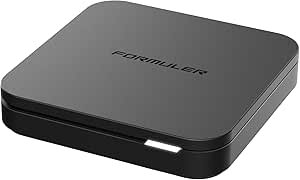
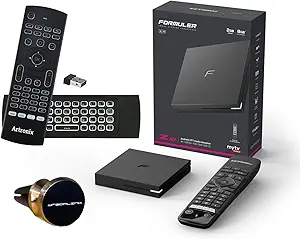
If your reason for buying is running a subscription IPTV service, the boxes built specifically for that job are better supported. The Formuler Z10 NEO ships with an air mouse and keyboard for exactly that kind of navigation, and the BuzzTV X5 covers the same ground with more storage. If you want the strongest hardware in this class and are willing to pay for it, the Ugoos AM6B Plus uses the higher end Amlogic S922X-J rather than the S905X4-J in this unit, and that gap shows on demanding local files.
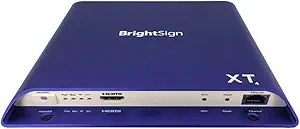
If the application is commercial rather than domestic, digital signage or a display in a waiting room, a consumer box is the wrong tool entirely and something like the BrightSign XT244 is built for continuous operation. The wider streaming media players category separates those groups out.
And if the television itself is the bottleneck rather than its software, no box will fix a panel that cannot display what you are sending it. A Dolby Vision source needs a Dolby Vision display, and the LED and LCD television category is where to check whether your set actually supports the formats this box outputs.
Who the G1 suits
It suits someone with an older or slow television who wants a small, cheap, flexible Android device with expandable storage and does not mind a listing that leaves several questions open. The processor, memory and wireless specification quoted in the bullets are reasonable for the class, and the stated two year replacement policy is longer than most.
It does not suit a buyer who wants a platform with guaranteed long term updates, or one who needs a documented port list before ordering, or one who is buying specifically for 4K Netflix without first confirming the certification. Ask about the Android version, the certification status and the ports, and treat the 33 rating sample as the thin evidence base it is.