
Description
How much are you going to install on it?
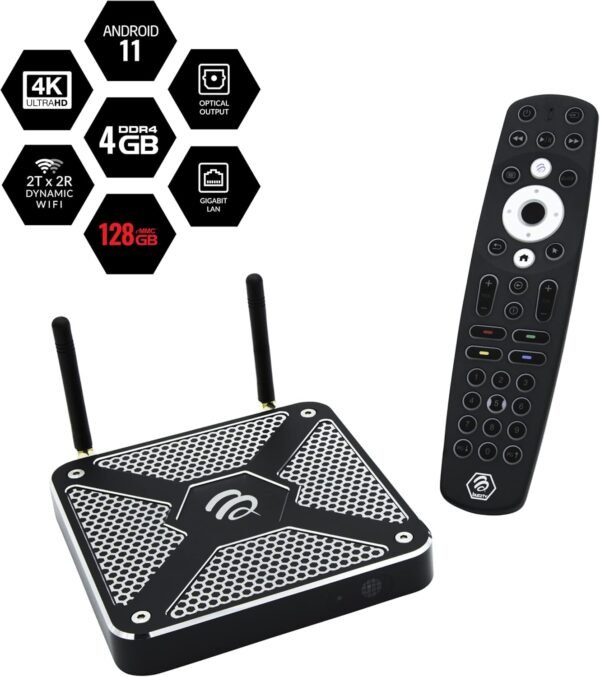
Most streaming boxes are bought on output specifications and then outgrown on storage. The BuzzTV X5 is the opposite proposition. Its headline numbers are 4 gigabytes of memory and 128 gigabytes of eMMC storage, which is a great deal more than the typical Android streaming device carries, and that is the reason to consider it.
The practical difference is what you can keep on the device. A box with 8 or 16 gigabytes of storage runs the operating system and a handful of applications, and every install after that means uninstalling something. A hundred and twenty eight gigabytes means the applications are never the constraint, and it means the box can hold downloaded content, recordings or a media library locally rather than depending on a network share.
Four gigabytes of memory does the same job for multitasking. Two gigabytes, which is common in this category, is enough to run one application well. Four gigabytes means a second application stays resident in the background rather than reloading every time you switch, which is the difference people actually notice in daily use.
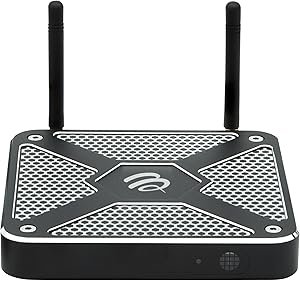
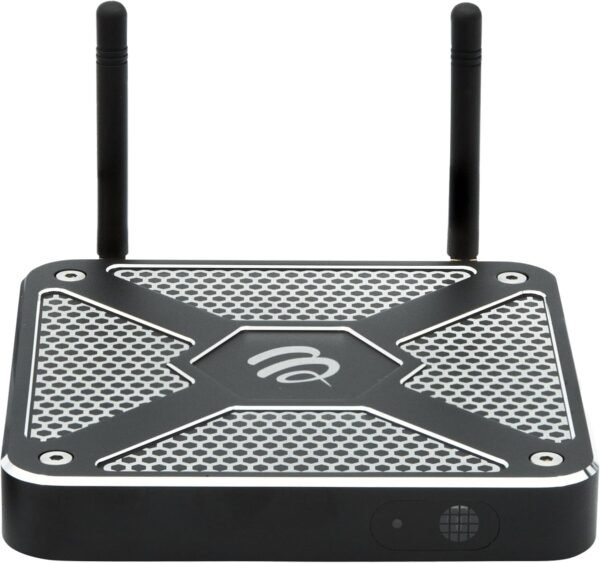
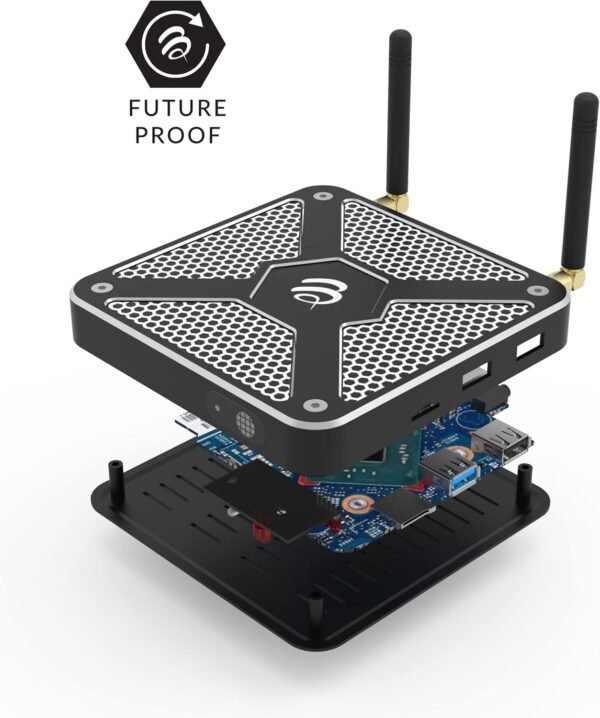
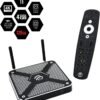
The processor is an Amlogic S905X4, and the box measures 4.72 inches square by 0.79 inches high. That is a compact unit that sits behind a television or under a shelf without a fan.
The listing publishes almost nothing else, and that is the main caveat
This page is unusually sparse. There is no description at all, and the only feature bullet reads “AMLogic 905×4”. Everything else about the product has to be inferred from a specification table containing eight entries, most of which are administrative.
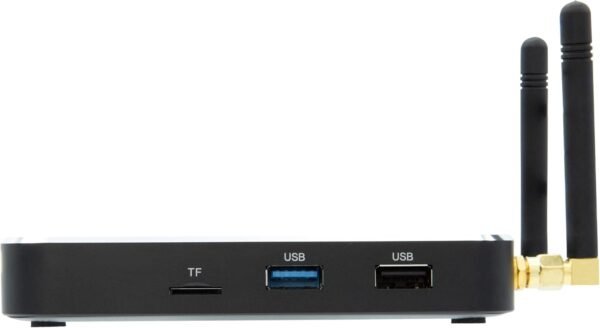
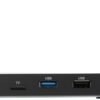
What is missing matters. There is no port list, so the number of USB sockets, the presence of an Ethernet jack, an optical audio output or a microSD slot are all unknown from this page. There is no output resolution stated, no HDR format, no HDMI version, and no wireless specification, so whether it supports the 5 gigahertz band, which is the single most useful thing to know about a streaming box’s network, is not answered anywhere.
For a device whose two published numbers are memory and storage, that is a lot of blank space. Anyone buying should get the full specification from BuzzTV before ordering rather than assuming, particularly on the wireless band and the port list.
The DVB-S2 field, and why it needs explaining
One specification entry stands out and deserves attention rather than being passed over. The specification met field reads “DVB-S2”. That is a satellite television broadcasting standard, the modulation and coding scheme used to carry digital television over satellite.
An Android media box does not receive satellite by itself. Receiving DVB-S2 requires a tuner and an input connected to a dish, and this listing mentions neither a tuner nor a coaxial input anywhere. There are two plausible explanations. Either the box supports a satellite tuner as a separate variant or accessory, or the field is an import artifact from a related product. The listing does not distinguish between them, and if satellite reception is your reason for buying, that is the question to settle with BuzzTV before ordering.
The remote takes two AAA batteries and the listing states they are included, which is a small point in its favor.
Living with it: what an open Android box asks of you
This is an open Android device rather than a closed streaming platform, and the difference is worth being clear about because it cuts both ways.
The advantage is that you decide what goes on it. You are not limited to a curated store, you can sideload, you can use a file manager and external storage, and the 128 gigabytes means you are not fighting for space while doing any of it. For anyone who wants a small Android computer under the television rather than an appliance, that is exactly the point.
The costs are real too. Updates come from the manufacturer rather than from Google, so how long the device receives security and platform updates depends entirely on BuzzTV’s support. The listing states Android 11, which was already a version or two behind current when the product appeared in April 2022 and is further behind now. Applications eventually raise their minimum Android version, and when they do an older platform stops being able to run them.
The other point that catches buyers of open Android boxes is service certification. Major commercial streaming services deliver full resolution only to certified devices, and uncertified boxes frequently receive a reduced quality stream regardless of what the hardware can do. This listing makes no certification claim of any kind, so if a specific commercial service at full resolution is your requirement, verify that first rather than after delivery.
Physically the box weighs 1.87 pounds, which is substantial for its size and suggests a metal chassis or an included power supply in the figure. There is no fan mentioned, so give it air rather than sealing it inside a cabinet.
When a different box is the right call
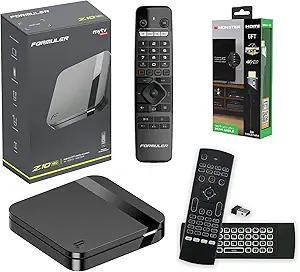
If storage is not your constraint and you want to spend less, the same category of device exists in much smaller configurations. The Formuler Z10 SE review covers a 2 gigabyte and 4 gigabyte machine at the entry end, and the Formuler Z10 NEO review covers the middle of that range.
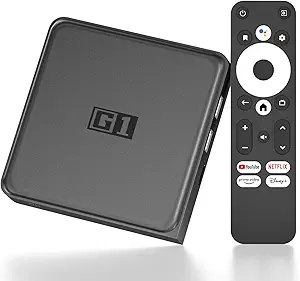
If processing performance matters more than storage, for instance for demanding applications or emulation, the Ugoos AM6B Plus review covers a box built around a stronger processor, and the Kinhank G1 review covers an Android device with Dolby Vision support stated on its listing.
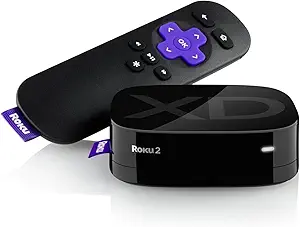
And if you want none of this complexity, a closed platform simply works, which is what the Roku 2 XD review covers at the legacy end. The rest of the range sits in the streaming media players category, and the sets these plug into are in the LED and LCD televisions category.
Who should buy it and who should not
It suits someone who wants an open Android device with room to install and store without managing space, who is comfortable maintaining their own software, and who has confirmed the port list and wireless bands they need. The combination of 4 gigabytes of memory and 128 gigabytes of storage is genuinely unusual in this category and is the reason to pick it over a cheaper box.
It does not suit anyone who wants a device that works out of the box with no configuration, and it does not suit anyone relying on a specific commercial service at full resolution, since no certification is claimed. Anyone drawn by the DVB-S2 line should confirm what it means before ordering, because nothing else on the page suggests a satellite tuner. The listing shows 83 ratings averaging 4.0 stars, ranked 515th within streaming media players.