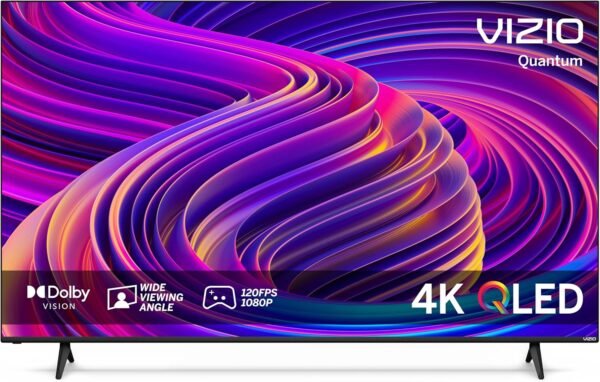
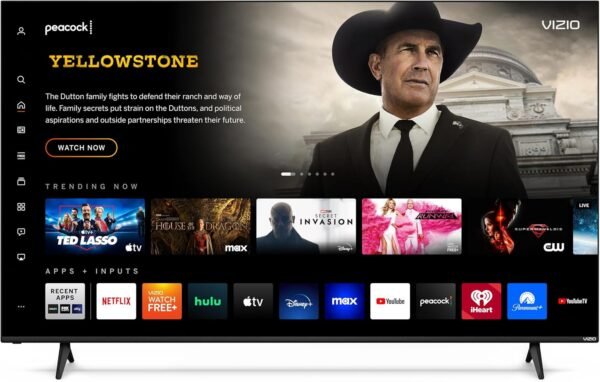
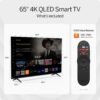
Description
What problem is a 65 inch quantum dot panel actually solving?
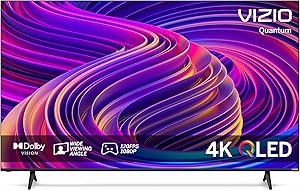
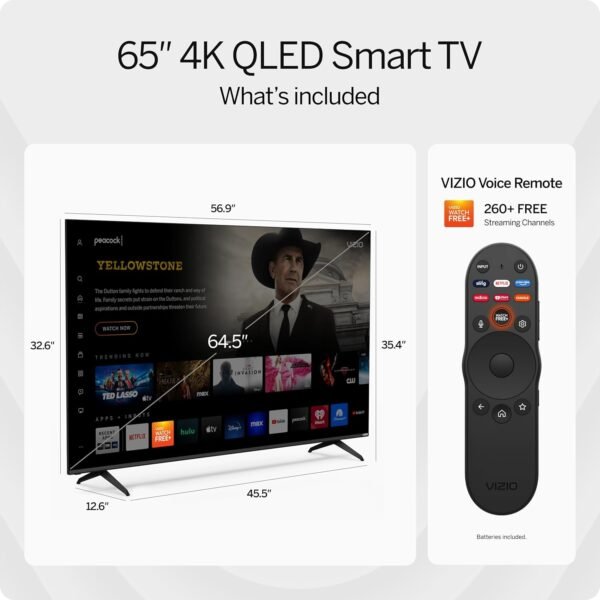
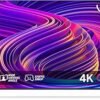
Most people who end up looking at the VIZIO M65Q6-L4 arrive with one of two problems. Either the room is bright and the current television washes out during the day, or the seating is spread across a wide space and only the person in the middle gets a decent picture. Both of those are panel problems rather than resolution problems, and both are what VIZIO is aiming this model at. The listed cabinet is 3.3 x 56.9 x 32.6 inches at 55.2 pounds, so the physical footprint is a little under five feet wide.
That width is the first filter. A 65 inch class set needs a stand or console of at least 50 inches to look settled, and it needs roughly seven to eleven feet of viewing distance to make the 4K pixel count worth having. If the room is smaller than that, the same panel technology in a smaller size will serve better than squeezing this one in.
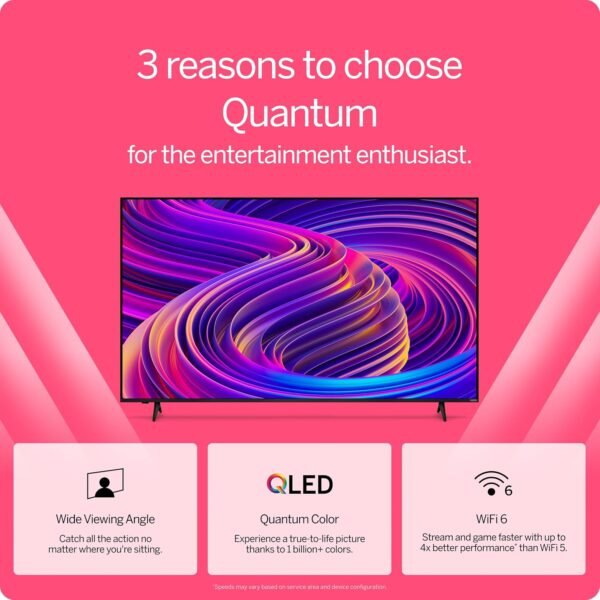
The second filter is the seating layout, because this is where the model earns its place. VIZIO calls out a wide viewing angle panel treatment specifically, and describes it as letting people sit off to the side and still see the action. On a conventional LCD panel, moving thirty or forty degrees off center visibly drains color and lifts black levels. If your room has a sofa plus two armchairs angled in from the sides, that behavior is the thing you notice every evening, and it is the reason to prefer a wide angle panel over a nominally sharper one.
The specifications that decide it: quantum color, WiFi 6, and the 120fps caveat
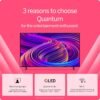
VIZIO states over one billion colors through its Quantum Color layer, with Dolby Vision high dynamic range on top. Quantum dot films work by converting backlight into narrower, purer red and green output, which is why they hold saturation better in a lit room than a plain LED LCD does. That is the single strongest reason to choose this over a non quantum set at the same size.
The gaming specification needs reading carefully, because it is easy to misread. VIZIO advertises up to 120 frames per second at 1080p, together with AMD FreeSync Premium certification and a gaming menu. That is 120 frames at 1080p, not at 4K. The listing does not publish a native panel refresh rate anywhere, and it does not claim 4K at 120. Anyone buying this to run a current generation console at 4K120 should treat that as unconfirmed until the panel refresh rate is verified on the manufacturer specification sheet. It is a genuine gap in the published data rather than a detail we can fill in.
Why WiFi 6 is on the box
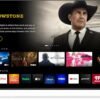
VIZIO lists WiFi 6 support and frames it as better streaming and gaming performance in a congested smart home. The honest version is narrower than that. WiFi 6 helps most when many devices are competing for the same access point, which is common in an apartment building or a household with a dozen connected devices. In a quiet network with a wired router two rooms away, the difference over WiFi 5 will be hard to notice. Apple AirPlay and Chromecast are both built in, along with Bluetooth headphone output, which is the more practical feature for anyone watching late at night without waking the house.
Living with it: setup, the specification oddities, and sound
At 55.2 pounds this is a manageable two person lift, lighter than most sets of this size, and the 3.3 inch depth means a flush wall mount is realistic. Check the VESA pattern against any bracket before ordering. The Mounting Dream MD2296 writeup covers the bracket sizing questions that come up at this weight.
Two fields in the published specification table are worth naming rather than quietly cleaning up. Voltage is listed as 1.1E+2 Volts and wattage as 1E+2. Those are scientific notation for 110 and 100, which have clearly been exported from a spreadsheet without being converted back. The values themselves are plausible for a North American 65 inch set, but the formatting means they should be treated as approximate rather than as a manufacturer figure. There is also no published brightness measurement, no contrast ratio and no local dimming zone count, which are the three numbers that would actually let you compare this against another quantum dot set.
Sound follows the pattern of every thin panel television. VIZIO lists the speaker type simply as built in, with no wattage or driver configuration given. A cabinet 3.3 inches deep has no volume for bass, so dialogue heavy material will be the weak point. Budget for a soundbar if that matters. Beyond that there are no consumables and nothing to clean except the screen, which should be wiped dry or with a barely damp microfiber cloth and never with a household spray.
When to buy something else instead
If the household genuinely needs 4K at 120 frames for a console, look at a set that states that explicitly rather than a 1080p frame rate figure. The Hisense U7N and the Sony X85K both publish native 120Hz panel figures, which removes the ambiguity.
If the room is dark and film watching is the main use, contrast matters more than peak color and an OLED panel answers that better than any quantum dot LCD. If the budget is the binding constraint and the room is not especially bright, a standard LED LCD such as the TCL 55S455 covers ordinary streaming without the quantum dot premium. If you want to compare within the same technology first, the QLED television category holds the direct alternatives, and the LED and LCD listings hold the step down options. Within VIZIO itself, the M Series Quantum is the closest sibling to check against.
Who should buy it and who should not
Buy it if the room is bright, the seating is spread wide rather than lined up square, and the main use is streaming, sports and casual console play at 1080p or 4K60. The combination of a quantum dot layer, a wide viewing angle treatment and Dolby Vision addresses exactly that situation, and the 3.3 inch depth makes it easy to place.
Skip it if you need a confirmed 4K120 gaming path, because the listing does not state one, or if you watch mostly in a dark room where contrast rather than color volume is the limiting factor. It ranks 303rd in its QLED category and first became available in June 2024, so it is a current rather than an end of line model. Before ordering, confirm the native panel refresh rate with VIZIO directly and confirm your console width against the 56.9 inch cabinet.