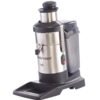
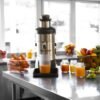


Description
Are you juicing for a household or for a service counter?
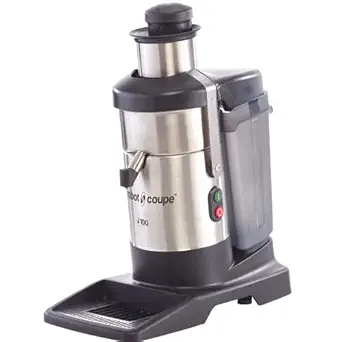
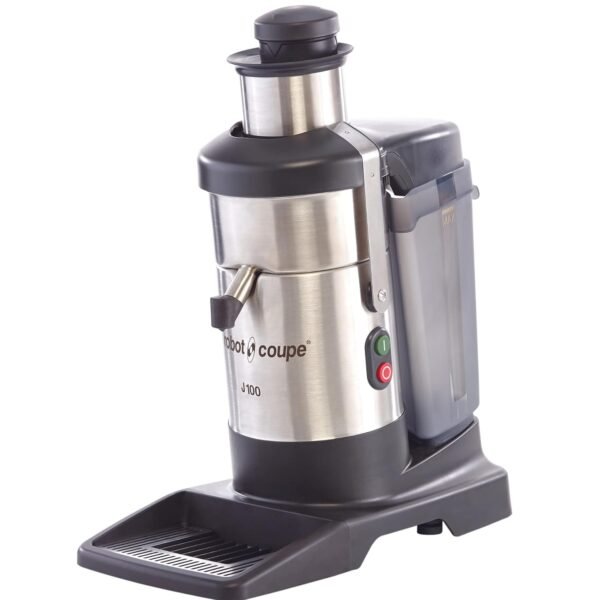
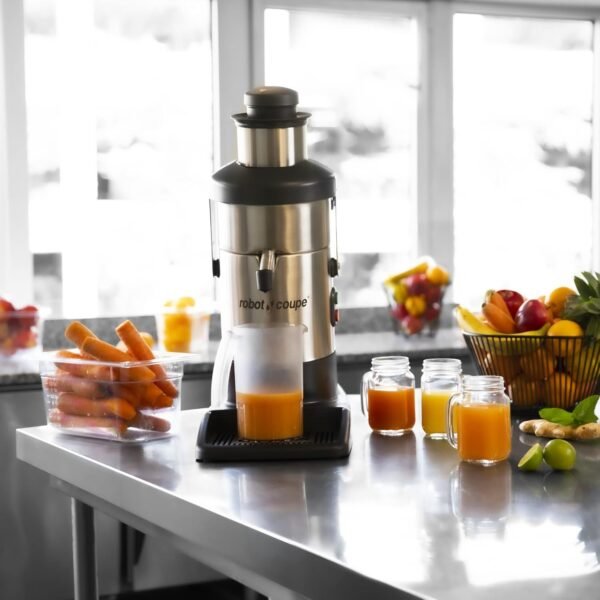
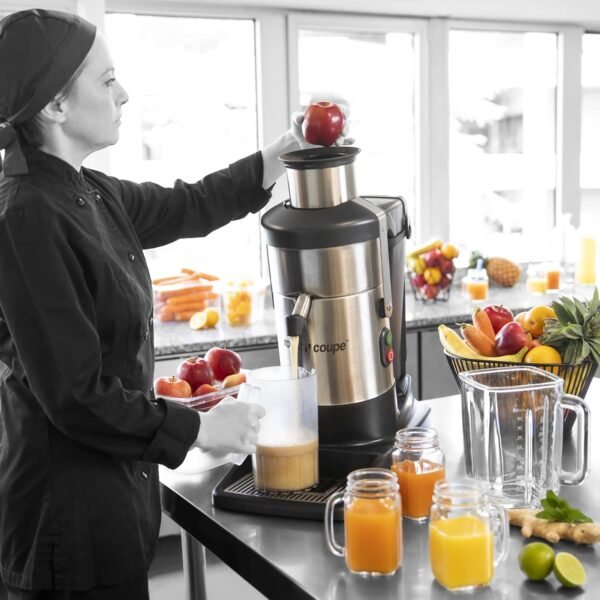
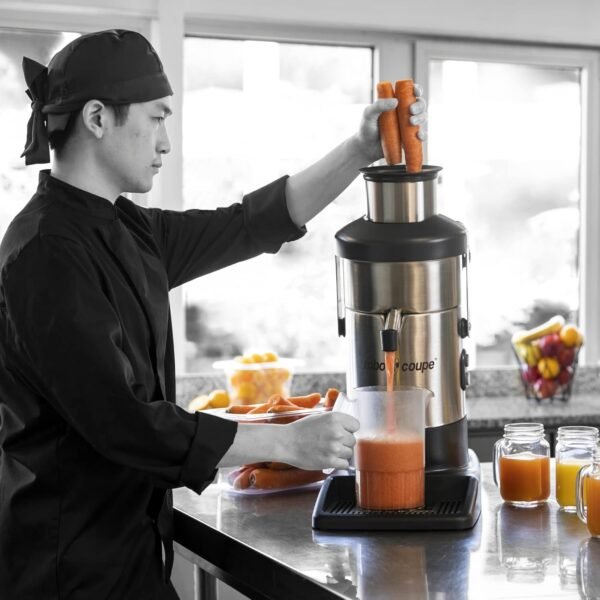
That question settles the Robot Coupe J100 faster than any specification does. This is a commercial juice extractor with a 1,000 watt motor, a magnetic safety switch and an auto feed system, described by Robot Coupe as designed for intensive use in juice bars, busy cafes, restaurants and supermarkets. Nothing about it is scaled for a domestic kitchen. It measures 21 x 9.25 x 23.5 inches and weighs 39.73 pounds according to the listing, which means it occupies a permanent station on a counter and is not something anyone lifts into a cupboard between uses.
The practical dividing line is throughput. A home juicer is asked for two or three glasses in a morning. A machine of this class is built for continuous running through a service period, which is why Robot Coupe pairs the motor with a ventilation system and calls out continuous pulp ejection rather than a fill and empty cycle. If you are making juice for a family at weekends, that engineering is wasted and the footprint is a daily nuisance. If you are running a counter, the same engineering is the entire point.
The second dividing line is what sits under and beside the machine. Robot Coupe positions the spout with what it describes as 10 inch clearance so juice can go straight into a blender container. That is unusual and useful in a service setting, but it also means the machine is tall in use and needs headroom under any overhead shelving. Measure the vertical clearance above the counter before committing.
The specifications that decide it: motor, feed system, and pulp handling
Robot Coupe rates the motor at 1,000 watts and separately at 1.25 horsepower. Those two figures do not describe the same thing, and they do not convert cleanly into one another, so the listing is giving power two different ways rather than one. Read them as an indication that this is a substantially stronger motor than a domestic centrifugal unit, not as a precise output number to compare against another brand. The magnetic safety switch is the more meaningful detail for a commercial buyer, because it is the mechanism that stops the machine when the lid is not locked.
The grating disc is specified at 2.5 mm and comes in a basket with two handles, which Robot Coupe says can be removed for cleaning without tools. Disc coarseness is the single variable that most changes yield and pulp texture on a centrifugal machine, and 2.5 mm is a general purpose setting rather than a fine one. Hard produce like carrot and beet is what centrifugal designs handle best. Leafy greens are where they give up yield to a masticating design.
The pulp container contradiction
The listing publishes the waste container capacity twice and does not agree with itself. The product title states a 7.5 quart waste container, while the feature bullet states a 7.6 quart translucent pulp container. The difference is trivial in practice, but it is worth naming because it shows the listing data has been assembled from more than one source. Either figure means roughly two gallons of pulp before an empty cycle, which for a service counter is a meaningful interval. The alternative is ejecting pulp straight into a bin below the worktop, which is the arrangement most commercial kitchens will use and which removes the container question entirely.
Living with it: cleaning, noise, and where it goes
Cleaning is the whole daily cost of owning a centrifugal juicer, and it is where commercial designs earn back their price. The two handled basket and tool free removal are aimed squarely at that. Even so, the sieve on any centrifugal machine collects fine pulp in the mesh and needs a brush rather than a rinse. Plan for that as a shift end task rather than something done between orders.
Noise is not published anywhere in this listing, which is a real gap for a machine that will sit in a customer facing space. Centrifugal juicers spin fast and are inherently louder than auger designs. If the counter is within earshot of seated customers, that is worth confirming with the distributor before buying.
Two other data points are worth flagging. The listing gives the country of origin as France and the model as J100, while the title adds the suffix J100 Ultra, so confirm which variant is being shipped. And the Customer Reviews field on this listing contains the text ranking 293rd in centrifugal juicers rather than a star rating or a review count, which means the usual social proof numbers are simply missing from the imported data. There is no rating figure here to weigh.
When a different juicer is the better answer
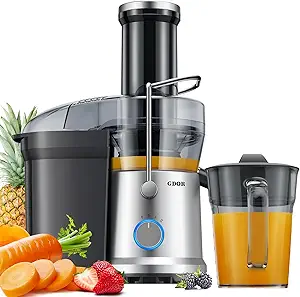
For a domestic kitchen, almost anything else on this site is a better fit. The GDOR JE2106 covers the same centrifugal principle at a size that stores in a cupboard. If the goal is leafy greens, wheatgrass or maximum yield rather than speed, a slow auger design is the right technology and the Hurom H400 and the Kuvings AUTO10W both approach the cleaning problem differently.
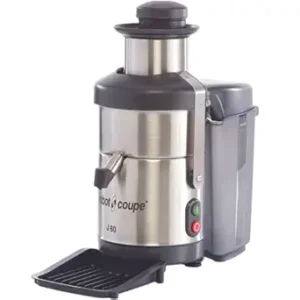
If the requirement really is commercial volume but the counter cannot take this footprint, the Robot Coupe J80 is the smaller machine in the same family and worth comparing directly. The rest of the fast spinning options sit in the centrifugal juicer category, and the slower, higher yield alternatives are grouped under masticating juicers.
Who should buy it and who should not
Buy it if you are equipping a juice bar, cafe, restaurant or supermarket counter, you have a dedicated 21 by 9.25 inch station with headroom above it, and you need to feed produce continuously rather than in batches. The auto feed, the magnetic safety switch, the ventilated motor and the under counter pulp ejection are commercial features that a domestic machine does not offer at any price.
Skip it if this is for a home kitchen. The footprint, the 39.73 pound weight and the cleaning routine are all sized for a service environment. Before ordering, confirm whether the shipped unit is the J100 or the J100 Ultra, confirm the pulp container capacity with the distributor given the listing states it two ways, and ask about operating noise, which is not published anywhere in the product data.