Description
Are you buying a machine or taking up a hobby?
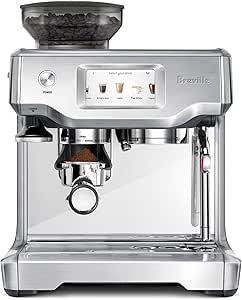
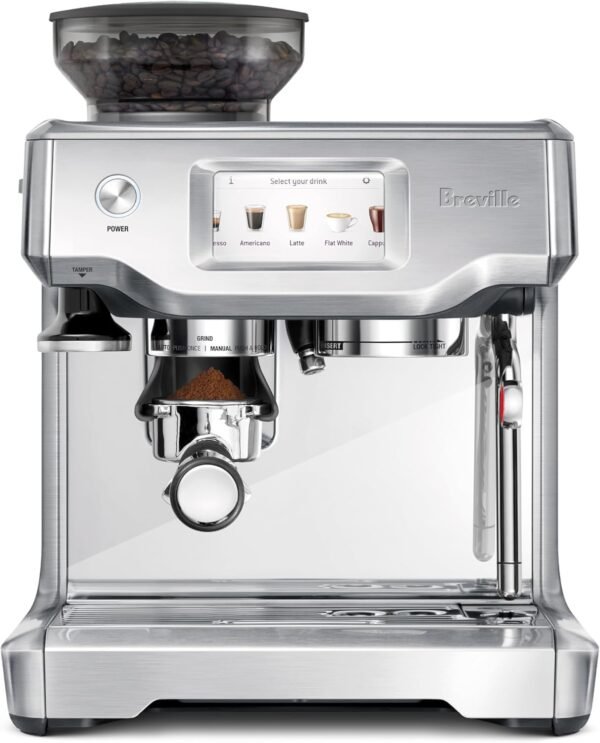
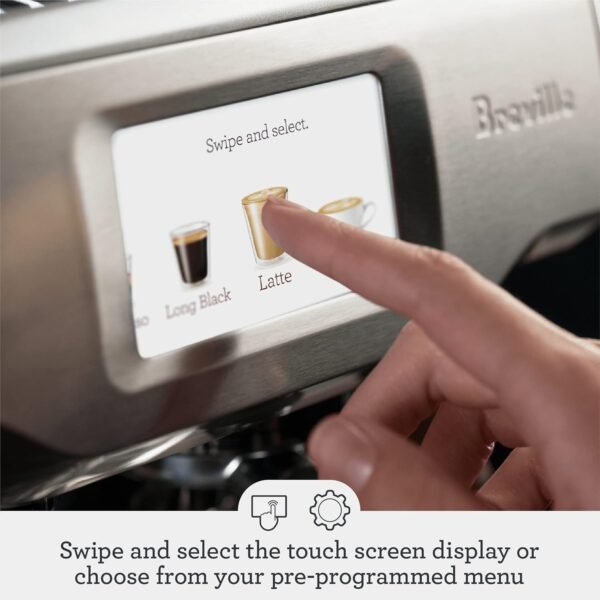
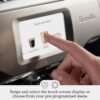
Espresso equipment divides on how much of the process you want to own. At one end, a pod machine makes the decisions and you press a button. At the other, a separate grinder and a manual machine leave every variable in your hands and take months to learn. The Breville Barista Touch sits deliberately in the middle: it grinds, doses, extracts and textures milk on one machine, from a touchscreen, but it still expects you to trim the dose with a razor tool and adjust the grind when the shot runs wrong.
That is the decision. If you want coffee without thinking about it, this machine will frustrate you, because it exposes settings a pod machine hides. If you want to learn espresso without buying three separate pieces of equipment, this is exactly the shape of machine that exists for you. Breville quotes five preprogrammed cafe drinks and the ability to create, name and save eight of your own, which is the compromise: it can behave like a button machine once you have dialed it in.
The other decision is physical, and it is the one most often missed. The machine measures 15.5 inches wide by 12.7 inches deep by 16 inches high, and weighs 21.8 pounds. Sixteen inches is taller than the gap under most kitchen wall cabinets, which sit around 18 inches above the counter, and you need clearance above that to fill a bean hopper from a bag and to lift out a 67 ounce water tank. Measure the vertical space, not just the counter, before ordering.
The two mechanisms that justify the price
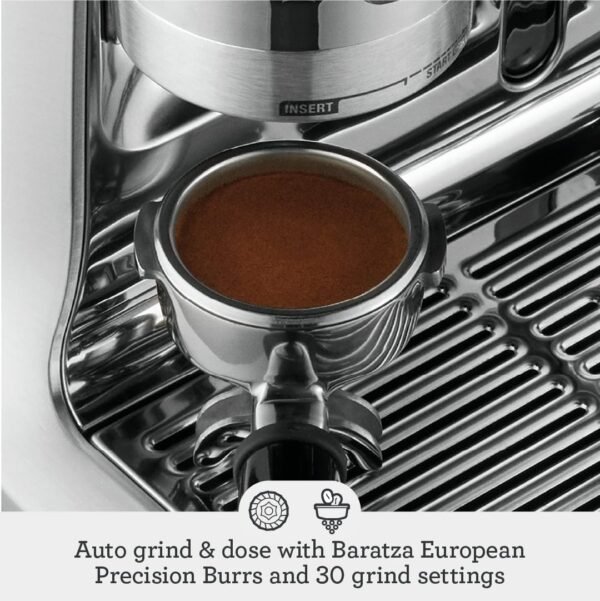
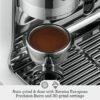
The first is the integrated conical burr grinder with dose control. Grinding to order rather than buying ground coffee is the single largest improvement available to a home espresso setup, because ground coffee loses its volatile aromatics within minutes. Breville quotes bean to espresso in under a minute and a half pound bean hopper. Grind adjustment is on the machine, which is the control you will use most often as beans age and humidity changes.
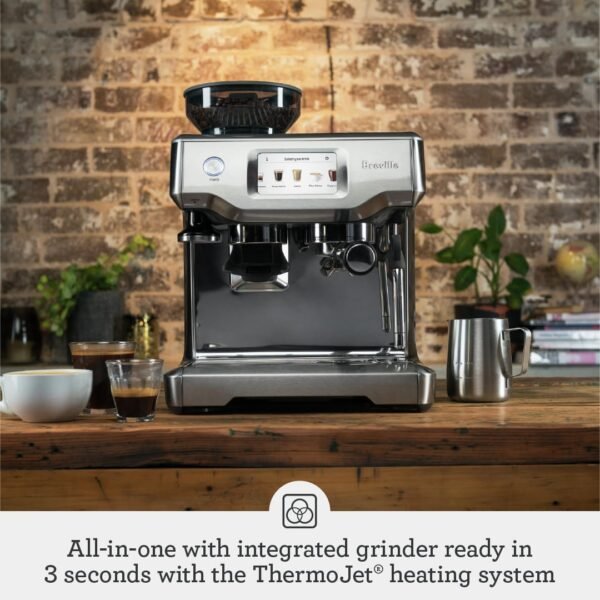
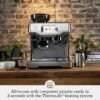
The second is temperature and pressure management. Breville lists a ThermoJet heating system reaching extraction temperature in three seconds, digital PID temperature control to hold water at a set point, and low pressure pre-infusion that ramps up gradually at the start of a shot. Those three together address the two most common causes of a bad home shot, which are water that is too hot or too cold, and a sudden pressure spike that channels water through one part of the puck.
What the automatic label does and does not mean
The specification table lists Operation Mode as Fully Automatic. That is misleading in a specific way. A fully automatic machine, in coffee terminology, grinds and brews and discards the puck without you touching it. This one requires you to lock in a portafilter, and it ships with a Razor precision dose trimming tool precisely because the dose needs levelling by hand. It is better understood as an automated semi automatic machine. The touchscreen automates the sequence, not the handling.
Similarly, the auto steam wand does texture milk to a set temperature without you holding the jug at an angle, which is a genuine automation, and it is the feature most likely to sell the machine to someone who has struggled with milk on a manual wand.
Living with it: the routine, the consumables and the cleaning
The box contents tell you what daily life looks like. Breville lists a 54 mm stainless steel portafilter, single and double wall filter baskets, a 480 ml stainless steel jug, a ClaroSwiss water filter, the Razor dose trimming tool, a cleaning kit and a water hardness test strip. The test strip is not a gimmick. Water hardness determines how fast scale builds in the boiler, and the machine uses it to set a descaling interval.
Three consumables run continuously: coffee beans, water filters for the tank, and cleaning tablets or backflush detergent for the group head. The dual wall baskets are for pre ground coffee and the single wall baskets for freshly ground, which is a distinction worth knowing on day one because using the wrong one produces a shot that looks right and tastes wrong.
Beans are the consumable that decides the result more than any setting on the machine. Espresso is unforgiving of stale coffee in a way that drip brewing is not, and a machine at this level is wasted on supermarket beans that were roasted months ago. Budget for fresher coffee at the same time as the machine, because the grinder can only work with what you put in the hopper.
Cleaning is a daily and a monthly job. Daily is wiping the steam wand immediately after every use, because milk sets hard inside the tip, and knocking out the puck. Monthly is backflushing and descaling on the schedule the machine prompts for. Skipping either is what ends these machines early.
Breville quotes a two year limited warranty and 1680 watts of power on 110 to 120 volts, which is a serious draw and should not share a circuit with another heating appliance. The listing records 3,962 customer ratings averaging 4.3 stars, a first availability date of December 2017, country of origin China, and a rank of 22nd in coffee machines.
What would send you to a different machine
If you already own a grinder you like, paying again for an integrated one makes no sense; the Breville Bambino Plus gives you the same ThermoJet heating and auto milk texturing in a much narrower body without the grinder. If counter width is the binding constraint, the DeLonghi Dedica Arte is built around a slim footprint.
If most of the coffee in your household is brewed rather than espresso, a machine like this spends its life making one drink for one person. The Breville Precision Brewer is the drip equivalent from the same manufacturer, and the broader coffee machines category covers both approaches. At the other extreme, if you want the machine to handle every variable including the pour, the xBloom Studio automates a different part of the process entirely. The coffee makers category holds the compact espresso alternatives.
Who the Barista Touch is for
It is for someone who drinks milk based espresso drinks daily, wants to grind fresh, has 16 inches of vertical clearance and 1680 watts of circuit headroom, and is willing to learn grind adjustment and dose trimming rather than expecting a button to solve everything. On those terms it removes most of the equipment sprawl of a home espresso setup.
It is not for someone who wants a pod machine experience, not for a narrow counter, and not for a household where one person drinks two coffees a week. And it is not a fully automatic machine in the sense the specification table implies, whatever that field says.