Description
How many people, and how many different drinks?
A pod machine makes sense in exactly two situations, and neither of them is a household that drinks a lot of coffee. The first is a home where two people want different drinks at different times, so a twelve cup pot would mostly go down the sink. The second is a low volume setting such as a home office or a guest area where coffee is occasional and nobody wants to manage grounds.
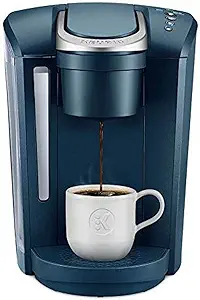
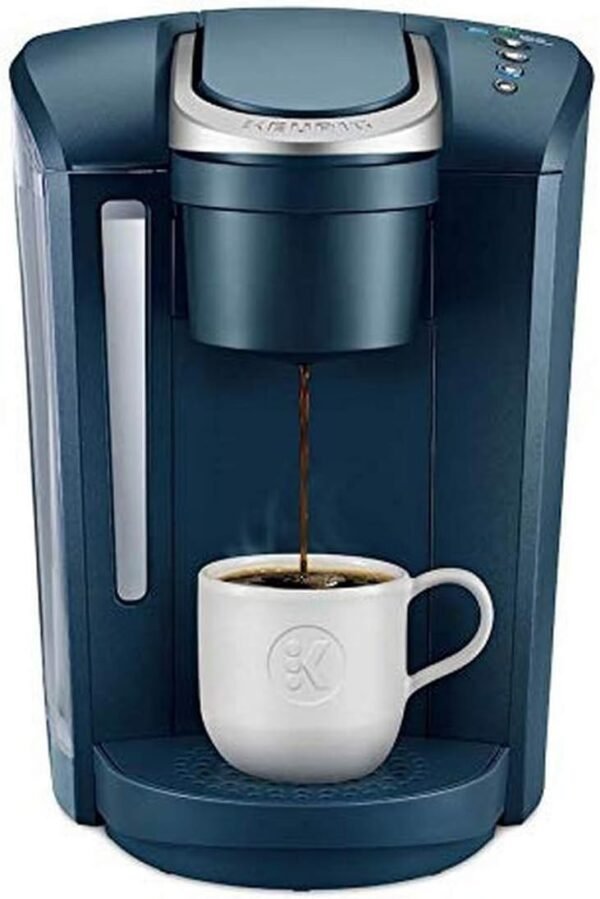
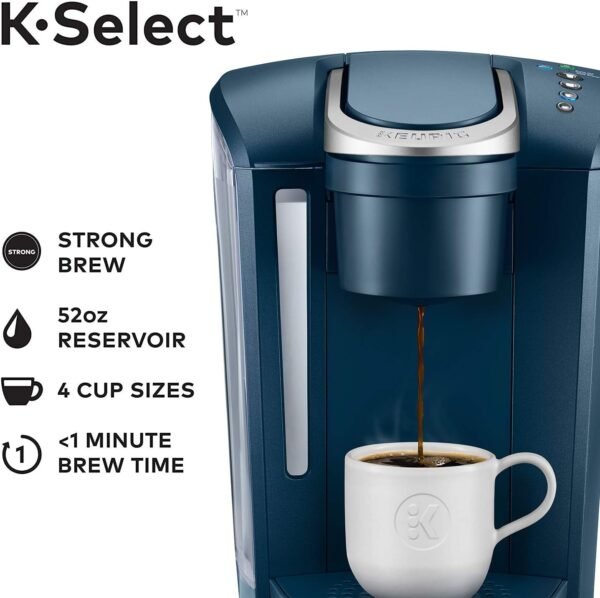
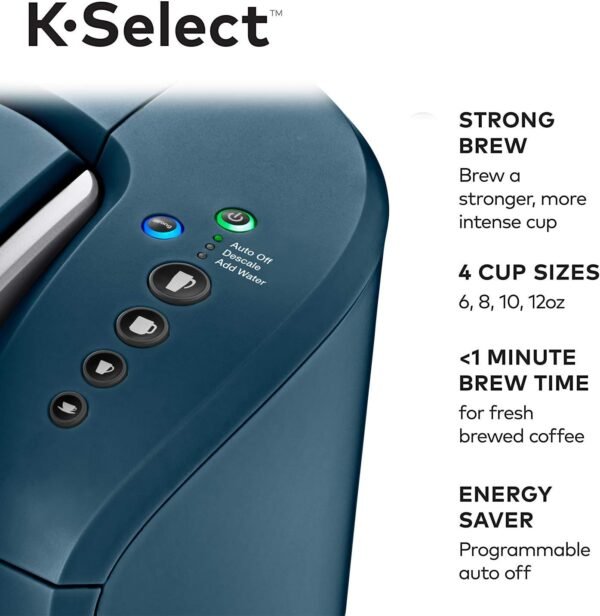
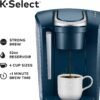
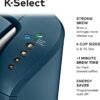
The Keurig K-Select is built for the first case. It brews four sizes, 6, 8, 10 or 12 ounces, in under a minute from a K-Cup pod, and adds a Strong Brew button that slows the brew to increase intensity rather than changing the amount of coffee. That combination covers a household where one person wants a small strong cup and another wants a large mild one, which is the problem a drip machine cannot solve without making two pots.
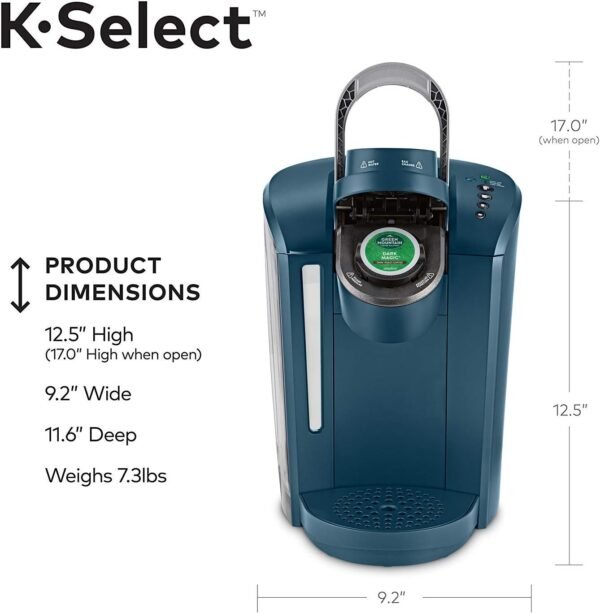
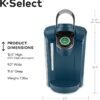
The number in the title needs reading carefully. It says five cups, and that is not the machine capacity. It is how many cups you get from the 52 ounce reservoir before refilling. The reservoir is removable, which means filling it at the tap rather than pouring from a jug, and 52 ounces is generous for the class. The machine itself measures 11.6 by 9.2 by 12.5 inches and weighs 8.43 pounds.
The two features that separate it from cheaper Keurigs
Quiet Brew technology is the first, and it is a real difference rather than a name. Pod machines are noisy because a pump forces water through a small aperture, and the noise is concentrated into the twenty seconds the machine is working. On a machine used first thing in the morning in an open plan apartment, that matters more than most specifications do.
Strong Brew is the second. It is not a stronger pod or more coffee; it is a slower water flow, giving longer contact time with the same grounds. That produces a more extracted, more intense cup from the same pod, and it is the closest a capsule machine gets to letting you change the result.
The removable drip tray is a small feature worth noting because it decides what you can put under the spout. The listing states it accommodates travel mugs up to 7.4 inches tall, which covers most commuter cups and is the specification to check against your own if that is the plan.
Reusable pods, and how the listing describes the filter
The attribute table lists Filter Type as Reusable, and the Included Components field lists one water filter handle and one filter. Those are two different filters and it is worth keeping them apart. The included item is a water filter that sits in the reservoir to reduce scale and improve taste. It is not a reusable coffee pod.
The description is clear about the coffee side: you can brew your own ground coffee with the My K-Cup universal reusable filter, sold separately. If avoiding single use pods is part of why you are buying, budget for that accessory, because it is not in the box. What is in the box, per the listing, is a six count K-Cup variety pack alongside the brewer and the water filter parts.
Two other fields sit oddly. Coffee Maker Type reads Drip Coffee Machine, which is not what a single serve pod brewer is, and Operation Mode reads Fully Automatic, which is fair enough for the brew cycle itself.
Living with it
Descaling is the maintenance that decides how long a pod machine lasts, because the whole mechanism is a small boiler and a narrow water path, and scale closes that path from the inside. In a hard water area this is a regular job rather than an annual one, which is precisely why the water filter is included.
The needle that punctures the pod is the other maintenance point. Coffee grounds accumulate around it and a partially blocked needle produces short, weak cups, which is the most common complaint about pod machines and is almost always a cleaning issue rather than a fault.
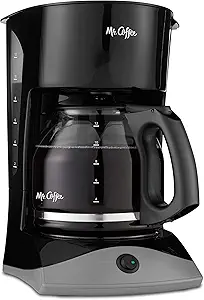
Running cost is the honest consideration. Cost per cup on capsules is several times that of ground coffee, and the arithmetic is simple enough to do before buying: multiply your household daily consumption by the pod price across a year. For one or two cups a day the convenience generally wins. For a household getting through six, a drip machine such as the Mr. Coffee SK13-RB costs a fraction as much to run.
Pod storage is worth planning for at the same time. A machine that brews four sizes invites keeping several varieties on hand, and a stack of boxes takes more counter or cupboard room than the brewer does. Households that use these machines happily generally end up with a drawer insert or a carousel for them.
This listing records 104 customer ratings averaging 4.4 stars, a first availability date of June 2019, and a rank of 698th in coffee machines. That rating count is low for a Keurig, which usually suggests a listing for one specific color variant rather than the main product page. Note also that the site files this under coffee machines while it belongs alongside the pod brewers in the single serve brewers category.
What would send you elsewhere
If you want more control over the cup, the Keurig K-Supreme adds MultiStream extraction and more brew settings within the same pod system. If the setting is a workplace rather than a kitchen, a commercial single serve unit such as the Keurig K1500 is designed for the duty cycle a domestic machine is not.
If you want espresso style drinks rather than filter coffee from a pod, a different capsule system is the answer; the Nespresso Vertuo covers short strong cups and long ones from the same machine. The coffee machines category holds the drip and espresso alternatives if pods turn out not to be the answer at all.
Who the K-Select suits
It suits a two person household with different coffee habits, or a home office, where the value of never making a pot nobody finishes outweighs the cost per cup. Four sizes, a genuine strength control, a quiet cycle and a 52 ounce removable reservoir are the sensible feature set for that job.
It does not suit a heavy coffee household on cost grounds, and it does not include a reusable filter for ground coffee, which the description confirms is sold separately. Read the five cups in the title as refills between reservoir fills rather than as a capacity.