
Description
How many times a day will this machine start?
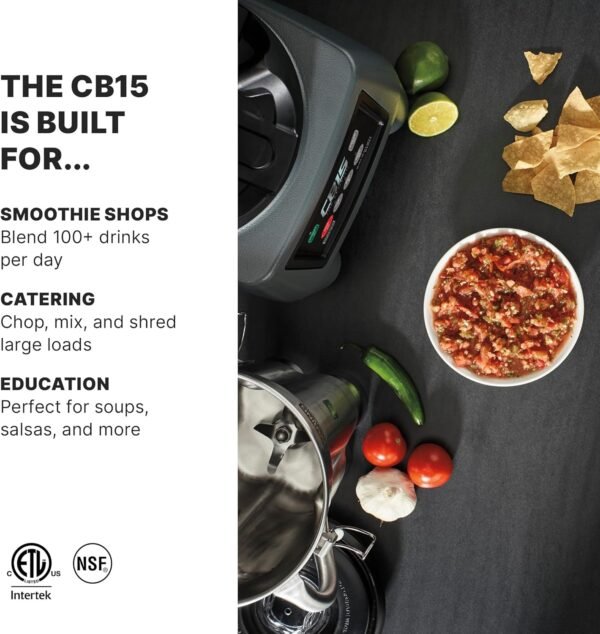
Domestic blenders and commercial blenders are not the same product at different prices. They are engineered around different questions. A home machine is designed to be excellent for a minute or two a day. A commercial machine is designed to survive being switched on and off a hundred times between opening and closing, every day, for years. Waring states the case for the CB15 in exactly those terms, describing it as built for making more than a hundred drinks per day.
That number is the buying test. If your machine will run twice a day, you are paying for a duty cycle you will never approach, and a domestic high performance blender will give you more features and a smaller footprint for the same counter. If it will run through a lunch service, a smoothie bar shift or a hospital kitchen’s daily prep, then duty cycle is the only specification that matters and the feature list is irrelevant.
The size reflects that. Waring gives 15 inches deep by 15 inches wide by 22.25 inches high, at 32.1 pounds. Twenty two and a quarter inches of height rules out almost every under cabinet position in a domestic kitchen, and 32 pounds means it does not get moved. It needs a permanent station with clearance above for the jar to come off.
The container and the motor rating are what separate this from a home blender
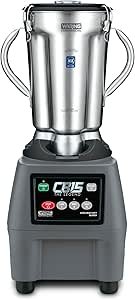
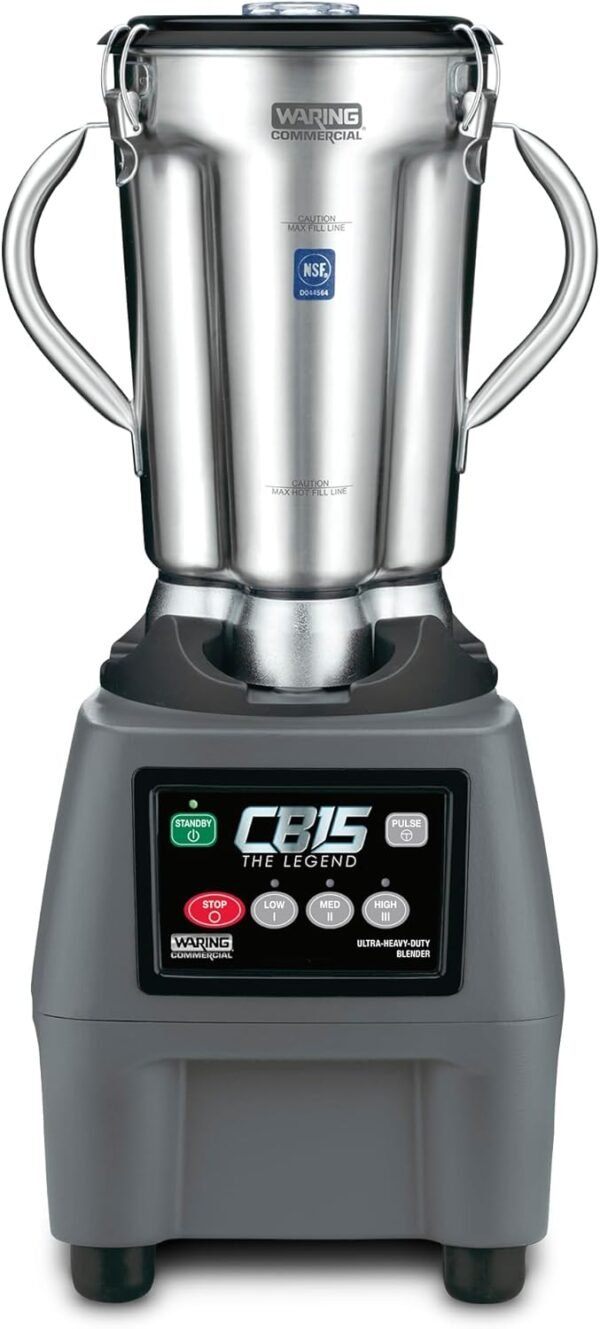
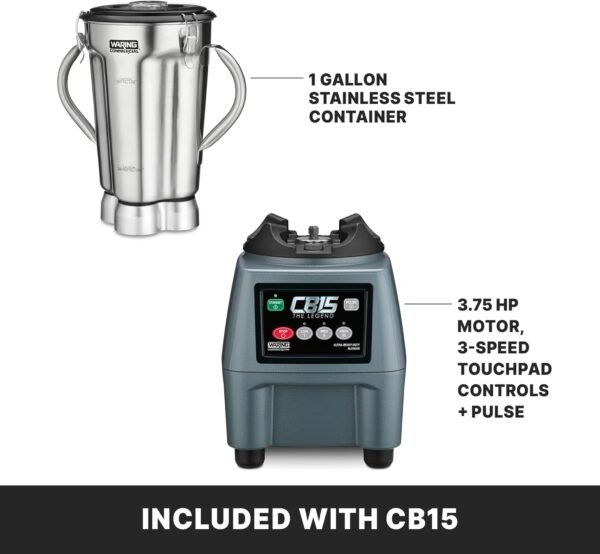
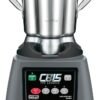
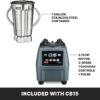
The one gallon stainless steel container is the most visible difference and the most practical one. Glass jars break and plastic jars scratch and cloud, and in a commercial kitchen both are liabilities. Stainless does neither. Waring specifies two handles for carrying and pouring, which a one gallon jar needs when full, and lid clamps to hold the lid down under load. A gallon of liquid weighs about eight pounds before you add the jar, so those handles are structural rather than decorative.
The trade is that you cannot see inside. With a stainless jar you judge the blend by sound and by time rather than by eye, which is fine for a repeated recipe and awkward for experimentation. That is a fair summary of the whole machine: it is built to do the same thing repeatedly and well, not to be versatile.
Why the 3.75 horsepower figure needs reading carefully
Waring rates the motor at 3.75 horsepower, and that number deserves scrutiny rather than acceptance. The title states the machine runs on 120 volts with a NEMA 5-15 plug, which is the ordinary three prong household plug on a 15 amp circuit. A 15 amp circuit at 120 volts can deliver about 1,800 watts. Three and three quarter horsepower is roughly 2,800 watts of mechanical output, and no motor produces more mechanical power than the electrical power going in.
The explanation is that horsepower figures on blenders are conventionally peak or stall ratings measured at the moment the motor is loaded to a standstill, not continuous shaft power. That is an industry wide convention rather than something Waring invented, and it is why comparing horsepower numbers between blender brands tells you very little. The listing publishes no wattage figure at all, which would have been the more useful number.
What is genuinely informative is the plug. A NEMA 5-15 means this goes into a standard outlet, which is not true of every commercial blender, and it means the real continuous power is within a normal circuit’s capability. Do not share that circuit with another heating appliance.
Living with it: controls, certification and the fields that overstate the machine
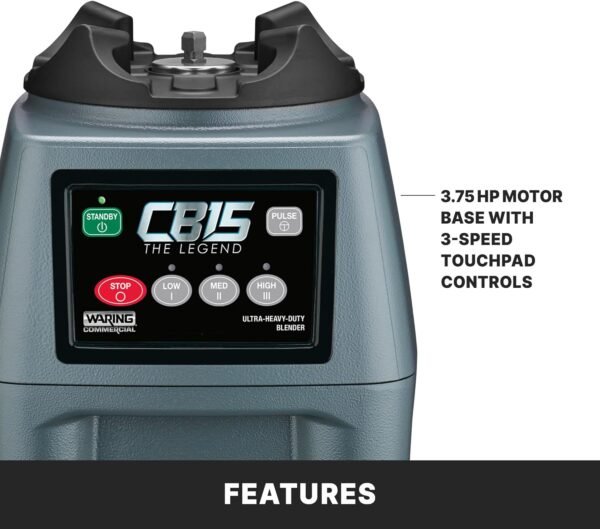
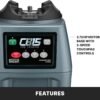
The controls are deliberately minimal: three speeds and a MAX PULSE, operated through an electronic membrane keypad. A membrane keypad is chosen for commercial use because it is a sealed flat surface that wipes clean and has no crevices for product to collect in, which is exactly what a health inspector looks at. Three speeds is not a limitation in a commercial setting, where operators need the same result every time rather than fine control.
The certifications are the part a professional buyer should read first. Waring lists cETLus and NSF. NSF certification is the one that matters for foodservice, because many health authorities require NSF listed equipment in commercial kitchens, and a great many otherwise excellent blenders do not carry it. If you are buying for a licensed operation, that single line is likely the deciding factor.
Two fields on the listing describe features the machine does not appear to have. The special feature list includes “Programmable”, while the manufacturer’s own bullets describe three fixed speeds and a pulse with no programs of any kind. The same list includes “Auto Shut Off” and “Dishwasher Safe” without saying what shuts off or which part goes in a dishwasher. Treat the manufacturer’s bullets as the accurate description and the special feature list as a collection of tick boxes.
The warranty is stated as three years limited, which is short by domestic standards and normal by commercial ones, because commercial warranties assume the machine will be worked hard. The blade is stated as removable and stainless steel, which matters because on a machine used this heavily the blade assembly is a wear part and a serviceable one. The machine is made in the USA with US and foreign parts, and it has been listed since June 2004, which is a long production run.
When a different blender is the right call
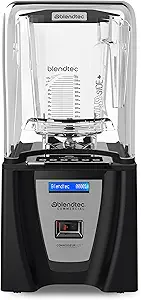
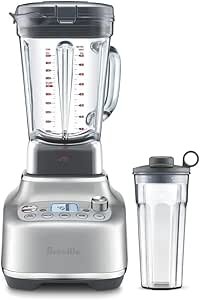
If the setting is a home kitchen, even a demanding one, a domestic high performance machine gives you programs, a smaller footprint and a jar you can see into. The Breville Super Q review covers that class directly, and the Blendtec Connoisseur 825 review covers a machine that sits between home and light commercial use with preprogrammed cycles.
If the volume is one drink at a time rather than one gallon, the Ninja Fit personal blender review covers the opposite end entirely. And if the actual requirement is chopping, dicing and slicing rather than liquidizing, a blender is the wrong machine regardless of its motor, which is what the Robot Coupe R2 Dice review and the Robot Coupe J100 juicer review cover on the commercial side.
The rest of the range sits in the countertop blenders category and the processing machines in the food processors category.
Who should buy it and who should not
It suits a commercial kitchen, a bar, a juice counter or an institutional operation where the blender runs continuously and where NSF listing is a requirement rather than a bonus. The stainless gallon jar, the sealed keypad, the removable blade and the plug that fits a standard outlet are all specified for exactly that setting.
It does not suit a home kitchen, where 22 inches of height, 32 pounds and three speeds are all costs without benefits. It also does not suit anyone comparing on the horsepower figure, since 3.75 horsepower is a peak rating that cannot be sustained through a 15 amp plug and the listing gives no wattage. The listing shows 76 ratings averaging 4.2 stars, ranked 262nd within countertop blenders.