Description
Do you want a blender or a machine that lives on the counter?
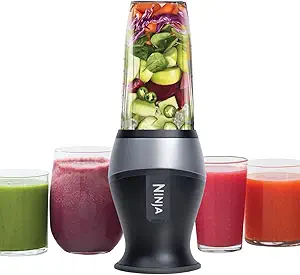
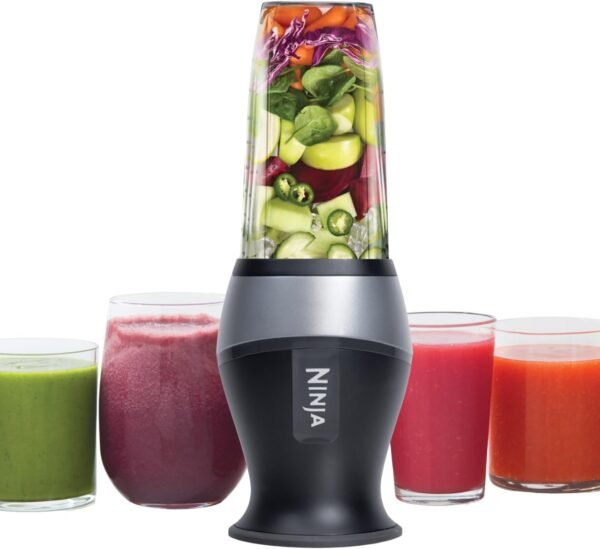
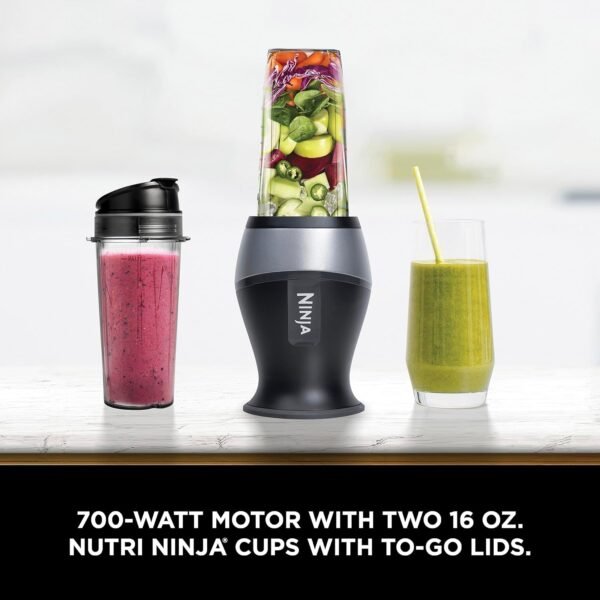
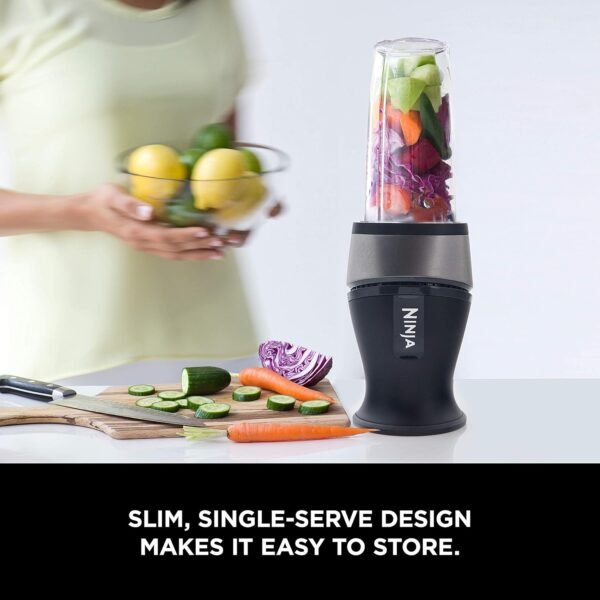
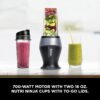
Personal blenders exist for one reason: the cup you blend in is the cup you drink from. That removes the two things that stop people using a full sized blender on a weekday morning, which are washing a large jug and pouring the contents into something else. The Ninja Fit is built entirely around that idea, with two 16 ounce cups and two spout lids, so the routine is load, blend, screw on a lid and leave the house.
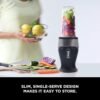
The size follows from the same logic. The base is 4.3 inches square and 13 inches tall, weighing 3.06 pounds. That footprint fits in the corner of any counter or in a cupboard, and 16 ounces is one generous smoothie or two small ones. If you are making enough for a family, or blending soup, or crushing ice for a jug of drinks, this is the wrong format and a countertop blender is the right one.
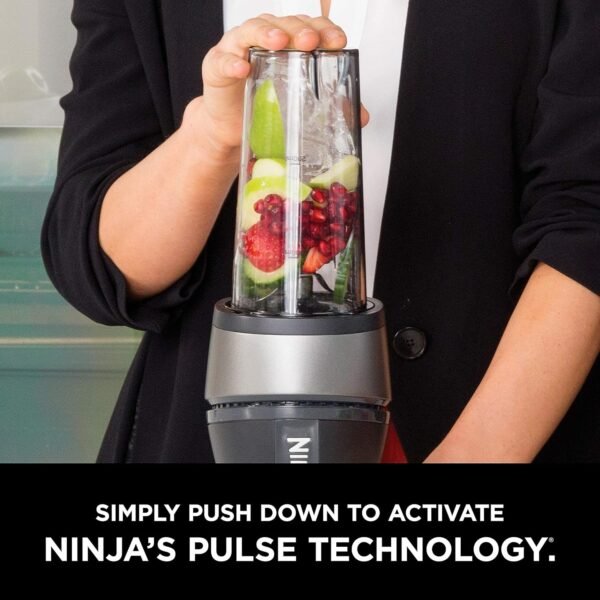
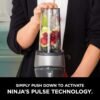
The second decision is whether one speed is enough. There is no dial and no program. You push the cup down to blend and release it to stop, which Ninja calls Pulse Technology, and the motor base is rated at 700 watts. For smoothies, shakes and frozen drinks, pulsing by hand is genuinely the correct technique, because it lets you break up a jam rather than letting the motor labor against it. For anything requiring a slow ramp or a sustained low speed, there is no way to ask for one.
What it is not, despite what the listing says
The description and several feature bullets describe this machine as replacing juicer machines, and call it a portable juicer that performs nutrient extraction, unlocking hidden vitamins from the parts of fruit and vegetables usually discarded. That framing needs correcting, because it will lead someone to buy the wrong appliance.
This is a blender. It breaks food down and keeps all of it in the cup, including the fiber. A juicer separates the liquid from the pulp and discards the pulp. Those produce different drinks with different textures and different nutritional profiles, and neither is a substitute for the other. What the bullets are actually describing is the fact that a blended drink retains material that a juicer would throw away, which is true and is an argument for blending, but it is not juicing. If juice is what you want, a slow juicer such as the Ninja JC151 is the machine that makes it.
A blade material field that cannot be right
The attribute table lists Blade Material as Plastic. This is a machine sold on its ability to crush ice and pulverize frozen fruit, and no plastic blade would survive that. The blade assembly on Nutri Ninja cups is a stacked metal design. Treat the field as an import error rather than as a specification, and if blade material is genuinely a deciding factor, confirm it with the manufacturer.
The Included Components field is also short, listing a recipe guide, a pour spout and a cup in the singular, while the description states a 700 watt motor base, a blade assembly, two 16 ounce Nutri Ninja cups, two spout lids and a 50 recipe guide. Take the description as the fuller account.
Living with it
The routine is about as short as kitchen appliances get. Fill the cup, invert it onto the blade assembly, screw it on, push down on the base, release, unscrew, swap the blade for a spout lid, drink. Two cups means one can be in the dishwasher while the other is in use, which is a small thing that matters on a weekday.
Ninja states that all parts are BPA free and dishwasher safe, which on this design means the cups, lids and blade assembly, since the motor base never touches water. Rinse the blade assembly straight after use regardless, because dried smoothie in a stacked blade is the least pleasant cleaning job this machine offers.
Two limits are worth knowing. Hot liquid does not belong in a sealed personal blender cup, because steam pressure builds with nowhere to go. And a full cup of hard frozen fruit with no liquid will stall the blade; adding liquid first and frozen items second is the standard order and it solves most of the complaints about machines in this class.
Cup life is the other practical consideration. Plastic cups scratch, cloud and eventually pick up odors from repeated blending and dishwasher cycles, and on a machine used daily that is the part you will want to replace before anything else fails. Replacement Nutri Ninja cups are widely available, which is one advantage of buying into a format this common rather than an obscure one.
The evidence base here is exceptional by any standard. The listing records 54,240 customer ratings averaging 4.7 stars, a first availability date of May 2016, a rank of 2nd in personal size blenders and 52nd in kitchen and dining overall, and states the product is not discontinued. A 4.7 average across more than fifty thousand ratings on a nine year old listing is about as strong a signal as consumer feedback provides.
What would send you to a different machine
Storage is one place the format helps twice over. The base is small enough to leave out permanently, and the cups stack, so the whole setup occupies less shelf than a single blender jug would.
If you are blending for more than one person, or making soup, sauces or nut butters, a full sized jug is the answer and no personal blender substitutes for it. The Breville Super Q is the high end domestic version and the Blendtec Connoisseur 825 is the commercial grade option with a sound enclosure. The countertop blenders category covers that tier.
If what you actually need is chopping rather than blending, a blender will turn vegetables to slurry where a chopper leaves them in pieces; the personal size blenders category and a small food processor sit either side of that line.
Who the Ninja Fit is for
It is for one person making one drink, most days, who wants it in a cup they can take with them and would rather not wash a jug. Two cups, two lids, a single button action and a 3 pound base that fits anywhere make it about as low friction as a powered appliance gets, and the rating history suggests it holds up.
It is not a juicer, whatever the listing bullets call it, it is not a family sized blender, and it has no speed control. And disregard the blade material field, which says plastic on a machine sold for crushing ice.