
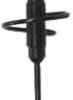
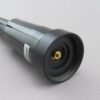
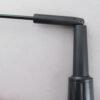
Description
This is amateur radio equipment, so start with the license
The Comet CA-2X4SRNMO is a dual band mobile antenna for 144 and 440 MHz, the two meter and 70 centimeter amateur radio bands. Comet describes it as offering transmit and receive capability on both bands, and lists compatibility with Yaesu, Icom and Kenwood radios. Before any discussion of gain or mounting, the decision that comes first is regulatory: transmitting on the amateur bands in the United States requires an FCC amateur radio license, and the equipment is sold on the assumption that the buyer holds one.
There is a second regulatory point in this listing that deserves stating plainly rather than repeating uncritically. The manufacturer description mentions the FRS frequency range alongside ham and land mobile use. FRS radios are license free, but FCC rules for the FRS service restrict the use of external and detachable antennas, so the mention of FRS in a mobile antenna description should not be read as an endorsement of that combination. Check the current FCC rules for the service you intend to operate on before installing anything, because the responsibility sits with the operator rather than with the seller.
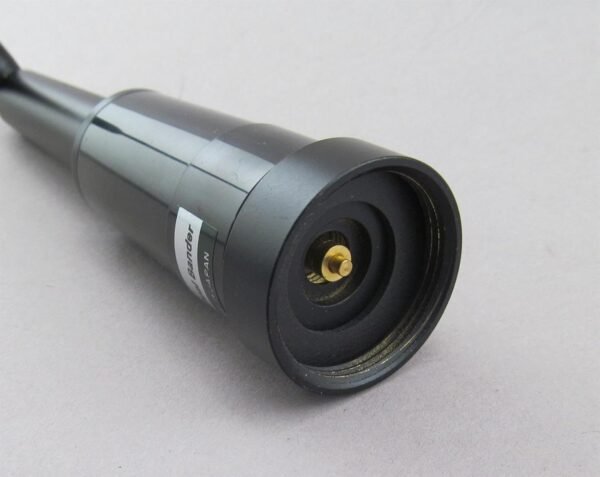
With that established, the practical decision is the vehicle. This is an NMO mount antenna, which is the professional standard used by public safety and commercial fleets. An NMO mount requires a hole drilled through the vehicle body, usually in the roof, with the coaxial cable run down inside the pillar trim. That produces the best possible ground plane and the cleanest installation, and it is permanent. No mount, no cable and no drilling hardware appear in this listing, so all of that is a separate purchase and, for many people, a separate decision about whether to drill a hole in their car.
What the listing publishes, and the specifications a buyer needs
For an amateur antenna, the numbers that matter are gain on each band, the physical length, the maximum power handling in watts, and the standing wave ratio across the band. None of those appear anywhere on this record. The feature bullets are a list of search terms rather than specifications: VHF and UHF mobile ham antenna, NMO mount dual band, compatible with Yaesu, Icom and Kenwood, 144 and 440 MHz, two meter and 70 centimeter, vehicle NMO antenna, high gain NMO mount antenna.
High gain is stated without a figure, which is the specification most worth having, because gain on a mobile whip is achieved by flattening the radiation pattern toward the horizon and the amount of that flattening determines how the antenna behaves on hilly terrain. Comet publishes these figures in its own documentation. Get them from there rather than from this page.
Power handling is the other one to confirm before connecting a mobile transceiver, because exceeding it damages the antenna rather than the radio and the failure is not always obvious.
Two attribute fields that are not real
Item Weight is recorded as 0.01 ounces. That is roughly the weight of a grain of rice and cannot describe a vehicle mounted whip antenna. Product Dimensions are given as 40 by 2 by 40 inches, which for a single vertical element is not a meaningful set of numbers; a whip has a length, and the 40 inch figure most likely relates to it while the rest is packaging or placeholder data.
What the record does state usefully is the model number CA-2X4SRNMO, a country of origin of Japan, a one year warranty, that the product is not discontinued, 65 customer ratings averaging 4.6 stars, a first availability date of December 2013, and a rank of 177th in radio antennas. A 4.6 average across 65 ratings on a decade old listing from a respected antenna manufacturer is a reasonable signal, even though the sample is small.
Installing and living with a mobile antenna
Three things decide whether a mobile antenna performs, and only one of them is the antenna.
The first is the ground plane. A quarter wave and most dual band mobile designs rely on the metal of the vehicle body acting as the other half of the antenna, which is why a roof mount in the centre of a metal roof outperforms a trunk lip or a mirror mount. On a vehicle with a plastic or aluminum roof panel, or a glass sunroof, the calculation changes entirely and needs checking before drilling.
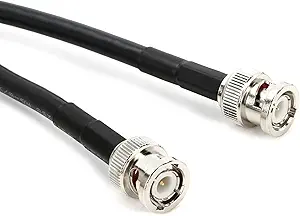
The second is the coaxial run and the connectors. Losses at UHF are meaningfully higher than at VHF, so cable quality matters more on 440 MHz than on 144 MHz, and a poor connector is a more common cause of bad performance than a poor antenna.
The third is tuning. An antenna is only correctly matched when its standing wave ratio is checked with a meter on the bands you actually use, and adjusted if the design allows it. Skipping that step is how transceiver finals get damaged.
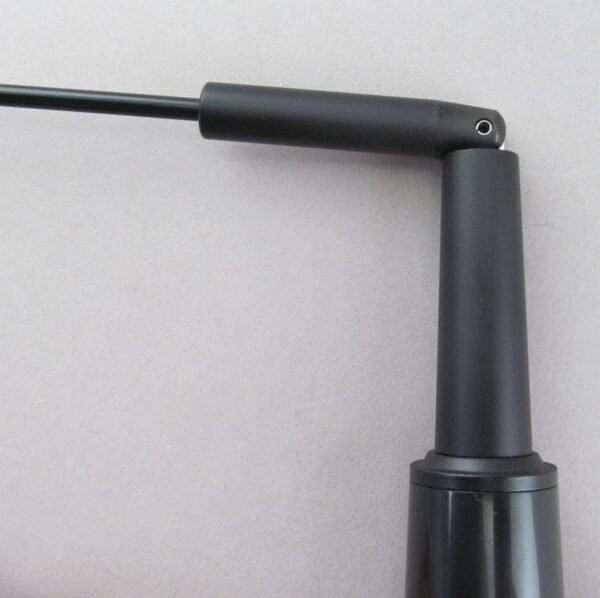
Physically, a roof mounted whip changes what you can drive under. Car washes, low garages and parking structures are the usual casualties, and this is the practical reason many operators fit a fold over mount or remove the whip when parking indoors.
Where the alternatives sit
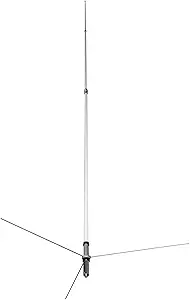
If you do not want to drill, a magnetic mount is the usual compromise; it gives up some ground plane efficiency and can mark paintwork, but it is removable. Among the base and mobile options on this site, the Diamond X30A is the fixed base station equivalent for a home installation rather than a vehicle, and the Tram 1481 fiberglass antenna covers the same idea in a different construction. The Tram 1180 is the budget dual band option.
If you operate HF as well as VHF and UHF from a vehicle, a screwdriver style auto tuning antenna covers far more spectrum from one mount; the Yaesu ATAS-120A is that category. The radio antennas category holds the amateur hardware, while the TV antennas category is a different application entirely and worth separating in your mind, since the two are unrelated despite sharing the word antenna.
Who this suits
It suits a licensed amateur operator fitting a permanent dual band installation to a vehicle with a metal roof, who is comfortable drilling an NMO hole and running coaxial internally. Comet is a well regarded Japanese antenna maker and the NMO standard is the right choice for a permanent fit.
It does not suit anyone unlicensed, anyone who cannot or will not drill, or anyone expecting the mount, cable and connectors in the box, since the listing describes none of them. Get the gain, length, power handling and standing wave ratio figures from Comet documentation before ordering, because none of them appear on this page, and disregard the weight and dimension fields entirely.