Description
How much yard, and how much patience, does a bullet smoker need?
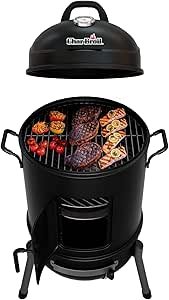
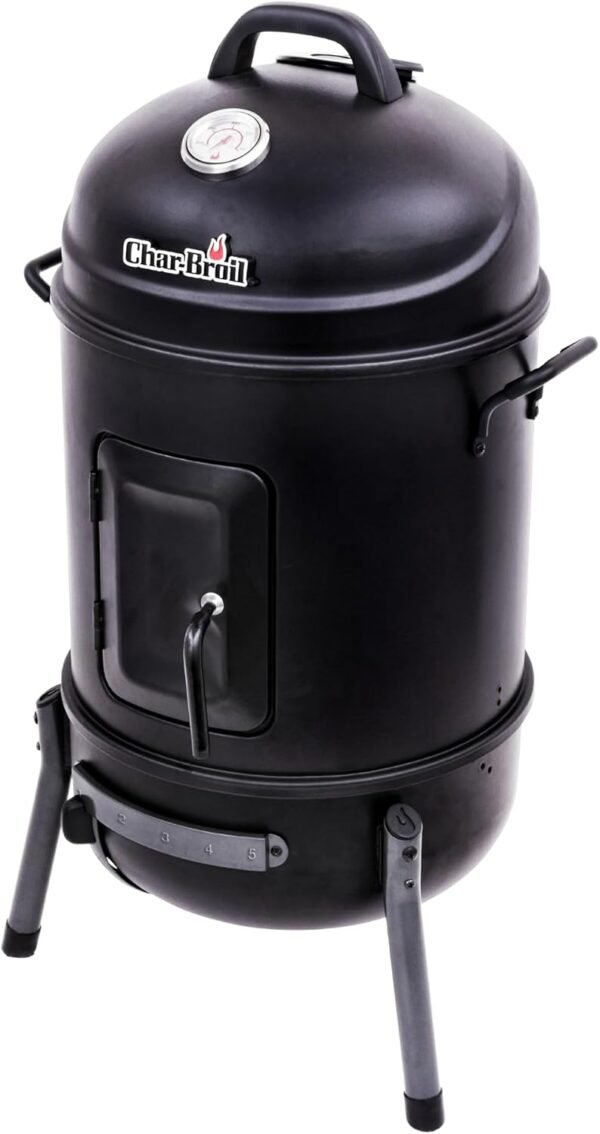
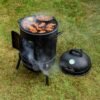
The Char-Broil 16 inch Bullet Smoker asks two things of a buyer before any specification comes into it. It asks for a patch of outdoor ground that can hold a 21.75 inch wide, 39.1 inch tall cylinder permanently or near permanently, and it asks for someone willing to manage a charcoal fire for several hours. Neither is a hardship, but both are decisions. A vertical bullet design has a small ground footprint, which is exactly why it suits a balcony, a small patio or a shared yard where a wide barrel smoker would be in the way.
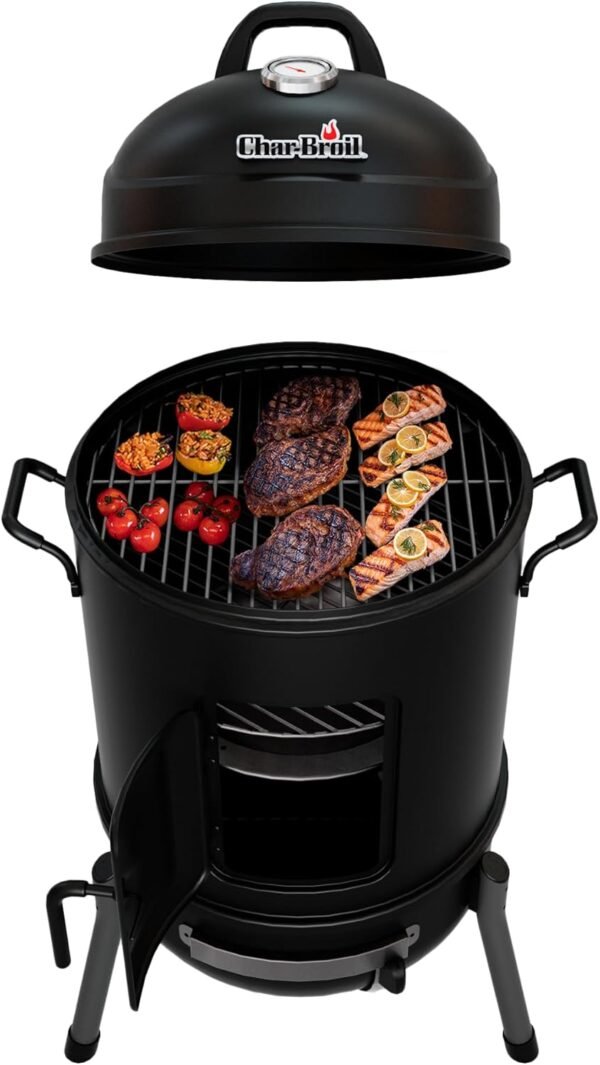
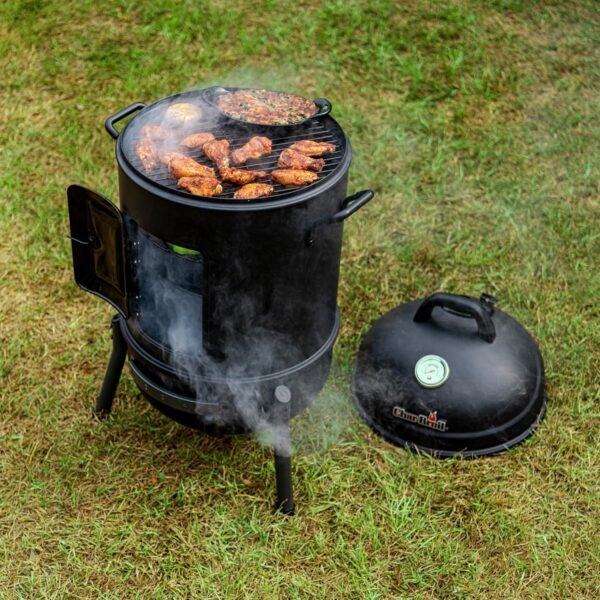
The cooking capacity sets the household size. Char-Broil lists 388 square inches across two porcelain coated grates. That is enough for a couple of pork shoulders, a rack or two of ribs cut to fit, or a chicken with room around it. It is not enough for a party of twenty. If the usual audience is four to six people, this is correctly sized. If it is regularly a dozen, the cook will be running two sessions and the day gets long.
The third question is fuel patience. This is charcoal, listed under fuel type as charcoal and under power source with the placeholder token fuel powered. Charcoal means lighting, waiting for coals to ash over, managing vents and adding fuel through a long cook. A pellet or electric smoker automates all of that. Somebody who wants to put meat in and walk away should not be looking at a bullet smoker at all.
The specifications that decide it: air control and the water pan
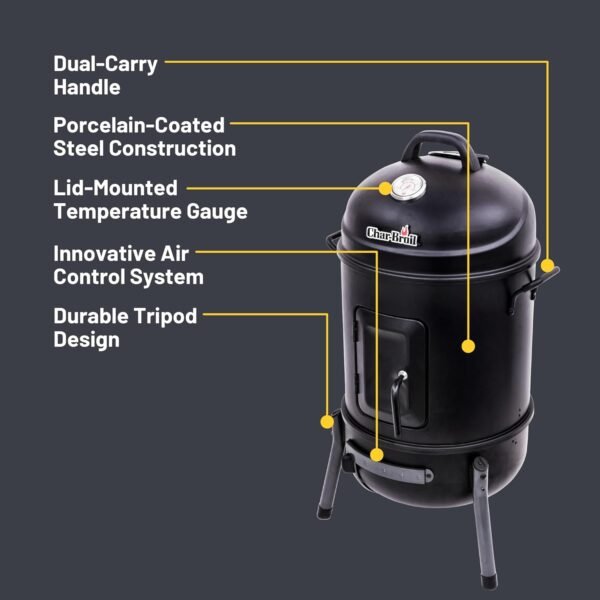
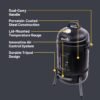
Char-Broil describes an air control system as the central feature and frames it as simplifying the job of setting and holding a cook temperature. On a vertical charcoal smoker, vent control is the temperature control. There is no thermostat and no fan. The intake vent at the base regulates how much oxygen reaches the fire, and the exhaust at the top regulates draw. Everything about how the cook goes depends on learning that relationship, and it is why the lid mounted temperature gauge is not a luxury item on this design but the only feedback you get.
The water pan matters just as much and gets less attention. In a bullet smoker the pan sits between the fire bowl and the food, and it does two jobs at once. It acts as a heat diffuser, stopping direct radiant heat from scorching the underside of whatever is on the lower grate, and it adds humidity, which slows the drying of the meat surface and helps smoke adhere. Running it dry changes the character of the cook completely, so topping it up is part of the routine rather than an optional extra.
What the temperature gauge will and will not tell you
The gauge is mounted in the lid, which means it reads the air temperature at the top of the chamber, not at the grate where the food sits. On a vertical smoker those two figures can differ substantially. Most people who cook seriously on this design end up adding a separate probe thermometer at grate level. The lid gauge is a useful trend indicator rather than a precise reading, and it should be treated that way.
Living with it: materials, cleaning and one weight figure that looks wrong
Char-Broil describes the lid, body and fire bowl as porcelain coated steel, and describes both cooking grates the same way. Porcelain coating resists rust and cleans more easily than bare steel, but it chips, and once it chips the steel underneath will corrode. Wire brushes with aggressive bristles are the usual cause. The specification table meanwhile gives the outer material as alloy steel and the inner material with the placeholder token stainless steel, which does not match the bullet describing porcelain coated steel throughout. The listing gives the construction two different ways and there is no way to settle it from the published data.
The removable ash pan is the single best convenience feature here. Ash accumulation is what chokes airflow on a long cook, and a pan that lifts out means the fire can be kept clean without dismantling the smoker. Dual carry handles are listed for repositioning.
One figure deserves skepticism. Item weight is given as 20 pounds for a 39 inch tall steel smoker with two grates, a water pan, an ash pan and a fire bowl. That is low for the described construction, and it is the kind of field that is frequently populated with a component or packaging weight rather than the assembled product. Anyone planning to move it regularly, or to carry it up stairs, should not plan around 20 pounds without confirming.
Ongoing costs are charcoal and wood chunks, plus a cover if it lives outdoors. The warranty is stated as one year on the firebox and parts, which is short and worth factoring in.
When a different smoker is the better answer
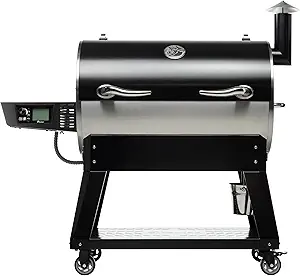
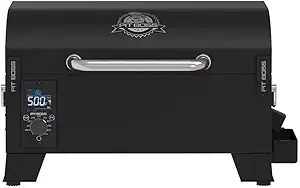
If the appeal is smoked food but not fire management, a pellet smoker automates the fuel feed and holds a set temperature electronically. The Recteq RT-B380 Bullseye and the Pit Boss 11091 both work that way, at a higher price and with a power outlet requirement.
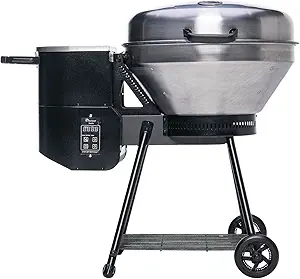
If you want to grill as well as smoke, a combination unit avoids owning two things, and the Oklahoma Joe 24203004 covers that ground. If charcoal grilling rather than smoking is the real goal, the Weber Performer is the better shape for it. Other vertical and offset options are grouped in the smoker category, and the direct heat alternatives sit under charcoal grills.
Who should buy it and who should not
Buy it if outdoor space is tight, the usual cook is for four to six people, and the fire management is part of the appeal rather than a chore. A vertical bullet at 21.75 inches across with 388 square inches of grate and a removable ash pan is a sensible first smoker, and it carries 656 ratings at an average of 4.6.
Skip it if you cook for large groups, want set and forget temperature control, or have nowhere outdoors to store a cylinder over three feet tall. Before ordering, confirm the assembled weight, because 20 pounds looks inconsistent with the described steel construction, and confirm what the body is actually made of, because the specification table and the feature bullets disagree.