Description
How many tapes are in the box, and do you want a computer involved?
Those two answers decide whether the Wolverine TransMedia is the right approach. Capture devices for old video split into two camps. One camp is a dongle that plugs into a computer and relies on software to record, which means dealing with drivers, codecs and an application that may or may not still be supported. The other camp is a self contained box that records to a memory card or a USB drive with no computer at all. This is the second kind, and for anyone digitizing a shelf of family tapes without wanting a software project, that is the entire argument.
The quantity matters because this is real time work. A capture device records at playback speed, so a two hour tape takes two hours. Ten tapes is a weekend. Fifty tapes is a commitment, and at that point a commercial transfer service is worth pricing against your own time. There is no way around the real time constraint on any device of this kind.
The third question is what the tapes are playing on. This device has an analog RCA input, so it needs a VCR, a camcorder or a player that can output composite video and stereo audio. It does not include one. If the camcorder is dead or the VCR has been thrown out, that is the first problem to solve and this box does not solve it.
The specifications that decide it: analog in, several ways out
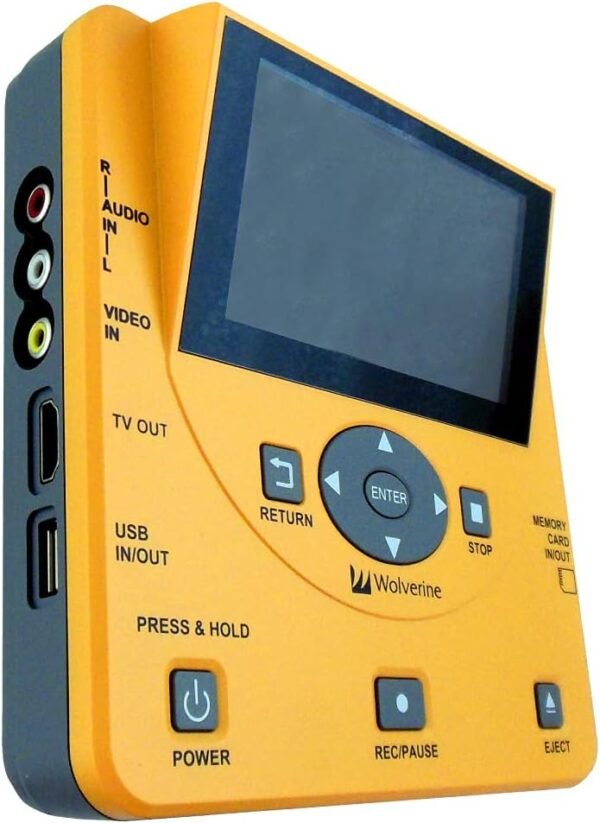
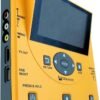
The input is AV RCA, which is composite video plus audio. That is the lowest common denominator connection and it is what almost every VCR and camcorder can produce. What it also means is that this device captures composite only. There is no S-Video input and no component input, so a source capable of a better connection will be captured at composite quality regardless. On old VHS material that is largely academic, since the tape itself is the limiting factor. On a Hi8 or a later camcorder with S-Video output, it is a genuine loss of quality.
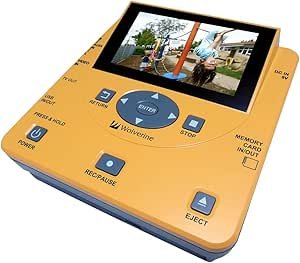
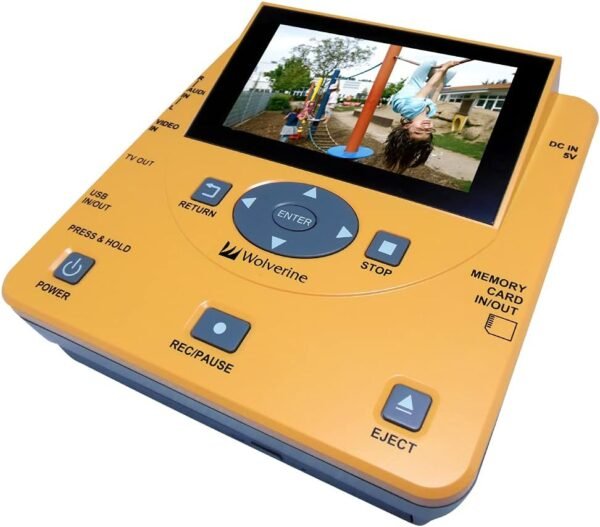
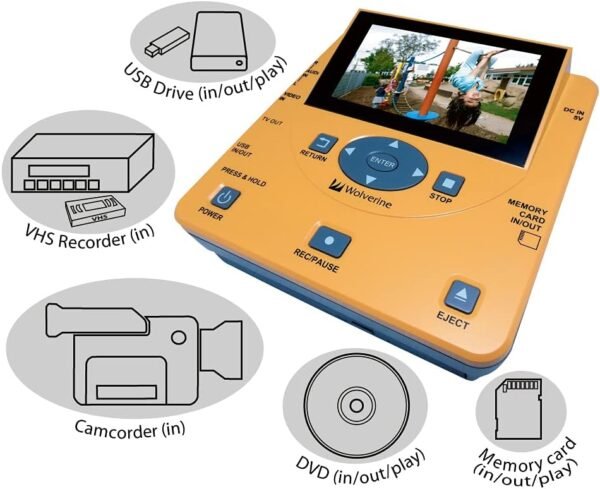
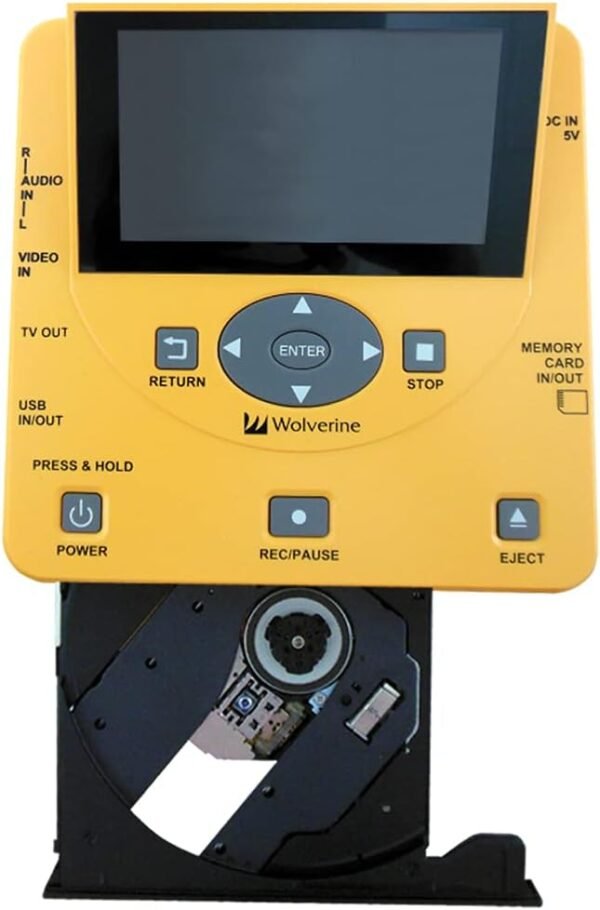
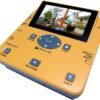
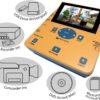
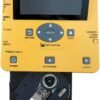
The output options are unusually broad for a device like this. Recordings can go to an SD card, to a USB flash drive or hard drive, or to a writable DVD, and the unit also has DVD read and playback, HDMI out and a 4.3 inch color screen. Being able to burn straight to DVD matters to a particular kind of user, typically someone making copies for relatives who still have DVD players. It can also read a DVD or CD and write the contents out to a card or drive, and it will extract audio CDs to MP3 or WAV files.
The 4.3 inch screen and why it earns its place
A built in screen means you can see what is being captured without connecting a television. On a real time transfer job that is the difference between discovering at the end of two hours that the tape was blank and noticing in the first thirty seconds. It also means the whole setup is a VCR, this box and nothing else.
Living with it: storage limits, USB speed, and two sets of dimensions
Two limits in the specification will shape how you work. SD card support is stated at a 32 gigabyte maximum, which indicates the device reads SDHC cards rather than the larger SDXC format. Thirty two gigabytes is a few hours of standard definition video depending on the encoding, so a long session means swapping cards. The USB ports are USB 2.0, which is fine for real time standard definition capture but slow when you come to move the finished files off the drive.
The published dimensions disagree with themselves and the difference is large. The specification table gives 10 by 7 by 3 inches, while a feature bullet gives 6 wide by 6 long by 1.5 high. Those are not close. The larger set is almost certainly the shipping carton and the smaller set the device, which is consistent with the listed weight of 1.04 pounds. Plan around the smaller figures for desk space and the larger ones for storage.
One point worth stating plainly, because the listing invites it. Two of the feature bullets describe copying DVDs and copying a collection of music CDs. Copyright law applies to that regardless of what a product listing says, and commercially produced discs and tapes may carry content protection and may not be lawful to copy depending on where you are and what the material is. Digitizing your own home movies is a different matter entirely and is what this device is genuinely for. Treat the disc copying bullets as a description of capability rather than as advice.
One figure deserves weight. This listing shows 187 ratings at an average of 3.4, which is a low average across a reasonable sample and the lowest of any product covered in this batch. That is worth reading the recent reviews on before ordering, particularly for a device whose job is a one time project you cannot easily repeat. The manufacturer of record is Wolverine Data, the product first became available in August 2021, and the listing publishes no description text beyond the feature bullets.
When something else does the job better
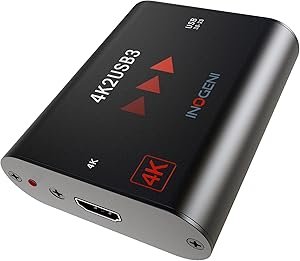
If the material is worth doing properly and there is a computer available, a capture device that feeds a computer gives you control over the encoding and the option of cleaning the video up afterward. The INOGENI 4K2USB3 is the professional end of that approach.
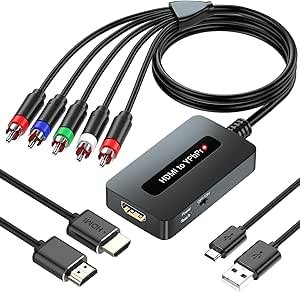
If the problem is not capture at all but simply getting an older device onto a modern television, a passive converter is far cheaper and does only that, which is what the HDMI to component converter covers. If the aim is playing the finished files back on a television afterward, a streaming player with USB support handles it, and the Roku player and the BrightSign XT244 sit in the streaming media player category. Other conversion options are under video converters.
Who should buy it and who should not
Buy it if you have a working VCR or camcorder, a manageable number of tapes, and you want the transfer done without a computer or software in the way. An RCA input, output to SD card, USB drive or DVD, a 4.3 inch preview screen and HDMI out make it a self contained solution to a specific and time limited project.
Skip it if the source can output S-Video or better and you care about the difference, if you have no player for the tapes, or if the job is large enough that a service makes more sense. Before ordering, note the 32 gigabyte card limit and the USB 2.0 speed, treat the two published dimension sets as carton and device, and read the recent reviews given the 3.4 average across 187 ratings.