



Description
Is a 75 inch set the right size for the wall you actually have?
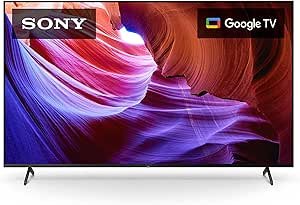
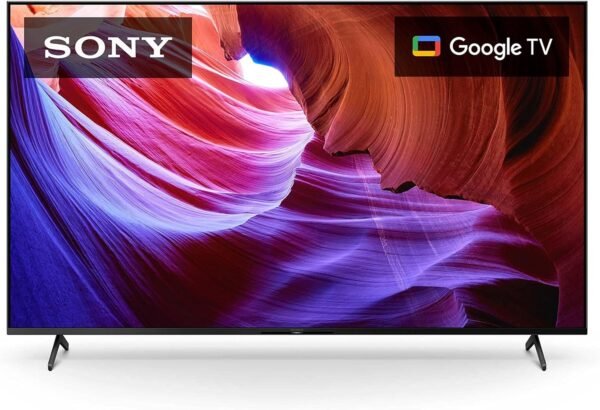
Before any picture specification matters, this purchase is a furniture decision. Sony lists the product dimensions of the KD75X85K as 66 x 16.25 x 41 inches and the weight at 74.5 pounds. That works out to a cabinet roughly five and a half feet wide. If your media console is narrower than about 60 inches, the feet will sit close to the edges and the set will look, and sit, precarious. Measure the console first. Measure the wall second. Only then think about panels.
The second half of the fit question is viewing distance. A 75 inch 4K screen is designed to be sat in front of, not squinted at from across an open plan room. Most living rooms that suit this size have a seating position somewhere between eight and twelve feet from the screen. Closer than about six feet and a very large panel starts to demand head movement to follow the frame. Further than about fourteen feet and much of the resolution advantage stops being visible, which is the point at which a smaller and cheaper set makes more sense.
The third constraint is who is watching and from where. Sony builds this model on an LED backlit LCD panel, and LCD panels of this class lose contrast and color saturation as you move off center. If your seating is a single sofa facing the screen square on, that is not an issue. If you have a wide room with chairs at forty five degrees to the screen, it will be.
The two specifications that decide it: native 120Hz and the HDMI 2.1 feature set
Sony rates this model with a native 120Hz refresh rate, and the listing pairs that with what it describes as features specified in HDMI 2.1, naming 4K at 120 frames, variable refresh rate and auto low latency mode. Those four things together are the whole argument for this set over a cheaper 60Hz panel. If the household has a PlayStation 5 or an Xbox Series X, or a gaming PC that will be plugged into the television, they are the difference between a console running at its intended frame rate and one being capped.
If nobody in the house games, the calculation flips. Streaming services almost universally deliver 24 or 60 frames per second, and a native 120Hz panel adds nothing to a Netflix film that a good 60Hz panel would not also deliver. In that household the money is better spent elsewhere, and a step down to something like the LG 65UQ7570PUJ covers the same viewing habits for less outlay.
What the processor claim does and does not tell you
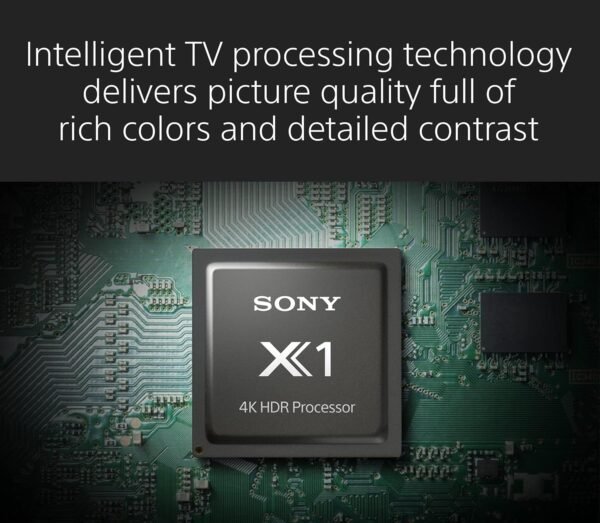
The listing credits picture handling to the 4K HDR Processor X1 and adds an upscaling claim under the name 4K XR Reality Pro, plus a wide color claim under the TRILUMINOS Pro label. These are Sony marketing names for processing behavior, not measurable specifications, and the listing publishes no brightness figure, no contrast ratio and no color volume percentage. Treat them as a statement of intent rather than a number you can compare against another brand. Sony does state Dolby Vision and Dolby Atmos support, and those are concrete, because they are licensed formats that either work or do not.
Living with it: mounting weight, the 220 volt oddity, and the sound question
At 74.5 pounds this is a two person lift and a two person mount. Any wall bracket has to be rated well above that figure and has to be anchored into studs rather than drywall plugs. If a wall mount is the plan, the Mounting Dream MD2380 bracket is worth reading about before ordering, because bracket VESA pattern and weight rating are the two things people discover too late.
There is a contradiction in the published data worth naming rather than smoothing over. The specification table lists Voltage as 220 Volts, while this is sold as a United States model with a standard North American power cord. Amazon voltage fields on television listings across this fleet are frequently populated with a regional or maximum value rather than the operating supply, so this is very likely a data error rather than a real requirement. It is not something to guess at, though. Confirm the voltage on the box or the rear label before plugging anything in, and do not buy a step up transformer on the strength of a specification field.
Sound is the usual large television compromise. Sony describes the speaker arrangement as a bass reflex and X Balanced speaker system, which is a step above the flat drivers in budget sets, but a cabinet this thin has nowhere to put a real woofer. Households that care about dialogue clarity should budget for a soundbar from the start rather than treating it as an upgrade later.
Running cost is modest and largely a function of screen area and brightness setting. The set ships with two AAA batteries for the remote, which the listing notes are included, and there are no consumables beyond that.
When a different television is the better answer
If the room is bright, with windows behind or beside the seating, a quantum dot panel will hold color better under glare than this LED LCD design. The Hisense U7N in 75 inches is the direct size for size comparison in that direction, and the wider QLED television range is where to look if brightness is the deciding factor.
If black levels in a darkened room matter more than anything else, no LED backlit set will satisfy, and the answer is an OLED panel instead. If the room is genuinely enormous and the seating is far back, the step up to a 98 inch TCL Q651G changes the conversation entirely, though so does the delivery problem. And if you are replacing an older Sony and want to understand what has and has not changed in the intervening generations, the Sony XBR65X900F is a useful reference point. Other options in the same panel family sit in the LED and LCD television category.
Who should buy it and who should not
Buy it if you have a console generation that can use 4K at 120 frames, a media unit or wall that can physically carry 74.5 pounds across 66 inches, and a seating position between roughly eight and twelve feet away. The native 120Hz panel and the HDMI 2.1 feature list are the things you are paying for, and in a gaming household they are used every day.
Skip it if the household watches streaming and broadcast only, if the room forces off axis seating, or if the wall and console cannot take the size. The listing carries 1,653 ratings at an average of 4.4 and ranks 625th in its LED and LCD television category, which is a solid rather than exceptional position. Before ordering, confirm the stand footprint against your console width and confirm the operating voltage on the unit itself, because the published specification field disagrees with the market this model is sold into.