Description
Does a 50-inch screen fit the wall you are actually working with?
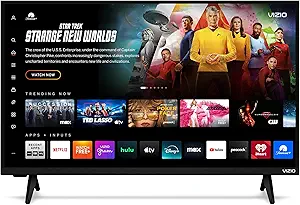
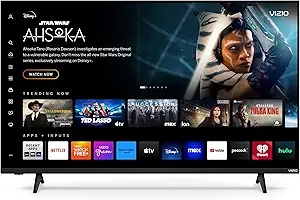
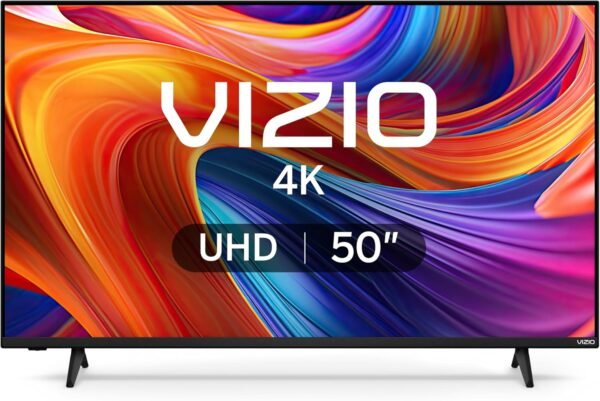
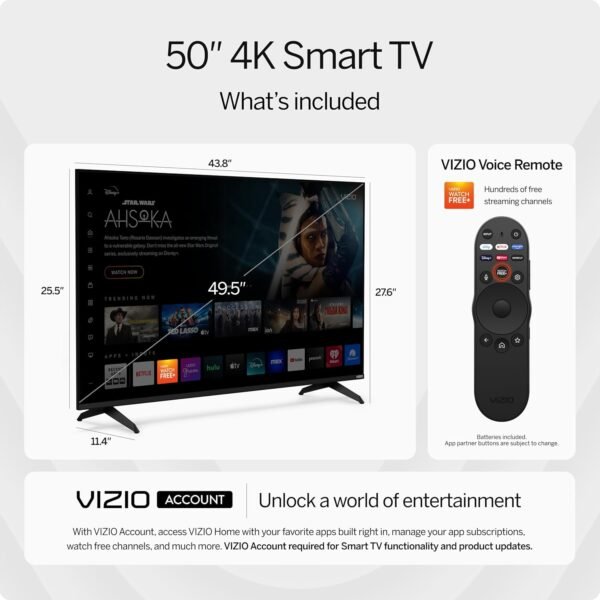
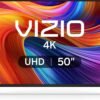
The first decision here is not brand and it is not resolution. It is whether a 50-inch class panel sits comfortably in the room you plan to put it in. VIZIO lists this model as a 50-inch television, but the specification table on the same listing gives the standing screen display size as 49.5 inches. That is the usual gap between a marketing class size and a measured diagonal, and it matters when you are working to the inch against a media unit or an alcove.
Work from width rather than diagonal. A 16:9 panel with a 49.5 inch diagonal is roughly 43 inches across the picture, and the listing gives 43.77 inches on one axis, which lines up with the panel plus bezel. The other two figures in that same field, 11.42 inches and 47.63 inches, do not describe a television that is under an inch thick at the edge, so they almost certainly describe the shipping carton rather than the set on its stand. The listing never separates carton from product, so treat 43.77 inches as the working width and measure your own furniture before committing.
Seating distance is the other half of the fit question. At 4K resolution a 50-inch panel gives up its full detail from roughly six to eight feet for most viewers, which suits a bedroom, a home office, a small living room or a kitchen wall. In a large open plan room the same set reads as small from the far sofa, and that is a sizing problem no picture setting can fix.
The specifications that decide it: HDR handling and the platform it runs
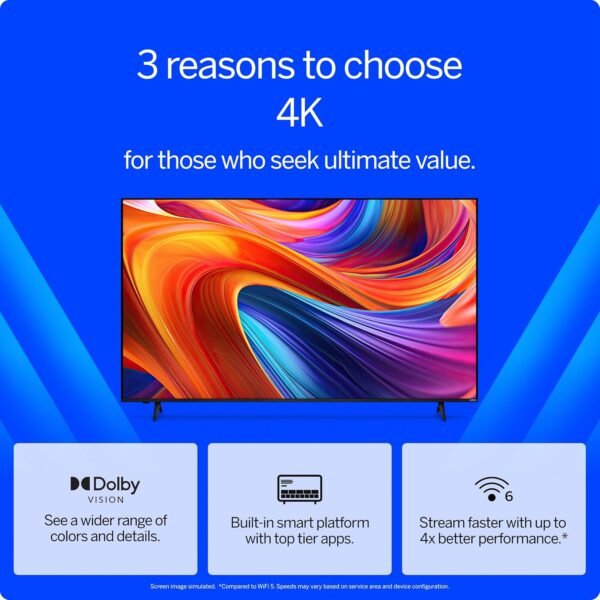
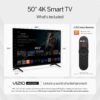
Two things separate this model from the rest of VIZIO’s V-Series, and both are on the listing. The first is Dolby Vision Bright+, which VIZIO describes as its own version of Dolby Vision, sitting alongside HDR10+, HDR10 and HLG. That is unusually broad format support for a set at this position in the range. Dynamic metadata formats adjust tone mapping scene by scene rather than once for a whole title, and carrying both Dolby Vision and HDR10+ means you are unlikely to meet a streaming title the set cannot map at all.
What the listing does not publish is peak brightness in nits, a local dimming zone count, or the panel refresh rate. Those are the numbers that decide how much of the HDR format support you actually see. A panel that accepts Dolby Vision but cannot get bright enough to show highlight detail is still a real product, it simply delivers a subtler result than the badge implies. If HDR performance is the reason you are buying, that missing brightness figure is the thing to confirm with VIZIO before ordering.
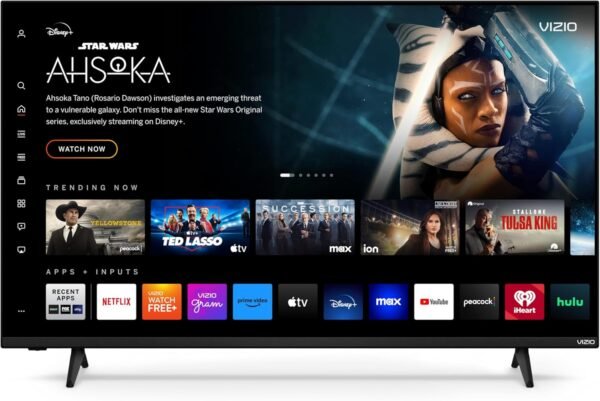
The second decider is the platform. This set runs VIZIO Home, and the listing is explicit that a VIZIO account is required for smart TV functionality and for product updates. That is a firmer condition than it sounds. Without the account you have a panel with inputs rather than a smart television, and you do not receive firmware updates either. Built in apps, the WatchFree+ free channels and the on demand catalog all sit behind that same account.
What WiFi 6 changes in a crowded home network
VIZIO calls out WiFi 6 and states that it supports better streaming and gaming performance in a congested smart home compared with WiFi 4 and WiFi 5. The honest version of that claim is narrower than the marketing. WiFi 6 does not make a single stream faster than the internet connection feeding it. What it improves is behavior when many devices share one access point, through scheduling features that cut the time each device spends contending for airtime. In a studio apartment with three devices you will notice nothing. In a household running two other televisions, a games console, a doorbell camera and a dozen phones it is a genuine advantage, and only if your router speaks WiFi 6 as well.
Living with it: mounting, cables and the running costs
At 26.4 pounds this is a one person lift onto a stand and a comfortable two person job for wall mounting. The listing does not publish a VESA pattern, which is a gap worth closing before you buy a bracket. A universal bracket rated for 32 to 65 inch sets, such as the one covered in the Mounting Dream MD2380 wall mount review, covers the size range, but the bolt pattern still has to match.
Power draw is where the listing contradicts itself in a way worth naming rather than smoothing over. The wattage field reads 8 watts. A 50-inch LED television does not run on 8 watts in normal viewing, and that figure is far more likely a standby number or an audio output rating that landed in the wrong field during import. The energy guide label shipped with the set is the number to trust.
Sound is the usual compromise at this size and thickness. VIZIO publishes no speaker wattage or configuration here, and the set’s Bluetooth headphone support is presented as a feature rather than as a fix, and private listening late at night is what it is useful for. If you intend to add a soundbar, plan the cable route at mounting time rather than after.
Content sources matter more than any of this. If you are cutting cable, an indoor antenna handles local broadcast and pairs sensibly with a set like this, and the Winegard FlatWave Amped indoor antenna review covers what an amplified indoor panel can and cannot do. For apps the built in platform is usually enough, but households wanting one interface across several rooms often add a separate box instead, and the wider streaming media players category lays out those options.
When a different television is the better call
If the wall is narrower than about 44 inches, step down rather than squeeze. The 43-inch model in the same family, covered in the VIZIO 43-inch V-Series review, carries the same platform and format support in a smaller frame. If you want the same 50-inch size from a neighboring generation, the VIZIO V-Series 50-inch review is the closest comparison and is worth reading on which features carried over.
If the platform is your sticking point and the required VIZIO account is a step you would rather not take, a Roku based set moves that account requirement to Roku instead. The TCL 55S421 Roku TV review covers a 55-inch alternative at a similar position in the market. And if the room is genuinely large, nothing at 50 inches will feel right, in which case the LED and LCD television category covers the larger sizes.
This model shows only 2 customer ratings averaging 3.1 stars, and it ranks 117,340th in electronics and 486th within LED and LCD televisions. That is not enough feedback to draw a conclusion from in either direction. Treat the star average as noise rather than signal at that sample size.
Who should buy it and who should not
This suits a bedroom, a second living space or a small main room where a 50-inch class panel is the right size and broad HDR format support matters more to you than measured brightness. It suits households on a WiFi 6 router with a lot of connected devices, and anyone content to hold a VIZIO account.
It is a weaker choice if you need published brightness and refresh figures before you buy, if you are trying to fill a large room, or if a mandatory manufacturer account is something you object to. With only two ratings on file, buyers who rely on a deep pool of owner feedback should wait or look at a model with more history behind it.