Description
Where can you actually put a base antenna?
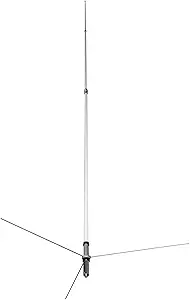
Base station antennas are chosen by constraint far more often than by specification, and Diamond says so openly in the description of the X30A: it is designed for areas where height or antenna restrictions are an issue. That single sentence is the reason this model exists and the reason to consider it.
The constraint is usually one of three things. A homeowner association or a lease that forbids visible antennas. A roof that cannot take a tall mast. Or a location where a long whip would be conspicuous. A 4.5 foot fiberglass vertical solves all three better than an 8 or 17 foot one does, at the cost of gain, because on a vertical antenna length and gain are directly related.
So the honest framing is a trade. If you have unrestricted space and a solid mast, a longer antenna will give you more range for the same money. If you do not, the question is what performance you can get from something that will actually be allowed to stay up, and that is where the X30A sits. Before anything else, establish what you are permitted to install and how high you can get it, because on VHF and UHF, height above surrounding obstructions matters more than gain does.
The specifications, which for once are mostly present
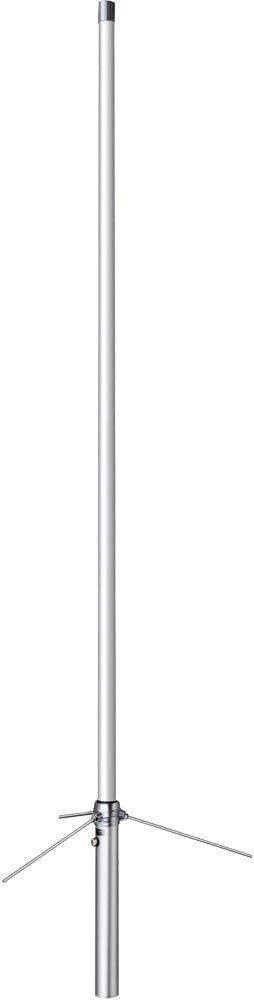
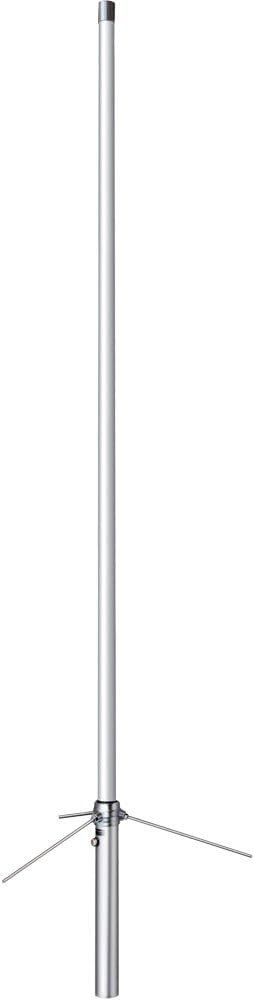
The X30A is a dual band vertical for the 2 meter and 70 centimeter amateur bands, quoted at 4.5 feet in height with a rated power handling of 150 watts. The connector is UHF female, also known as SO-239, which is the standard fitting on most amateur base equipment and takes a PL-259 plug on the coaxial cable. Construction is a fiberglass radome over the elements with stainless steel hardware, and the listing states a high wind rating.
Two features in that list are worth calling out. Factory adjusted, no tuning required means the antenna arrives matched for the bands rather than needing elements trimmed with a meter, which removes the step that stops many people installing an antenna at all. And DC grounded means the radiating element is at direct current ground potential, which bleeds off static charge that would otherwise build up on the antenna in wind and dry weather. That is a genuine benefit for equipment protection, though it is not a substitute for a proper station ground and a lightning arrestor, neither of which is included here.
An honest sentence in the description, and one dimension that does not match
The description contains something rare on a product listing: a caveat that works against the sale. It states that standing wave ratio may vary depending on the exact installation location and frequency, and advises checking the values in your specific area of use. That is correct and it is the right advice. An antenna is matched by its surroundings as much as by its design, and a factory adjusted antenna in a bad position can still show a poor match. Buy a meter and check it, whatever the antenna claims.
The one figure that does not reconcile is size. The description and the feature bullet both state 4.5 feet, which is 54 inches. The attribute table gives product dimensions as 45.5 by 4 by 2 inches. Those cannot both describe the assembled height, and the 45.5 inch figure most likely refers to the shipping length of a sectioned antenna. Weight is given as 2.1 pounds, which is light and consistent with fiberglass construction.
Installing and living with it
Three practical matters follow from choosing a base antenna, and none of them are in the box.
The first is the mount. Nothing in this listing describes a mast, a bracket, a U bolt or a mounting kit, so all of that is a separate purchase and needs specifying against where the antenna is going: a chimney, a gable end, a mast on a tripod, or a short pole on a balcony.
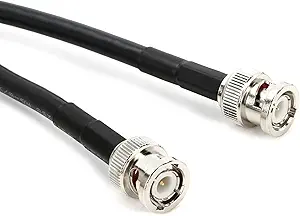
The second is coaxial cable and its losses. At 70 centimeters, cable loss is meaningfully higher than at 2 meters, so a long run of thin cable can quietly undo the gain the antenna provides. Choose the cable for the length of run, not for the price per foot, and terminate the PL-259 connectors properly, since a poorly soldered connector is the most common cause of a station that performs worse than it should.
The third is safety and grounding. An outdoor antenna must never be installed where it could contact overhead power lines during installation or if the mast failed. National electrical code requires the mast and the coaxial lead to be bonded and grounded, and DC grounding inside the antenna does not satisfy that requirement.
Fiberglass verticals of this type live outdoors for years and the parts that fail are the coaxial connector where water ingress occurs and the mounting hardware. Weatherproofing the connector at the antenna end with self amalgamating tape is standard practice and it is the single maintenance step most worth doing at installation time.
The listing records 178 customer ratings averaging 4.7 stars, a first availability date of February 2016, a rank of 346th in radio antennas, and states the product is not discontinued.
Where the alternatives sit
If the installation is a vehicle rather than a building, this is the wrong format entirely and a mobile whip on an NMO mount is what you want; the Comet CA-2X4SRNMO is that category. If you want a fiberglass base antenna at a lower price, the Tram 1481 covers similar ground and the Tram 1180 is the budget dual band option.
If you operate HF as well and want one antenna to cover far more spectrum, a motorized auto tuning design such as the Yaesu ATAS-120A is a different approach entirely. The radio antennas category holds the amateur hardware, and the TV antennas category is an unrelated application despite the shared word.
Who this antenna suits
It suits a licensed amateur operator with a height restriction, a covenant, or simply nowhere to put a large antenna, who wants a dual band base vertical that works out of the box without tuning. At 4.5 feet and 2.1 pounds it mounts on hardware that a longer antenna would not survive on, and 150 watts of power handling covers any normal base transceiver.
It does not suit someone with the space for a longer antenna who wants maximum range, and it does not arrive with a mast, cable, connectors or grounding hardware, none of which appear in the listing. Note also that the description says 4.5 feet while the dimension field says 45.5 inches, so confirm the assembled height if clearance is tight.