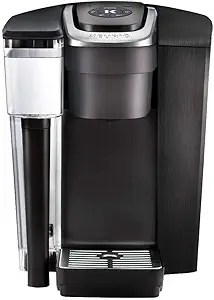
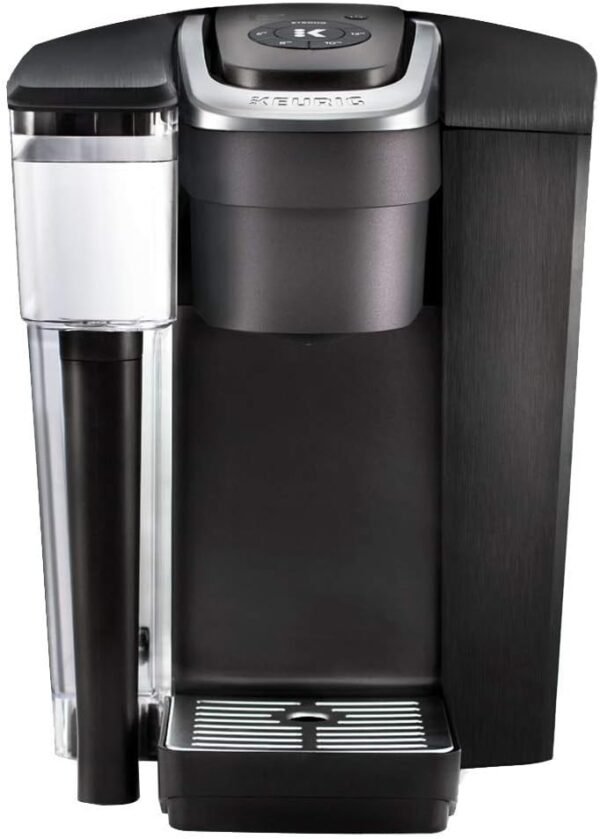
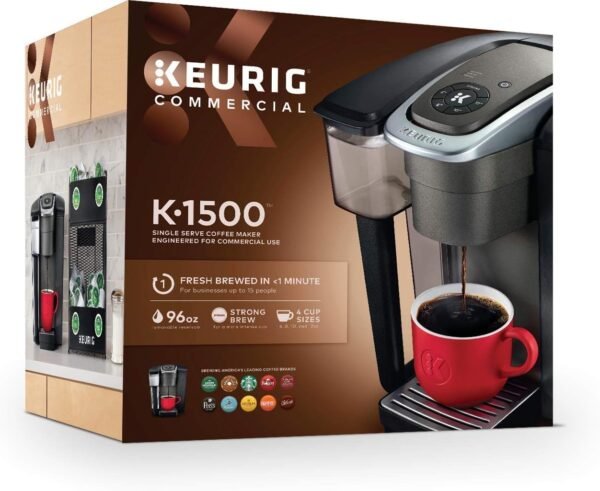
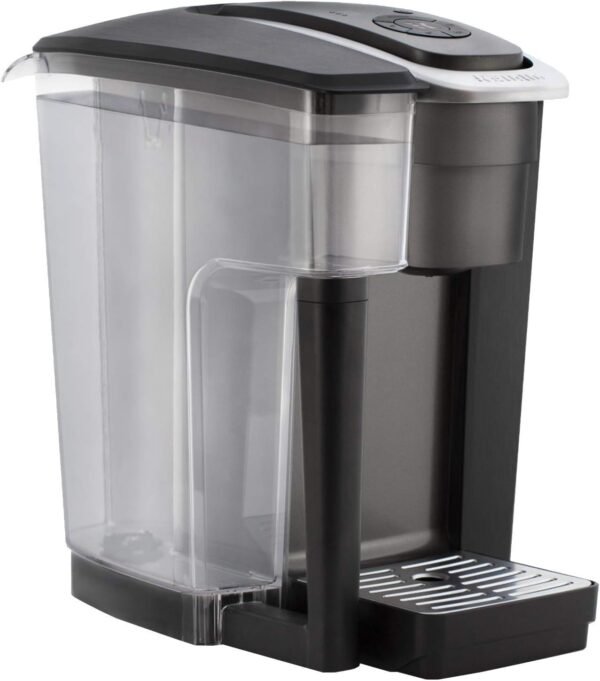

Description
How many people are queueing for coffee, and who refills the tank?
Keurig positions the K1500 for small businesses of up to fifteen employees, and that number is the honest starting point for the decision. Fifteen people making one or two cups each across a working day is between fifteen and thirty brews, and the machine that has to absorb that is a different machine from a domestic pod brewer. The difference is not in the coffee. It is in the reservoir, the noise and the physical robustness.
The reservoir is the deciding constraint in practice. Keurig lists 96 ounces, which is eight 12 ounce cups or sixteen 6 ounce ones before somebody has to walk to the tap. In an office, the person who refills it is whoever noticed, and a small reservoir turns into a daily irritation. Ninety six ounces with a carry handle on the tank is what makes it an office machine rather than a kitchen one.
The second question is where it sits. The listing gives dimensions as 10.3 inches deep, 12.4 inches wide and 12.1 inches high, with a weight of 10.2 pounds. Note that the product title states the same three numbers in a different order, as 12.4 by 10.3 by 12.1 inches, so the two published sources disagree about which figure is depth and which is width. The practical answer is to allow roughly 13 inches in both directions plus clearance above for the lid to open, which needs more than the 12.1 inch body height suggests.
The specifications that decide it: four cup sizes and the strength control
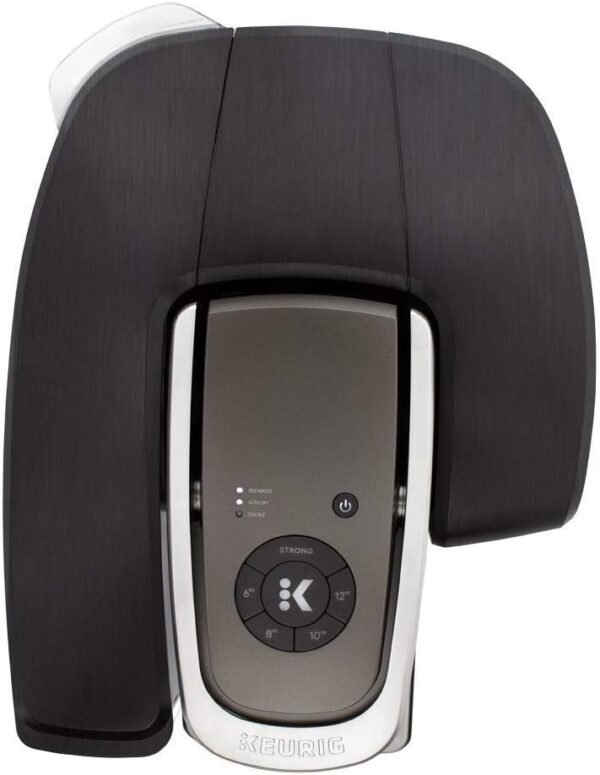
Keurig gives four brew volumes, at 6, 8, 10 and 12 ounces. In a shared setting that range matters more than it does at home, because it covers both the person who wants a small strong cup and the person filling a travel mug. A machine with only one or two volumes forces everyone into the same drink and generates complaints.
The second control is the strength button, which Keurig describes as delivering a bolder, more intense flavor. On a pod brewer this works by slowing the water through the grounds rather than by using more coffee, so it increases extraction from the same pod. That is a genuine improvement for anyone who finds standard pod coffee thin, and it is the feature most worth having on a shared machine, because it lets two people with different tastes use the same pods.
Noise, and why it is on the specification sheet
Keurig lists a quiet brew technology and puts it in the feature bullets rather than burying it. That placement is deliberate and it reflects where these machines get installed. A pod brewer in a small office often sits within earshot of desks or a meeting area, and pump noise during a brew cycle is the complaint that follows. Keurig publishes no decibel figure, so there is no number to compare against another machine, only the claim itself. If the intended location is beside a phone desk, that is worth confirming before ordering.
Living with it: pods, cleaning, and a specification table that argues with itself
The running cost of any pod machine is the pods, and that is the honest downside of the format. Keurig describes access to over thirty brands and more than 150 K-Cup varieties, and states that each pod has an air tight internal and external cup wall. The machine takes single serve pods as its coffee input, which is stated plainly in the specification table.
Maintenance is descaling and rinsing rather than deep cleaning. Keurig notes the machine is built from non porous materials that are straightforward to clean, and the reservoir handle exists partly so the tank can be taken to a sink. In a hard water area, descaling is the maintenance task that decides how long the machine lasts, and skipping it is the usual reason a pod brewer starts producing short cups.
Several fields in the published specification table contradict the product itself, and they are worth naming rather than quietly correcting. The coffee maker type is listed as Drip Coffee Machine on a single serve pod brewer, which is a different brewing method entirely. The filter type is listed as Reusable, while the coffee input type in the same table says single serve coffee cups, so those two fields describe different machines. The style field reads Putty while the color field reads Black. And the recommended uses field reads Cold Protection, which has no relationship to a coffee maker of any kind. None of these change what the product is, but together they show the imported listing data is unreliable, and no specification in that table should be treated as authoritative without checking the manufacturer sheet.
When a different brewer is the better answer
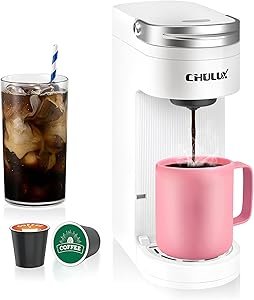
If the setting is a home kitchen rather than an office, the commercial reservoir and build are wasted and a domestic machine is cheaper to run and smaller. The Keurig K-Supreme is the household equivalent in the same pod ecosystem, and the CHULUX slim single serve is the minimum footprint version for a very small space.
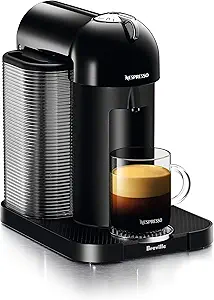
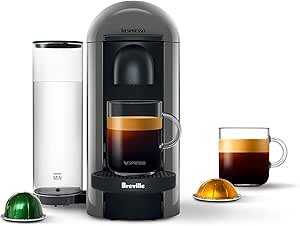
If several people want coffee at the same time rather than one after another, a pod machine is the wrong architecture and a carafe brewer serves better. The Breville Precision Brewer handles that with more control over the brew itself. If espresso rather than long coffee is what the office actually drinks, the Nespresso VertuoPlus is a different pod system aimed at that. The rest of the pod options sit under single serve brewers, and the carafe and espresso alternatives are grouped in coffee machines.
Who should buy it and who should not
Buy it for a small office, waiting room, workshop or clinic with roughly a dozen or fifteen people, where the value is in the 96 ounce reservoir, the four cup sizes and a build meant for repeated daily cycles. The strength button is what makes it usable by people with different tastes from the same box of pods.
Skip it for a household, where the same coffee comes from a smaller and cheaper machine, and skip it if several cups are needed simultaneously rather than in sequence. It carries 957 ratings at an average of 4.5 and has been available since December 2018, so it is a settled rather than a new product. Before ordering, confirm the footprint from the manufacturer sheet, because the title and the specification table state the three dimensions in different orders, and disregard the specification fields describing it as a drip machine with a reusable filter.