Description
Are you buying a coffee maker, or the first piece of one?
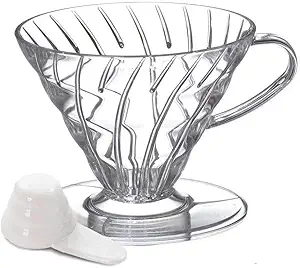
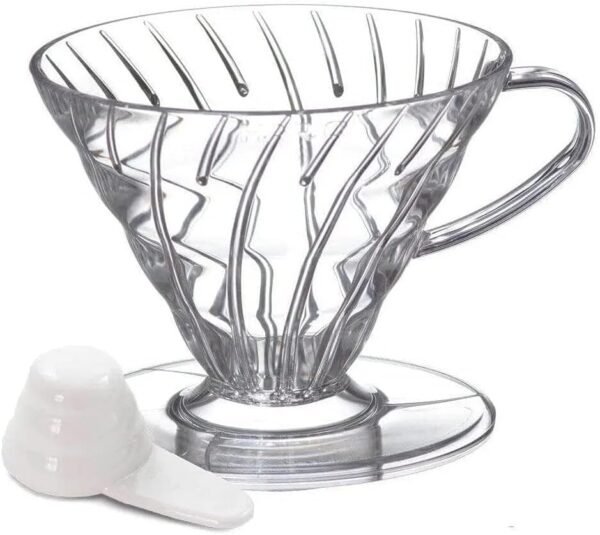
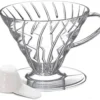
The Hario V60 in size 01 is a cone. That is the honest description and it is the thing most people miss when they order one. On its own it will not make coffee. It needs paper filters, which are a specific conical shape and sold separately. It needs something to sit on, either a mug or a server. It needs a kettle, ideally one with a narrow spout that lets you control where the water lands. And it needs ground coffee at roughly a medium grind, which means a grinder if you want to do it properly.
None of that is a criticism. It is how manual brewing works, and the total cost of the setup is still modest. But somebody expecting a coffee maker to arrive will be disappointed, and it is worth being clear before rather than after.
The second question is how many cups. Hario publishes the sizing plainly: size 01 makes one to two cups, size 02 makes one to four, and size 03 makes one to six. This listing is the 01. That is the right size for a single person brewing for themselves, and the wrong size for a household of two who both want coffee at the same time. Sizing up is the more common regret than sizing down, because a larger cone can brew a smaller volume less well but at least it can brew the larger one.
The specifications that decide it: the cone angle, the ribs and the single hole
Three pieces of geometry define the V60 and each does a specific job. The cone is a 60 degree angle, which is what the name refers to. A steep cone concentrates the coffee bed toward the bottom, which means water passes through a deeper layer of grounds in the center than in a flat bottomed brewer. Hario states this accentuates floral and fruit notes, which is a taste claim rather than a measurement, but the mechanism behind it is that a deeper bed extracts differently from a shallow one.
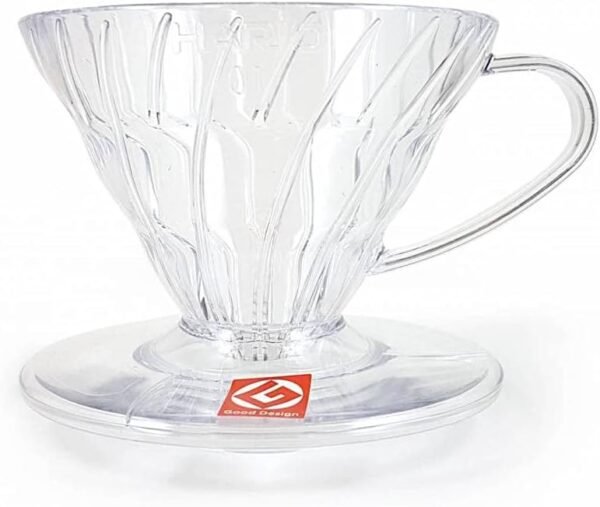
The spiral ribs on the inner wall keep the paper filter off the cone for most of its surface. That leaves an air gap so the coffee bed can expand as it degasses, and it lets brewed coffee drain down the sides rather than being sealed against the plastic. Without ribs, a wet filter clamps to the wall and the brew stalls.
The large single hole at the base is the most consequential of the three, and it is what makes the V60 a device for people who want control rather than convenience. Because the hole is large, it does not restrict the flow. The flow rate is therefore set by how you pour and how fine the grind is, not by the brewer. Pour fast and you get a quick, light extraction. Pour slowly in a spiral and you get a longer, heavier one. That is the whole appeal to anyone who cares, and the whole frustration to anyone who does not.
Why the plastic version is a reasonable choice
The V60 is made in ceramic, glass, metal and plastic. Plastic is the least glamorous and, for a lot of situations, the most practical. It does not crack when dropped, it weighs almost nothing, and it holds heat far better than ceramic during the brew because it has almost no thermal mass to steal from the water. A ceramic cone genuinely needs preheating. A plastic one much less so. Hario also notes the clear plastic makes the brew visible, which matters when you are learning what a good bloom looks like.
Living with it: cleaning, filters and a listing with almost no data
Cleaning is a rinse. There is nothing to disassemble and nothing to descale. Over time coffee oils build a film on any brewer, and on clear plastic it becomes visible before it becomes a problem, which is a small advantage. Avoid abrasive scrubbing, which scratches plastic and gives oils somewhere to hold.
The filters are the recurring cost and the one thing to get right. V60 papers are cut for this cone specifically and a generic conical filter will not seat properly. Most people rinse the paper with hot water before brewing, which removes papery taste and preheats the brewer at the same time.
This listing publishes very little. There is no specification table at all: no dimensions, no weight, no material detail beyond the word plastic, no statement of whether filters are included, no customer rating and no review count. For a simple object that matters less than it would on an appliance, but it does mean the practical questions, whether it sits stably on your particular mug and whether any filters ship with it, are not answered here and should be confirmed before ordering.
When something else suits the routine better
If the appeal is good filter coffee but not the process, a machine that pours for you removes the variability. The Technivorm Moccamaster is the well regarded version of that, and it will produce a more consistent cup than a beginner with a cone.
If you want immersion rather than percolation, a French press extracts differently and needs no paper at all, which is what the ESPRO P7 is built around, with more options in the French press category. For iced coffee, cold brew is the method rather than pouring hot coffee over ice, and the Takeya cold brew maker covers it. Within pour over, the Hario PDA-02T is the same brand in a different configuration, and the rest sit under pour over coffee makers.
Who should buy it and who should not
Buy it if you are brewing for one or two, you already have or intend to buy a kettle and a grinder, and controlling the pour is something you want rather than tolerate. The cone geometry, the spiral ribs and the unrestricted single hole are what make this the standard manual brewer, and the plastic version is cheap, unbreakable and thermally better behaved than ceramic.
Skip it if you want to press a button, if more than two cups are needed at once, in which case buy the 02 or 03 instead, or if buying filters separately is an annoyance. Before ordering, confirm whether any filters are included, because this listing does not say, and check the cone will sit on the mug or server you intend to use, since no dimensions are published anywhere.