Description
How much coffee do you actually pour before it goes cold?
A French press has one structural weakness and everybody who owns a glass one knows it. The coffee finishes brewing, you pour a cup, and the rest of the carafe starts cooling on the counter with the grounds still sitting in it. Twenty minutes later the second cup is lukewarm and tastes different from the first. That is the problem the ESPRO P7 is designed around, and whether it is worth solving depends entirely on how you drink coffee in the morning.
If you pour one cup and walk away, an ordinary glass press does the job and this one is more machine than you need. If two or three people drink from the same brew over half an hour, or if you carry a mug back to a desk and return for a refill, then insulation and grounds separation are not luxuries. They are the difference between one good cup and a carafe of good cups.
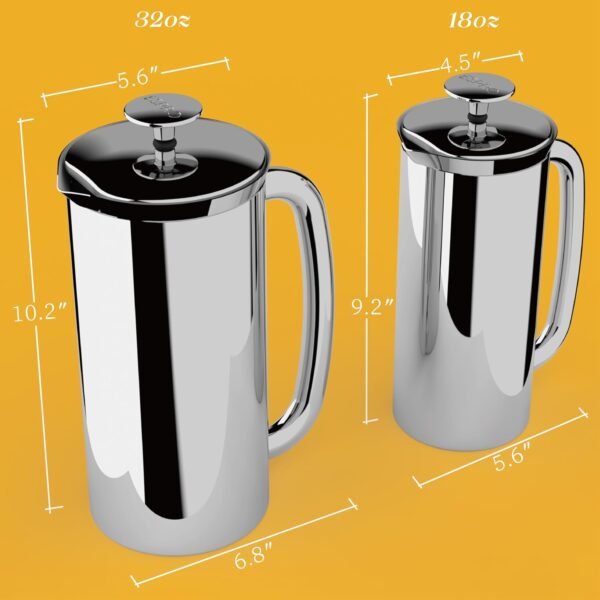
ESPRO sizes this one at 32 ounces of brewed coffee, and the feature bullet adds a useful detail: it holds 48 ounces of water and brews 32 ounces of coffee. That gap is the volume the grounds take up, and it is worth knowing before you assume you can fill it to the brim. Thirty two ounces is roughly four small cups or two generous mugs with a refill each.
The two things that separate this from a glass press
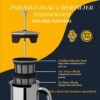
The first is the double walled stainless steel body. ESPRO states the double walled design keeps the brew hot for longer, and that is the whole point of the format. There is no hot plate involved, no element, nothing to switch on. The carafe simply loses heat slowly because there is a vacuum layer between two skins of steel. It also means the outside stays touchable, which matters at a breakfast table with children around.
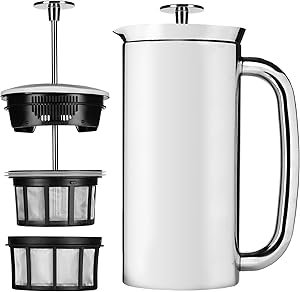
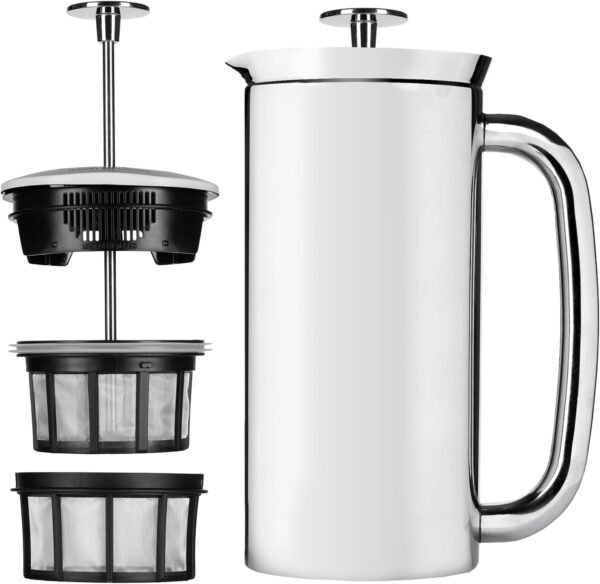
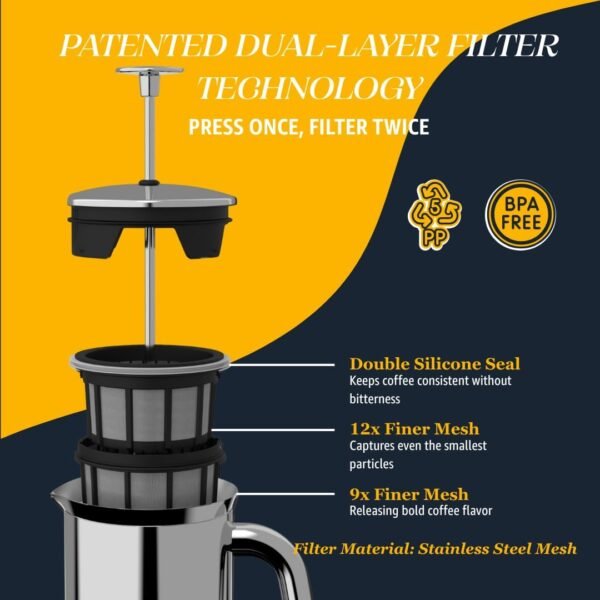
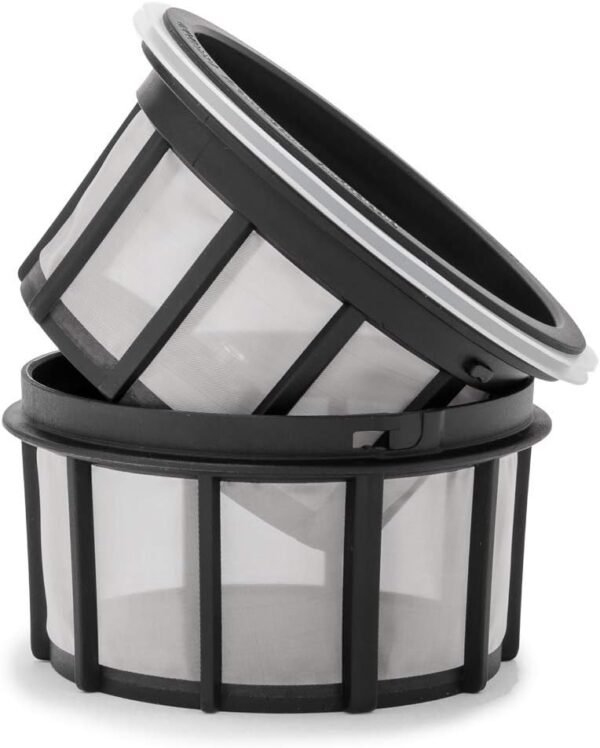
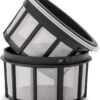
The second is the filter, and it is the piece ESPRO built its reputation on. Rather than the single mesh screen of a standard press, this uses a double micro mesh system that the company says eliminates grounds from the cup. The mechanical consequence is more interesting than the taste claim. A conventional press keeps brewing after you plunge, because water is still in contact with the grounds through a seal that is never complete. A tighter double filter reduces that contact, which is why coffee from this style of press changes less between the first cup and the last.
What the specification says and what it does not
The listing records the filter as reusable and permanent, and the coffee input as loose grounds, so there are no capsules, papers or pods to buy. The stated uses run beyond coffee to tea and infusions, which the double filter makes practical because loose leaf tea leaves are exactly the thing a single mesh lets through.
What the listing does not publish is a temperature retention figure. There is no claim of how many degrees it holds over how many hours, only that it keeps coffee hot for longer. Treat that as the honest limit of what the page supports. The description field on this listing is empty entirely, and the feature bullets that remain are written in heavy marketing language, so the specification table is the part worth reading.
Living with a 2.7 pound steel press
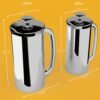
Size first, because it decides where it lives. The listing gives the dimensions as 10.4 inches high, 6.37 inches deep and 4.68 inches wide, at 2.7 pounds. Ten and a half inches of height will not clear the underside of most wall cabinets with the plunger raised, so it either sits out on the counter or goes on a shelf tall enough for it. Stainless steel means it survives being knocked over, which glass presses famously do not.
Cleaning is the daily cost of any press, and a double filter has more parts than a single one. The mesh assembly comes apart for washing, and it needs to, because coffee oils build up in fine mesh and turn rancid over weeks. The listing does not state whether the parts are dishwasher safe, so treat hand washing as the assumption until the manufacturer says otherwise. Spent grounds still have to be scraped out of the carafe, which is the part of press ownership that sends some people to a pour over instead.
There is one thing to watch with any insulated press. Because the body holds heat so well, it also holds it long after you have finished, so the grounds stay warm and continue to extract if you leave them in. Decant into a mug or a separate carafe if you want the last cup to taste like the first.
Grind size is the other thing that changes results and costs nothing. A press wants a coarse grind, and a double filter is more forgiving of a slightly finer one than a single mesh is, but pre ground supermarket coffee is usually cut for drip machines and will over extract in a press. If the coffee tastes bitter rather than muddy, the grind is the variable to change before anything else.
Ownership signals are solid. The listing shows 1,668 ratings at 4.4 stars, with a rank of 32nd in coffee presses, and it has been on sale since February 2017. It also carries ranks in teapots and coffee servers and, oddly, in kitchen storage and organization, which is a category placement error rather than anything about the product.
What would send you to something else
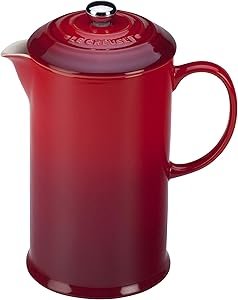
If you want a press for the ritual and the look rather than for insulation, the Le Creuset stoneware press is a different answer to the same brewing method, and the French press category covers the range between.
If grounds in the cup are your actual complaint, a paper filtered brew removes them completely rather than reducing them. The Hario V60 dripper is the reference point for hand pour over, and the Hario PDA02T adds a server to it. Both take more attention per cup than a press does.
If the real requirement is coffee waiting for you without any hands on work, the format changes entirely. The Technivorm Moccamaster is a filter machine built around brew temperature, and the coffee machine category covers automatic brewing more broadly. For iced coffee, the Takeya cold brew maker works on steeping time rather than heat.
Who it fits and who should skip it
Buy it if two or more people drink from one brew, if you refill over half an hour rather than drinking a single cup, or if you have broken a glass press before. The insulation and the double filter both earn their place under those conditions.
Skip it if you drink one cup and rinse, if you want a dishwasher friendly routine, or if fine sediment does not bother you. And plan for hand washing the filter assembly, because the listing does not say otherwise.