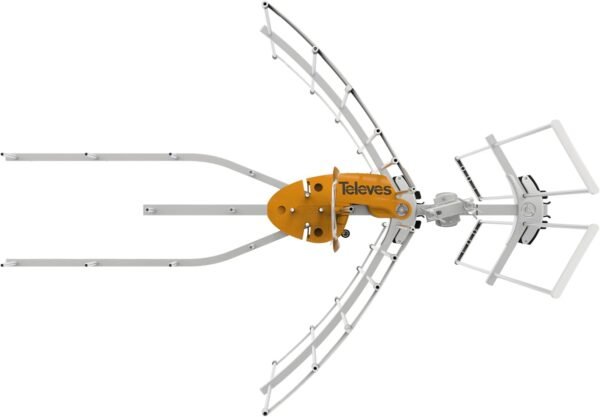
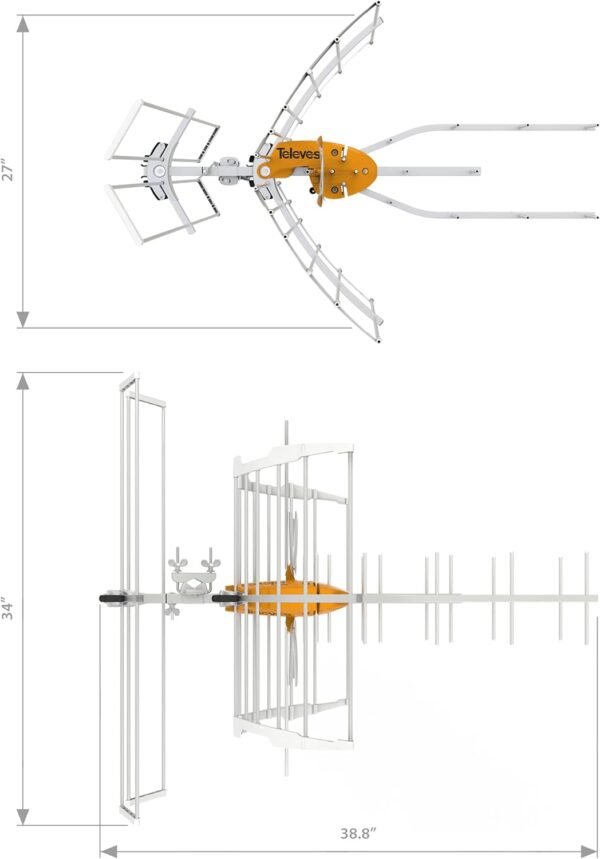
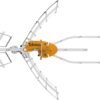
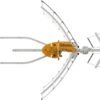
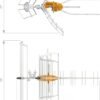
Description
How far are you from the transmitters, and in which direction?
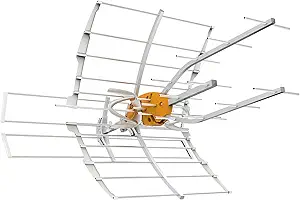
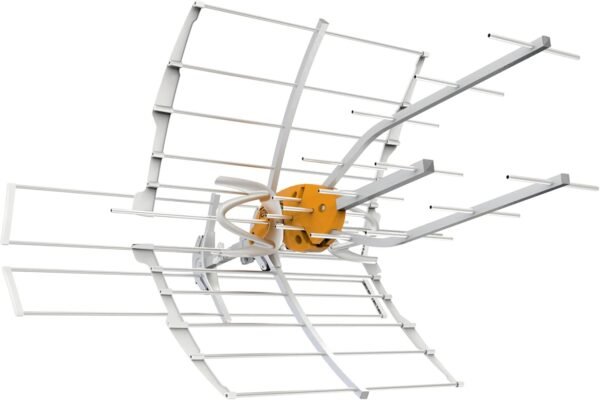
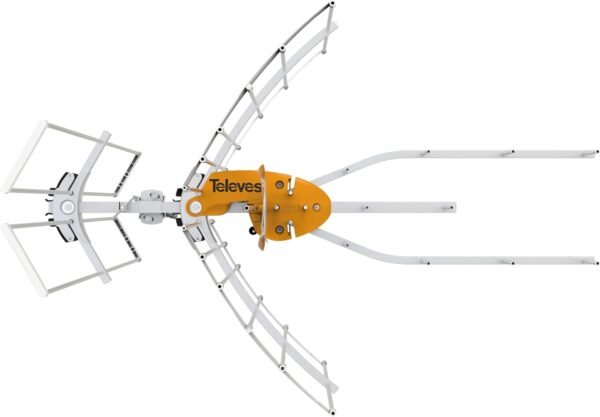
Every antenna purchase begins in the same place, and it is not the product page. It is a coverage map. Enter your address on one of the broadcast coverage tools and you get two pieces of information that decide everything: how many miles away the transmitters are, and whether they sit in one direction or several. A directional antenna like the Televes Ellipse Mix is built for the first case. Aimed at a cluster of towers it delivers far more usable gain than an omnidirectional one. Aimed at a city that broadcasts from two opposite sides, it will pull in half your channels and miss the rest unless you add a rotor.
Televes quotes a range of up to 75 miles, and range figures on antennas are always optimistic because they assume line of sight. Hills, buildings and dense tree cover cut it, and the useful reading of a 75 mile figure is that this is a mid to long range antenna rather than a nearby city one. The listing describes it as suitable for outdoor or attic installation, and an attic install typically costs you some of that range to the roof material.
The third question is where it will physically go. The listing publishes only package dimensions of 35 by 16.5 by 7 inches and a weight of 9.58 pounds, with no assembled dimensions. That is a gap worth filling before you buy, because roof and gable mounting decisions depend on it. What the listing does say is that assembly takes under a minute, which for an outdoor antenna is genuinely unusual and worth something on a ladder.
The specification that limits what you can receive
This is the detail most likely to cause a disappointed buyer, and the listing states it clearly enough if you read the right line. The Ellipse Mix is designed for RF channels 7 through 36. That is high VHF and UHF only. It does not cover low VHF, meaning RF channels 2 through 6.
The complication is that a station broadcasting as channel 4 on your remote may transmit on a completely different RF channel, because virtual channel numbers were kept the same after the digital transition while the physical frequencies moved. So checking whether this antenna covers your local stations means looking up their RF channel, not the number on screen. A small number of stations still transmit on low VHF, and in those markets this antenna will simply not receive them. Do that check before ordering; it takes two minutes on a coverage tool and it is the single most common cause of a returned antenna.
What the built in amplifier changes
The Ellipse Mix includes a TForce preamplifier with automatic gain control, which is the feature that separates it from a plain passive antenna. Televes describes it as amplifying VHF and UHF independently and adjusting gain in real time, so weak signals get boosted while strong ones do not overload the tuner.
That last part matters more than people expect. A common failure with amplified antennas is a household close to one strong transmitter and far from others: the amplifier lifts the weak stations and simultaneously drives the strong one into overload, so adding amplification makes reception worse. Automatic gain control exists specifically to handle that. The listing also states FM and LTE or 5G filtering above 608 MHz, which blocks the cellular band that was reallocated from television and is a frequent source of interference near a mast.
Because the amplifier is built in, a power supply is required. Televes includes a UL listed low consumption supply with two outputs for feeding more than one television, and the antenna is 75 ohm, which is standard coaxial.
Installing and living with an outdoor antenna
Two practical matters come before the antenna itself. The first is safety. An outdoor antenna on a mast is a fall risk and an electrocution risk, and the rule is absolute: never install where the mast could contact an overhead power line if it fell, in any direction. The second is grounding. National electrical code requires an outdoor antenna mast and the coaxial lead to be bonded and grounded, which protects the house from static buildup and lightning induced surges. Neither a mast, a mount nor a grounding block appears in this listing, so budget for them separately.
Aiming is the part that determines whether the antenna performs. Directional antennas are narrow, and being twenty degrees off can cost you several channels. Point at the tower bearing from your coverage map, then run a channel scan, then adjust in small increments and rescan. A signal strength meter in the television menu makes this far quicker than rescanning blind.
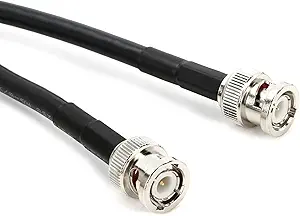
Cable losses matter over long runs. If the antenna is on a roof and the television is two floors down, use quality coaxial and keep splits to a minimum, which is one reason the two output power supply is useful rather than splitting the amplified feed further. If you need to extend the run, a coaxial extension such as the Shure UA825 25 foot BNC coaxial cable is the kind of component that gets added at this stage, though connector types differ and need checking.
The listing records 311 customer ratings averaging 4.7 stars, a first availability date of March 2022, and a rank of 67th in radio antennas. That last detail is itself an oddity: this is a television antenna filed in a radio antenna category on both the source listing and this site.
When a different antenna is the answer
If you live close to the transmitters, none of this hardware is necessary and an indoor antenna will do the job for a fraction of the price. The Winegard FlatWave Amped is the amplified indoor version of the same idea and mounts on a wall or a window. If you are further out and need maximum UHF gain from a single direction, the Antennas Direct 91XG is a long range UHF Yagi, and the Winegard YA7000C is the VHF counterpart for markets where the main stations sit on high VHF.
The TV antennas category covers the indoor and outdoor television options, while the radio antennas category where this listing currently sits holds mostly amateur radio hardware, which is a different application entirely.
Who the Ellipse Mix suits
It suits a household 20 to 75 miles from a cluster of transmitters that broadcast on RF channels 7 to 36, with a roof or attic to mount on, and a willingness to aim and rescan carefully. The built in gain controlled preamplifier removes the usual guesswork about whether to add amplification, and the LTE filtering is genuinely useful near a cell mast.
It does not suit anyone whose local stations broadcast on low VHF, anyone who needs reception from opposite directions without a rotor, or anyone who cannot safely mount and ground an outdoor antenna. Check your local RF channel assignments first, and budget for a mast, a mount and a grounding block, none of which are in the box.