
Description
Do you already own the pump these bags are made for?
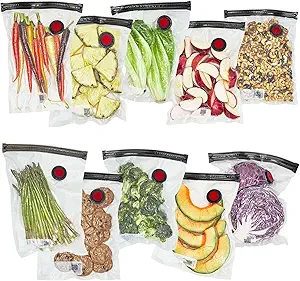
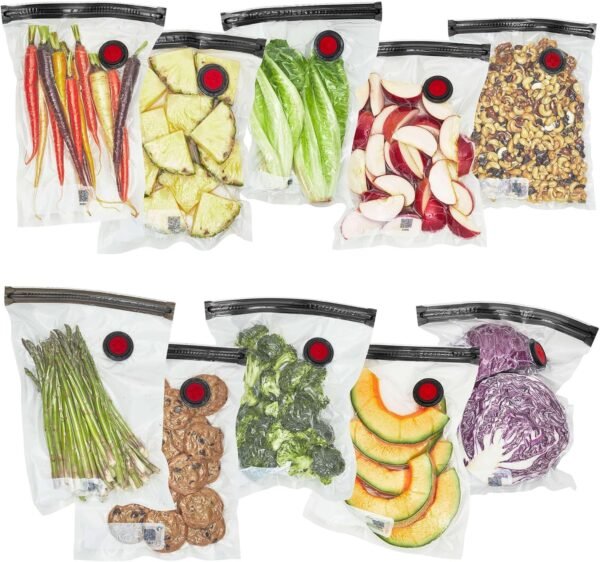
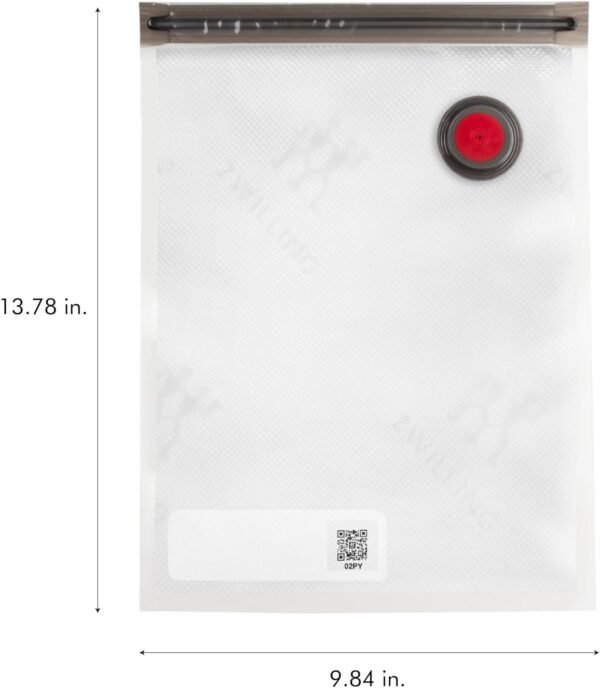
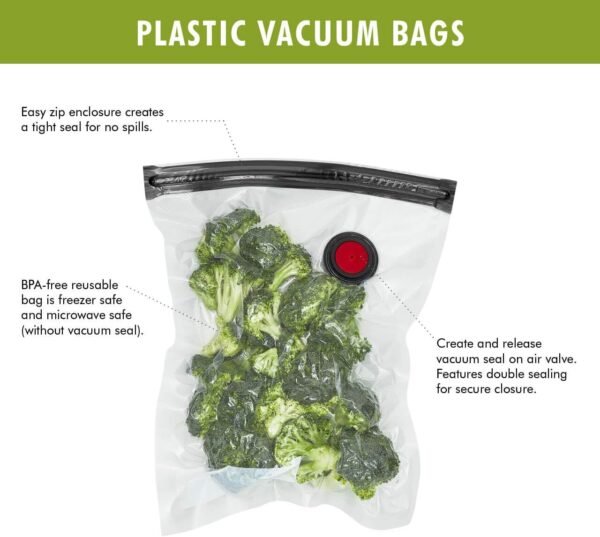
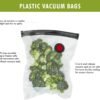
This is the question that decides whether this listing is relevant to you at all, and it is easy to miss. What is being sold here is ten bags. Not a machine, not a starter kit, ten medium bags with zip closures and silicone valves. They are part of ZWILLING’s Fresh and Save system, and they are designed to be evacuated by a separate cordless vacuum pump that docks onto the valve on each bag.
The listing does not make that easy to see, because among the feature bullets is one that reads like a product description of the pump itself, praising a cordless vacuum sealer machine as fast, quiet and easy to use. That machine is not in this box. If you do not already own it, these bags are storage bags with a zip and an unusable valve.
The compatibility point extends further. These are system specific bags. They will not work with a chamber vacuum sealer, and they are not the textured roll stock that an external suction sealer needs, because those machines seal by melting the bag closed rather than by drawing air through a valve. If your existing machine is a chamber unit like the one covered in the Vacmaster VP230 review, these bags are the wrong consumable entirely.
What the valve and the zip actually change about food storage
The mechanism here is different from conventional vacuum sealing and the difference is worth understanding, because it drives every advantage and every limitation.
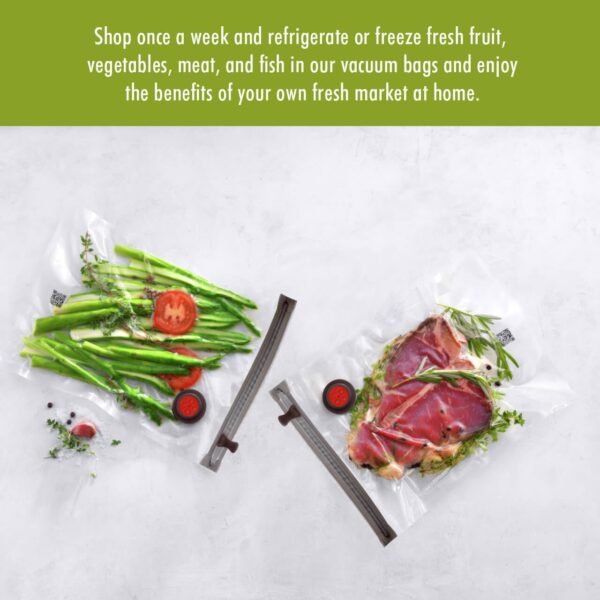
A conventional vacuum sealer draws air out of an open bag and then heat seals the end shut. The bag is single use, the seal is permanent, and the vacuum is strong. ZWILLING’s approach uses a reusable bag with a zip closure and a one way silicone valve. You fill the bag, close the zip, dock the pump on the valve, and the pump extracts air until it stops automatically. Pressing the button in the centre of the red valve then seals it.
The advantage is reuse. The same bag goes through the dishwasher and gets used again, which changes the running cost of vacuum storage from a consumable to a fixed purchase. The advantage is also convenience: no cutting, no measuring, no heat sealing, and you can open a bag, take out half the contents and reseal it.
The limitation is vacuum depth. A zip and a valve will not hold the same level of vacuum as a heat sealed bag or a chamber machine, and a mechanical closure is more likely to leak over long freezer storage than a welded seam. ZWILLING states the bags keep food fresh up to five times longer than non vacuum storage, which is the manufacturer’s own comparison and is stated against ordinary storage rather than against a heat sealed bag.
The liquid barrier, and why it matters more than it sounds
One included detail deserves attention: ZWILLING states the bags include a liquid barrier to help ensure liquids are not drawn into the vacuum pump. Anyone who has vacuum sealed a marinade knows why. The moment the pressure drops, liquid rises toward the valve, and liquid inside a vacuum pump is how pumps die. A barrier built into the bag is a design response to the most common way this kind of system fails.
That said, the safe habit with any vacuum system is to chill or partly freeze wet contents before sealing, which keeps liquid where it belongs. ZWILLING also describes marinating under vacuum in thirty minutes, which works because reduced pressure opens the structure of the meat and lets marinade in faster than soaking does.
Living with them: sous vide, the dishwasher and food safety
ZWILLING states these bags are suitable for sous vide, freezer safe, dishwasher safe, and microwave safe without the vacuum seal engaged. That last qualifier is the important one. A sealed bag in a microwave is a pressure vessel, and the valve has to be open or the seal released before heating. It is stated on the listing and it is easy to skim past.
For sous vide the practical question is buoyancy. A bag that has not been fully evacuated floats, and a floating bag cooks unevenly because part of it is out of the water. Since a valve and zip system holds a lighter vacuum than a heat sealed one, expect to need a weight or a rack more often than with a chamber sealed bag.
Food safety deserves plain language here rather than enthusiasm. Vacuum packing slows spoilage by removing oxygen, and it is not a substitute for refrigeration. Removing oxygen creates conditions that favor anaerobic organisms, which is why vacuum packed food must be kept cold and why sous vide has specific time and temperature guidance rather than being a matter of taste. Vacuum sealed food left at room temperature is less safe than the same food left open, not more.
The bags themselves are stated as BPA free, with a plastic bag and zipper and a silicone valve, and they are made in China despite a feature bullet describing German engineering, which refers to the design of the system rather than where the bags are produced. The specification table also lists a power source of “Handheld” and an operation mode of “Manual”, which are fields for an appliance rather than for a pack of bags, and the product dimensions of 10.6 by 2.6 by 5.3 inches describe the package rather than a bag laid flat.
When something else fits the job better
If the goal is long term freezer storage of large quantities, a heat sealing machine with roll stock costs less per bag over time and holds a deeper vacuum, and the Vacmaster VP230 chamber sealer review covers the serious end of that approach.
If the actual goal is cooking ahead rather than storing, the appliance often does more than the packaging. The Ninja MC1010 Foodi multi cooker review covers batch cooking in one vessel, and the Aroma ARC-914D rice cooker review covers the grain half of a meal prep routine.
And if food is spoiling before you get to it, the storage appliance matters more than the bag, which is what the GE GNE27JYMFS French door refrigerator review covers. The consumables sit in the vacuum sealer bags category and the machines in the vacuum sealers category.
Who these suit and who should not buy them
They suit an existing owner of ZWILLING’s Fresh and Save pump who wants more medium bags, and anyone attracted to reusable vacuum storage rather than a consumable roll. The zip closure, the liquid barrier and dishwasher compatibility are the three things that make repeated use practical, and the listing shows 1,019 ratings averaging 4.4 stars, ranked 83rd within vacuum sealer bags.
They do not suit anyone without the matching pump, anyone with a chamber or external heat sealing machine, or anyone who needs the deepest possible vacuum for long freezer storage. And nobody should read the vacuum sealer machine described in the feature bullets as being included, because this listing is ten bags.