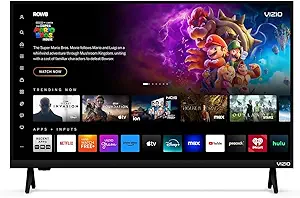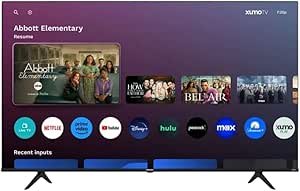
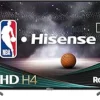


Description
Where does a 40 inch 1080p set still make sense?
Buying a Full HD television in a 4K market needs a reason, and there are three good ones. A bedroom or a kitchen where the viewing distance is short and the screen is small enough that 4K would be invisible. A second set for a guest room where price matters more than specification. Or a room where most of what plays is broadcast television and older streaming content, which is largely produced and delivered at 1080p or below anyway.
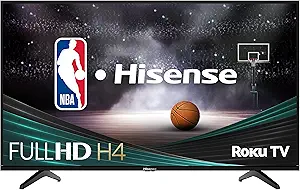
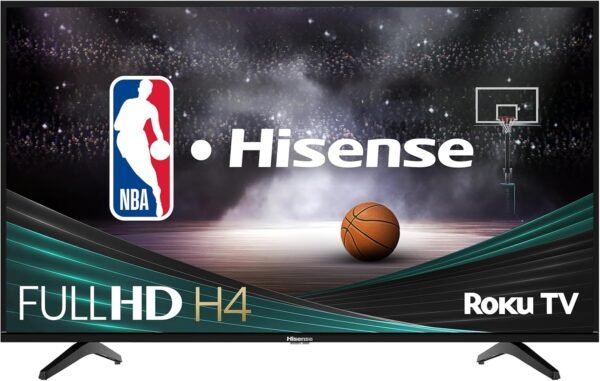
The Hisense 40H4030F4 fits all three. At 40 inches diagonal and 1920 by 1080 resolution, the pixel density is close to what a 4K set gives you at 80 inches, so at normal seating distances in a small room the resolution is not the limiting factor. What is limiting is contrast, brightness and the absence of high dynamic range, and those are the things a 4K set at the same price would also compromise on.
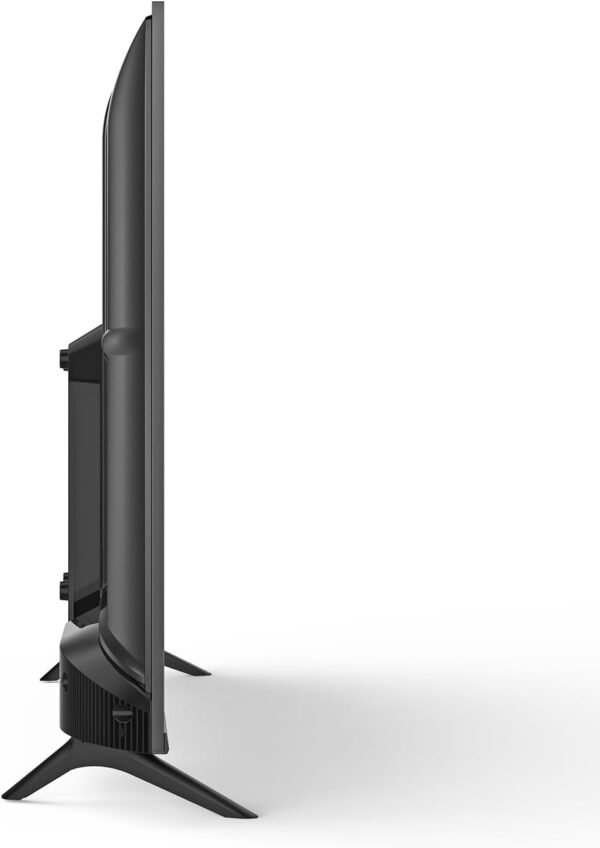
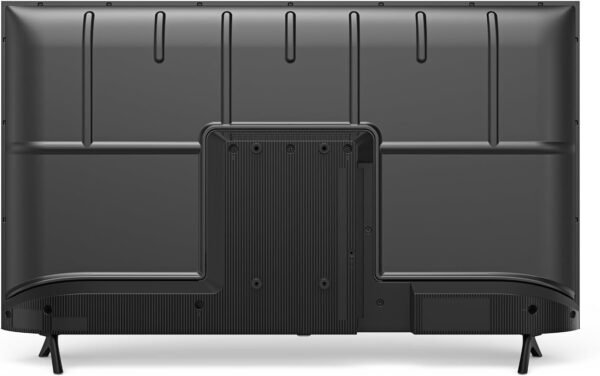
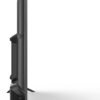
Physically the listing gives 38.2 by 24.1 by 8.7 inches, with that depth figure clearly including the stand rather than describing the panel. Weight is recorded as 8.26 kilograms, roughly 18 pounds, and it is the only weight on this listing given in metric, which is worth noting since every mount is rated in pounds. Light enough for any bracket, but measure the VESA hole spacing yourself, because the listing does not publish it.
The refresh rate claim, stated three different ways
This listing describes its motion handling in language that does not agree with itself, and it is the specification most likely to matter to a buyer. The product title says Game Mode 120 Motion Rate. The description says the television features a 120Hz refresh rate. A feature bullet says 120Hz Refresh Rate and 5000:1 Contrast Ratio.
Motion Rate and refresh rate are not the same thing. Motion Rate is a manufacturer index that combines the native panel refresh with backlight scanning and frame interpolation, and on budget sets a Motion Rate of 120 very commonly sits on top of a 60 Hz panel. The title uses the index wording while the description and the bullet state the number as a native refresh rate. Nothing on this page settles it. If you are buying for gaming, or specifically because you want 120 Hz, confirm the native panel refresh with Hisense before ordering rather than relying on this listing.
The connectivity limit worth counting
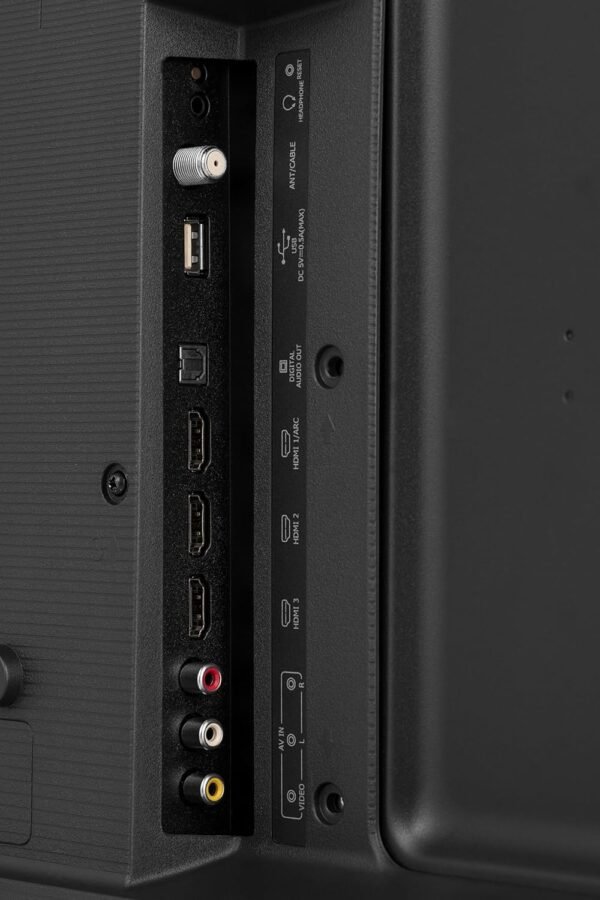
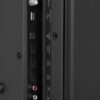
The listing specifies two HDMI ports and one USB port, plus built in Wi-Fi and a QAM tuner. Two HDMI ports is the constraint that catches people out. A games console and a soundbar fills both, leaving nothing for a disc player or a streaming stick, and this set has no listed optical output as an alternative route for audio.
The rest of the specification is straightforward: a 5000 to 1 contrast ratio, Dolby Digital 5.1 audio decoding, V-Chip parental controls, Energy Star certification, and compatibility with Apple HomeKit, Alexa and Google Assistant. The platform is Roku, which is the simplest of the smart television interfaces and a sensible choice on a secondary set where nobody wants to learn a new system.
Living with it
A Roku set is set up once and left alone. The home screen is a fixed grid of service tiles rather than a recommendation engine, updates arrive quietly, and the remote is small with shortcut buttons. On a bedroom television that simplicity is a feature rather than a limitation, because the alternative is a system that keeps proposing things at eleven at night.
The QAM tuner is worth knowing about specifically. It receives unencrypted digital cable channels directly, without a set top box, which in some apartment buildings and campuses is how basic television is delivered. Combined with the over the air tuner and an antenna, this set covers broadcast reception without any subscription hardware, and the TV antennas category is where to look if that is the plan.
Placement is simple at this size. A 38.2 inch wide set fits most bedroom dressers and shelving without the overhang problem that catches out larger televisions, and at roughly 18 pounds one person can lift it onto a bracket without help. If it is going on a wall, the only thing to check is the VESA hole spacing on the back panel, since the listing does not state it and small sets vary more than large ones do.
Sound on a set this size is adequate for dialogue in a small room and nothing more. Dolby Digital 5.1 in the specification means the set can decode the signal, not that it can reproduce surround sound from two small speakers.
Energy Star certification is a small but genuine benefit on a set that may run for hours in a bedroom. It does not tell you the wattage, which this listing never publishes, but it does mean the model met a federal efficiency threshold for its size class at the time it was certified.
The listing records 172 customer ratings averaging 4.4 stars, a first availability date of July 2024, and a rank of 782nd in LED and LCD televisions. The H4030F series has been sold across several years, so treat the availability date as the date this particular listing appeared rather than as a model year.
What would send you to a different set
If the room is smaller still, the size drops further and the price with it. The Hisense 32A4NR is the same idea one size down with a slim bezel, and the TCL 32S327 is the Roku equivalent from a different manufacturer. If you want to stay at 40 inches but prefer a different brand, the VIZIO 40 inch VFD40M-08 is the direct alternative.
If this is the main television rather than a second one, 1080p is the wrong purchase in 2020s terms and the sensible move is a 4K set at 50 inches or above. The TCL 55S455 is the entry level 4K option at a size that justifies the resolution, and the LED and LCD televisions category runs the full range from 32 inches upward.
Who this set is for
It is for a bedroom, a kitchen, a guest room, a dorm or a workshop, where 40 inches is the right size, the viewing distance is short, and the priority is a simple interface and a low price rather than picture quality. Roku, a QAM tuner, HomeKit and voice assistant compatibility make it an easy set to slot into an existing household.
It is not for a main living room, not for anyone who needs more than two HDMI inputs, and not for a buyer counting on 120 Hz, because the title calls it a Motion Rate figure while the description calls it a refresh rate and the listing never resolves the difference.