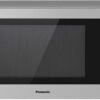



Description
Is this replacing a microwave, or replacing a second oven?
The answer changes what you should think about this appliance. If you are replacing a microwave, this is a large one that also does other things, and the counter space is the price. If you are avoiding building a second oven into a wall, it does most of that job in a space you already have.
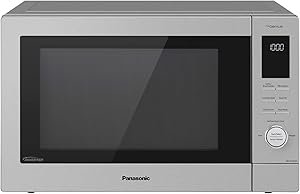
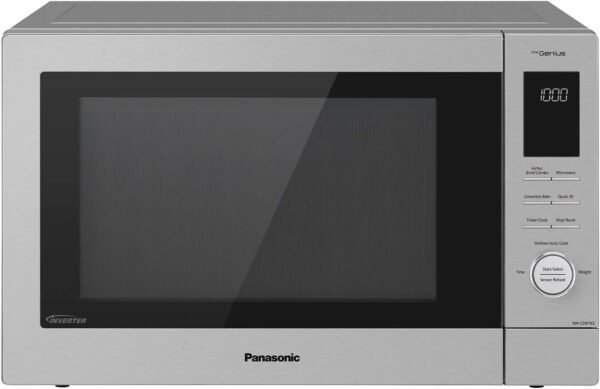
The dimensions decide it. Panasonic gives the footprint as 22 inches wide, 17.7 inches deep and around 13.5 inches high, with the description saying 13.5 and a feature bullet saying 13.4. Seventeen and a half inches of depth is close to the full usable depth of a standard counter once you allow the clearance a convection appliance needs at the back, and 22 inches of width is a substantial run. It weighs 39.1 pounds, which means it is placed once and not moved.
What you get for that footprint is 1.2 cubic feet of interior with a 14.2 inch turntable, which Panasonic says will take a whole chicken. That is the practical test for a combination oven: if a chicken fits, most roasting and baking a household actually does will fit.
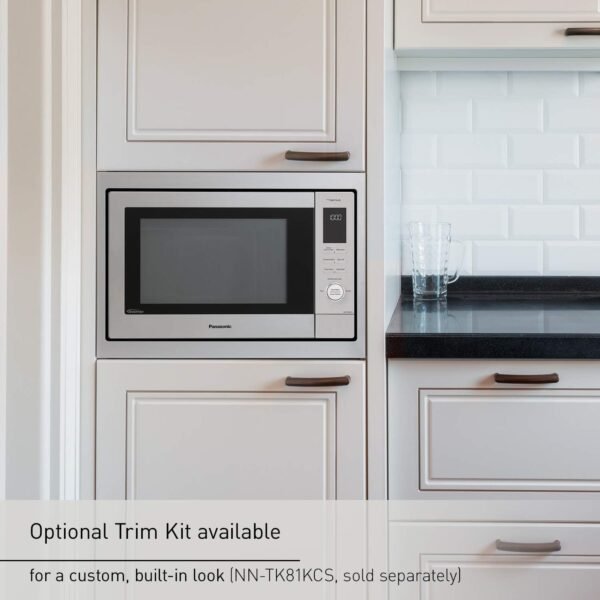
The listing also names an optional trim kit, model NN-TK81KCS sold separately, which allows the unit to be built into cabinetry. That is worth knowing at the planning stage rather than after, because it turns a countertop appliance into a fitted one.
Four heat sources in one cavity is the specification that matters
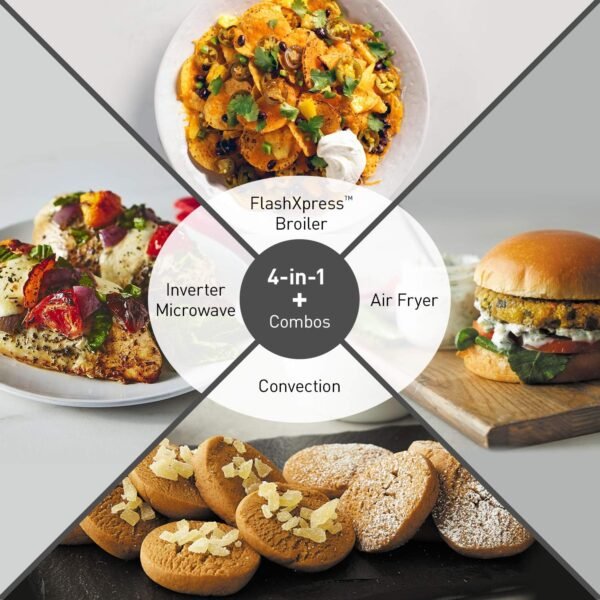
Panasonic describes four functions: microwave, air fryer, convection bake and the FlashXpress broiler, plus six cooking options including two combinations, convection with microwave and broil with microwave. Those combinations are the reason to buy a machine like this rather than a plain microwave and a separate air fryer.
Microwave energy heats food throughout its volume, which is fast and leaves surfaces soft and pale. Convection and broil heat from outside, which browns and crisps but takes time to reach the middle. Running them together is how you get a chicken cooked through and browned in less time than either method alone would take. That is not marketing, it is the underlying physics, and it is the single strongest argument for a combination oven.
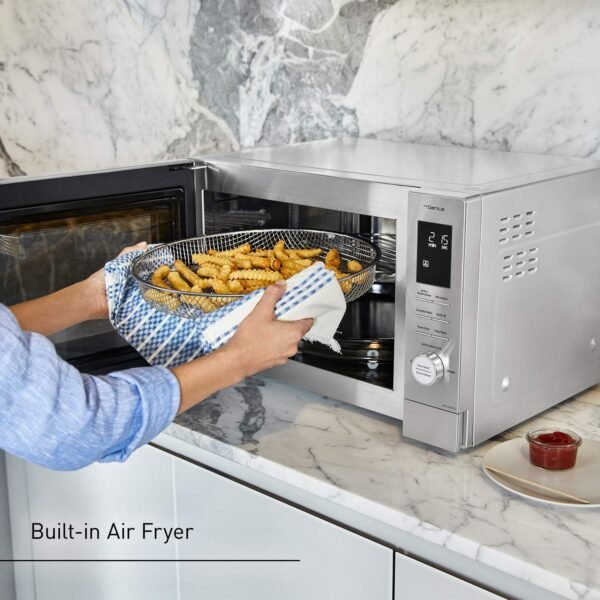
The convection function goes up to 425 degrees Fahrenheit, with or without preheat, which covers baking and roasting for most domestic recipes though not the higher temperatures some breads and pizzas want. The air fry mode is described as circulating hot air with no preheat required, which on an oven of this cavity size means a fast convection profile rather than the small chamber high velocity approach a dedicated basket air fryer uses. It will crisp, and a dedicated air fryer will crisp a small batch faster.
What inverter technology changes about a microwave
The microwave side is rated at 1000 watts with Panasonic’s inverter technology, and that is a genuine technical distinction rather than a badge.
A conventional microwave has only one power level: full. When you select 50 percent power, it runs at full power for half the time and switches off for the other half, cycling on and off. That is why defrosting on a conventional machine cooks the edges of the food while the center is still frozen. An inverter supply can genuinely reduce the power output and hold it there, so 50 percent means a steady half power rather than an alternation between full and nothing.
The practical results are better defrosting, gentler reheating without rubbery edges, and the ability to simmer or hold something without overcooking the outside. Panasonic pairs it with Genius Sensor cooking, which measures steam coming off the food to decide when it is done rather than relying on a timer, plus Turbo Defrost and twenty automatic menu presets.
One number on the listing needs care. The 1000 watt figure is microwave output power, which is the industry convention for how microwaves are rated, and it is not the same as the power the appliance draws from the wall. A combination unit with convection and broil elements draws considerably more than 1000 watts when those are running. The listing gives a single wattage figure and does not distinguish between the two, so treat 1000 watts as the cooking rating and check Panasonic’s specification sheet if you need the electrical load for a circuit.
Living with it: accessories, cleaning and the honest limits
Three accessories come with it, and each corresponds to a function: an enamel tray, a wire rack and an air fryer basket. The wire rack is what makes two level convection baking possible, and the basket is what lets air reach the underside of food during air frying. Without the basket, air fry mode is just a fast convection setting.
The interior is stainless steel, which Panasonic calls an easy clean cavity, and on a combination oven that matters more than on a plain microwave. Broiling and roasting spatter, and spatter that bakes onto a painted cavity is far harder to remove than spatter on stainless. A wipe while the cavity is still warm is the routine.
The turntable is worth planning around. At 14.2 inches it is generous, and it also means the food rotates, so anything that overhangs the plate will catch on the cavity wall. Rectangular dishes and full sheet pans do not belong in a turntable oven, which is one genuine limitation against a built in oven with fixed racks.
Panasonic also mentions a recipe application for monthly recipes, which is a convenience rather than a capability, and depends on the manufacturer continuing to run it.
One thing to read carefully rather than accept: the description positions air frying as a healthier alternative to fried food. Air frying does use less oil than deep frying, which is a fact about the method, and everything beyond that is the manufacturer’s framing.
When a different appliance answers the question better
If the microwave is genuinely all you need, a plain one costs far less and takes far less counter, and the Farberware Classic 1.1 cubic foot review covers that end. If you want the same combination idea in a smaller footprint, the GE GCST10A1WSS four in one review covers a more compact machine.
If the counter cannot spare 22 inches, moving the microwave above the cooktop frees the whole run, which the Samsung ME17R7021ES over the range review covers. And if the cooking you care about is baking and roasting rather than microwaving, a countertop oven does that better and does not microwave at all, which the Breville Smart Oven Air Fryer Pro review covers, while a built in unit like the one in the LG WCEP6423F combination wall oven review puts both in the wall instead.
The rest of the range sits in the countertop microwave ovens category and the countertop ovens in the ovens and toasters category.
Who should buy it and who should not
It suits a kitchen with a small or overworked main oven, a household that reheats constantly and also roasts, and anyone who would rather buy one appliance than a microwave plus an air fryer plus a toaster oven. The inverter microwave, the convection and microwave combination mode and the stainless cavity are the three things that justify the size. The listing shows 2,712 ratings averaging 4.1 stars, ranked 38th within countertop microwave ovens, from a product first listed in March 2020.
It does not suit a small kitchen, since 22 by 17.7 inches is a serious commitment of counter. It does not suit anyone baking on rectangular sheet pans, because the turntable rotates. And anyone planning the electrical side should note that the single 1000 watt figure on this listing is the microwave output rating rather than the appliance’s draw.